

You started managing your Amazon account in-house because it made sense. You had control, you understood your products, and the platform seemed manageable enough. But somewhere along the way, things changed. Sales grew, competition intensified, and what used to take a few hours per week now consumes entire days.
If you're constantly feeling like you're playing catch-up with your Amazon business, you're not alone: and you might have outgrown your current account management setup. Here are seven telltale signs it's time to level up, and more importantly, what to do about it.
1. Your Ad Spend Is Eating Your Profits Alive
Remember when a 30% ACoS felt acceptable? Now you're watching your advertising cost of sales creep toward 40%, 50%, or even higher, and your total advertising cost of sales (TACoS) is making your accountant wince.
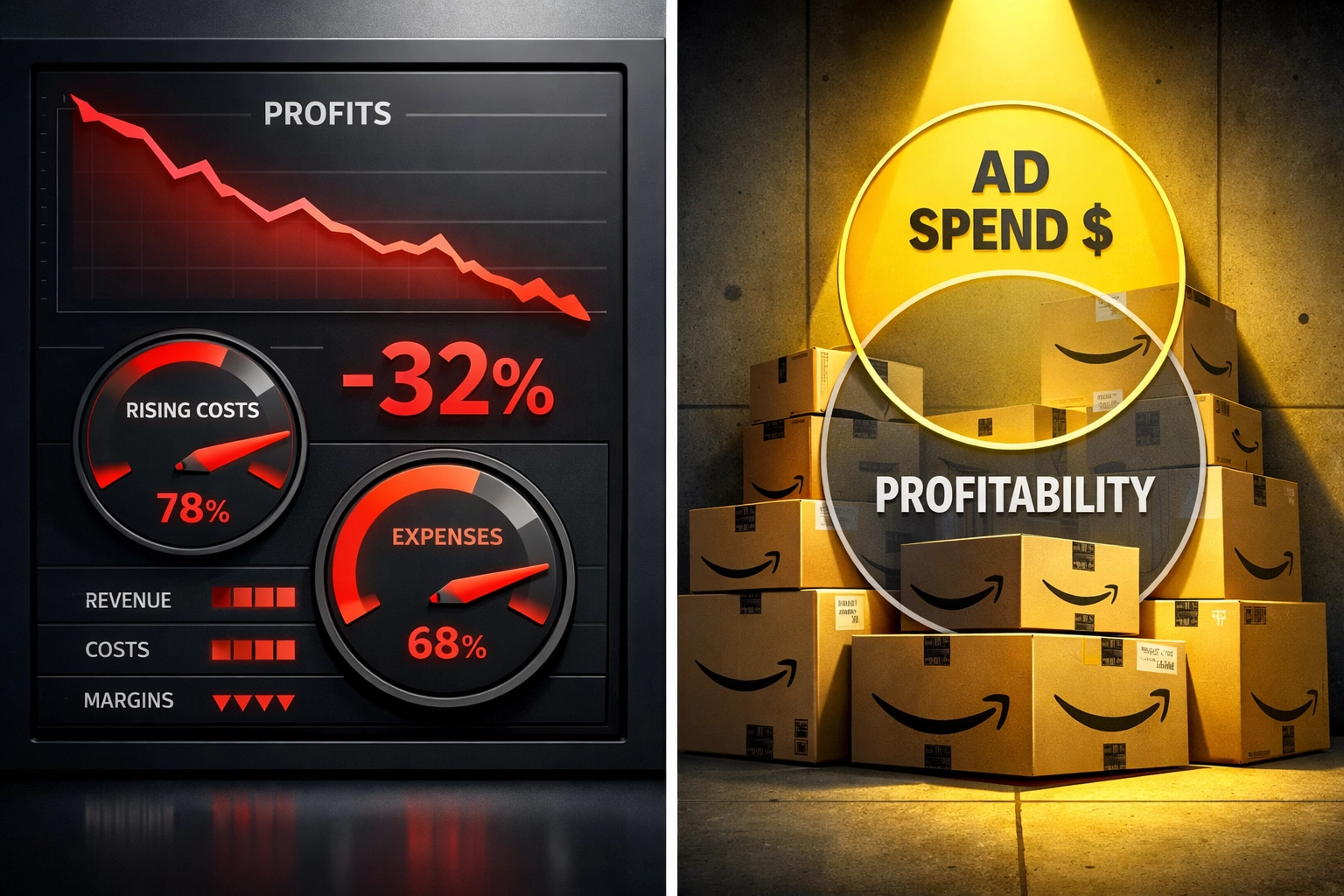
You've tried the basic optimization tactics: adjusting bids, pausing underperforming keywords, tweaking budgets: but you've hit a ceiling. The problem isn't that you're doing something wrong; it's that sustainable profitability requires a strategic ecosystem approach that coordinates pricing, promotions, inventory positioning, content optimization, and advertising into one cohesive strategy.
When your amazon ads management becomes a guessing game rather than a data-driven strategy, it's a clear sign you need specialized expertise.
2. You're Always Playing Inventory Roulette
One week you're scrambling to restock before running out. The next, you're sitting on three months of excess inventory tying up cash you desperately need for growth initiatives. Your inventory forecasting feels more like fortune-telling than strategic planning.
Proper inventory management requires understanding seasonal trends, advertising impact on velocity, and coordination with your supply chain: all while maintaining optimal stock levels for Amazon's algorithm. When you're constantly surprised by how fast (or slow) products move, it's time to bring in professionals who live and breathe these metrics.
3. Your Listings Haven't Been Updated in Months
Your competitor just launched an A+ Content refresh that makes their product pages look like works of art. Meanwhile, your listings still have the same basic bullet points and images you uploaded last year. You know amazon listing optimization matters, but when do you actually have time to do it?
Content optimization isn't a one-and-done task. It requires continuous testing, keyword research, conversion rate analysis, and staying current with Amazon's ever-evolving content features. If your listings feel stale, they probably are: and so are your conversion rates.
4. You Have No Idea What Changed (Until It's Too Late)
Amazon updated their Terms of Service again. There's a new fee structure for FBA. They rolled out a feature that could double your visibility, but you found out about it three months after your competitors started using it. Sound familiar?
The Amazon ecosystem moves fast: really fast. Policy changes, new advertising features, algorithm updates, and compliance requirements hit without warning. Professional amazon account management services include staying ahead of these changes, not reacting to them after they've already impacted your business.

5. Customer Service Is Drowning Your Team
Your customer service queue looks like a nightmare. Returns are piling up. Negative reviews are starting to accumulate because response times have slipped. Your team is stretched so thin trying to handle Amazon alongside all your other sales channels that something's got to give.
Quality amazon seller support requires dedicated attention and expertise in Amazon's specific customer service ecosystem. When your general customer service team is trying to juggle Amazon's unique requirements alongside everything else, the cracks start showing: usually in your seller metrics.
6. Your Competitors Are Running Circles Around You
You've noticed something unsettling: competitors who were behind you six months ago are now dominating the search results. They're running sophisticated promotional strategies you didn't know existed. Their listings feature content formats you've never seen. They seem to have unlocked a level of the Amazon game you can't access.
Here's the reality: they probably have. They're working with an amazon agency that brings competitive intelligence, advanced strategies, and platform expertise you simply can't match while managing Amazon as a side project. You're playing checkers while they're playing chess with a grandmaster coach.
7. Managing Amazon Is Consuming Your Life (And Your Team's)
You're checking Seller Central at 11 PM. Your marketing manager is spending 60% of their time on Amazon when they should be building your brand across all channels. Weekend work has become the norm, not the exception. You've become so buried in the day-to-day tactical execution that you've lost sight of the strategic growth opportunities.

This is perhaps the most critical sign: when Amazon management becomes a time sink that prevents you from working on your business instead of in it. The opportunity cost of your team's time is massive: and it's holding your entire business back.
What to Do Next: Your Three Options
You've identified the signs. Now what? You essentially have three paths forward:
Option 1: Hire Dedicated In-House Talent
Building an in-house Amazon team means recruiting specialists in PPC management, SEO optimization, content creation, and compliance. You're looking at six-figure salary commitments, benefits, training, and the time to find the right people. This makes sense if you're doing $10M+ on Amazon and can support multiple full-time specialists.
Option 2: Invest in Training and Tools
You could double down on your current approach: send your team to Amazon conferences, invest in software tools, and dedicate more resources to learning. This works if the issue is primarily knowledge gaps rather than capacity constraints.
Option 3: Partner with an Amazon Agency
Working with a specialized amazon advertising agency gives you immediate access to a full team of experts without the overhead of hiring. You get strategic guidance, tactical execution, and the ability to scale up or down based on your needs.
The Questions You Should Ask Any Agency
If you're considering option three, don't just hire the first agency you find. Here's what to evaluate:
Do they specialize in your category? E-commerce expertise is great, but amazon brand management requires specific platform knowledge.
What's their communication style? You need partners who explain strategies clearly, not ones hiding behind jargon and vague promises.
Can they show real results? Case studies, client testimonials, and specific metrics matter more than flashy websites.
How do they handle scaling? Your needs six months from now will differ from today. Make sure they can grow with you.
Do they understand the complete ecosystem? Amazon advertising, inventory management, listing optimization, and brand protection should be part of an integrated strategy, not siloed services.
The Bottom Line
Outgrowing your current Amazon management approach isn't a failure: it's a sign of success. Your business has evolved beyond what one person or a generalist team can handle effectively. The question isn't whether you need more sophisticated management; it's how you're going to get it.
Whether you choose to build in-house, level up your current team, or partner with specialists, the key is recognizing that doing nothing isn't an option. Every day you delay is a day your competitors pull further ahead.
If three or more of these signs resonated with you, it's time to have a serious conversation about your Amazon strategy. Your business has outgrown where you started: make sure your account management catches up.
Ready to explore what professional Amazon account management could do for your business? Let's talk about where you are and where you want to go. Sometimes the best growth decision is knowing when to bring in the specialists.