

If you've been optimizing your Amazon listings the same way you did in 2023, here's the hard truth: you're probably invisible to Rufus.
Amazon's AI shopping assistant has fundamentally changed how products get discovered, recommended, and purchased. And most sellers? They're still playing by yesterday's rules: stuffing keywords, chasing search volume, and crossing their fingers that the algorithm gods smile upon them.
But here's the thing: Rufus doesn't work like the old A9 algorithm. It doesn't just match keywords. It understands customer intent, verifies claims, and builds semantic connections between what shoppers need and what your product actually delivers.
In this guide, we're breaking down the 7 critical mistakes that are killing your visibility with Rufus: and more importantly, how to fix each one so your amazon listing optimization strategy actually works in 2026. Whether you're managing listings yourself or working with an agency on your amazon brand management, these insights will help you stay ahead.
Here's what we'll cover:
- Optimizing for search volume instead of intent
- Missing semantic data points
- Creating structurally unsound listings
- Keyword stuffing and unnatural language
- Duplicating keywords across fields
- Ignoring backend attributes and Q&A
- Using prohibited terms and unverified claims
Let's dive in!
First, What Exactly Is Rufus?
Before we get into the mistakes, let's make sure we're on the same page about what we're dealing with.
Rufus is Amazon's AI-powered shopping assistant that helps customers find products by understanding conversational queries, comparing options, and making personalized recommendations. Think of it as a smart concierge that sits between your listing and the customer.
Instead of just matching "running shoes" to listings with those words, Rufus interprets why someone is searching. Are they dealing with plantar fasciitis? Running on concrete? Training for a marathon? Rufus connects the dots: and if your listing doesn't provide those dots, you're effectively invisible.
This is a massive shift. And it requires a complete rethink of how you approach listing optimization.

❌ Mistake #1: Optimizing for Search Volume Instead of Intent Volume
This is the most common (and costly) mistake we see. Sellers obsess over high-volume keywords like "running shoes" or "protein powder" without understanding what problem the customer is actually trying to solve.
Here's the reality: a customer typing "running shoes" into Amazon might actually be solving for:
- Plantar fasciitis pain relief
- Shock absorption for hard surfaces
- Lightweight options for speed training
- Wide-toe-box fit for comfort
If your listing only targets "running shoes" without addressing these underlying needs, Rufus has no reason to recommend you when a customer asks, "What running shoes are best for bad knees?"
✅ How to Fix It
Research the actual problems your product solves, not just the keywords people type. Use Amazon's own search suggestions, competitor Q&A sections, and customer reviews to identify the intent behind searches.
Then, build your listing copy around those pain points. Connect your product features to customer problems using natural language that Rufus can understand and verify.
Pro tip: Create a simple spreadsheet mapping your product features to specific customer problems. This becomes your roadmap for semantic optimization.
❌ Mistake #2: Lacking Semantic Data Points
Here's where things get technical: but stay with me because this is crucial.
Rufus builds understanding through semantic connections. It's not just looking for keywords; it's looking for a web of related terms, attributes, and concepts that tell a complete story about your product.
Let's go back to running shoes. If your listing mentions "running shoes" but lacks any reference to:
- Plantar fasciitis support
- Shock absorption technology
- Surface compatibility (concrete, trail, treadmill)
- Arch support type
- Cushioning level
…then Rufus effectively removes you from consideration when customers ask about those specific needs. Even if your product actually delivers those benefits!
✅ How to Fix It
Audit your listing for semantic completeness. Ask yourself: does my listing include the complete ecosystem of terms that connect my product to customer problems?
This means going beyond your primary keywords and including:
- Related problem terms (pain points your product addresses)
- Technical specifications (materials, measurements, certifications)
- Use-case scenarios (when, where, and how customers use your product)
- Comparison terms (how your product differs from alternatives)
Think of it as building a semantic map that Rufus can crawl and understand.
❌ Mistake #3: Creating Structurally Unsound Listings
For Rufus to recommend your product, your listing must be structurally sound, semantically rich, and factually verifiable. Many sellers prioritize traditional ranking tactics while completely neglecting the data architecture that AI needs.
What does "structurally unsound" look like?
- Bullet points that ramble without clear benefit statements
- Titles stuffed with keywords but lacking proper noun phrases
- Incomplete or inaccurate backend attributes
- Product descriptions that repeat title content verbatim
- Missing or contradictory specifications
When your listing structure is messy, Rufus struggles to parse and understand your product: which means fewer recommendations.

✅ How to Fix It
Treat your listing like a well-organized database entry:
- Title: Use proper noun phrases with your primary keyword, brand, key features, and size/quantity. Make it readable.
- Bullets: Lead each bullet with a bolded benefit, followed by the feature that delivers it. One clear idea per bullet.
- Description: Expand on use cases and lifestyle context: don't just repeat bullets.
- Backend attributes: Complete every single field accurately. This is where many sellers lose the game.
- Images and A+ Content: Ensure visual claims match text claims exactly.
If you're working with an agency on your brand management, make sure they're auditing listing structure: not just keyword placement. For guidance on finding the right partner, check out our ultimate guide to choosing the right Amazon agency.
❌ Mistake #4: Keyword Stuffing and Unnatural Language
We get it. For years, the advice was to pack as many keywords as possible into your listing. And it worked: sort of.
But Rufus changes the game. Keyword stuffing now:
- Makes your listing unreadable to humans
- Triggers algorithmic suppression
- Confuses the AI about what your product actually does
- Tanks your conversion rate (because customers bounce)
When your title reads like a random keyword generator vomited onto the page, neither Rufus nor real shoppers will trust your product.
✅ How to Fix It
Write for humans first, then optimize for AI.
This doesn't mean ignoring keywords: it means integrating them naturally into benefit-driven copy. Your listing should read like it was written by someone who actually understands and believes in the product.
Focus on:
- Clear, benefit-forward language
- Natural sentence structure
- Specific details over generic claims
- Conversational flow that matches how customers think
Remember: if it sounds weird when you read it out loud, it's probably keyword-stuffed.
❌ Mistake #5: Duplicating Keywords Across Fields
Here's a quick SEO myth-buster: Amazon indexes each unique word only once per listing.
That means if "organic coffee beans" appears in your title, adding it again to your backend search terms provides zero ranking value. You're just wasting precious character space that could be used for additional relevant terms.
We see this constantly: sellers repeating their top keywords in every possible field, thinking more mentions = more ranking power. With Rufus, this redundancy actually hurts you because you're missing opportunities to add semantic depth.

✅ How to Fix It
Use the TFSD framework to map each keyword to its optimal location:
- T (Title): Primary keyword + brand + key differentiators
- F (Features/Bullets): Secondary keywords + benefit-driven language
- S (Search Terms): Synonyms, misspellings, and related terms NOT already used
- D (Description): Long-tail phrases and contextual keywords that reinforce your semantic map
Audit your listing with a simple highlight test: if the same word appears in multiple fields, ask yourself if that space could be better used.
❌ Mistake #6: Ignoring Backend Attributes and Q&A Seeding
Most sellers focus exclusively on what customers can see: title, bullets, images, A+ Content. But Rufus crawls everything, including:
- Backend search terms
- Product attributes (material, size, compatibility, etc.)
- Q&A sections
- Customer reviews
If your backend attributes are incomplete, inaccurate, or generic, you're leaving massive optimization opportunities on the table. And if your Q&A section is empty or filled with random customer questions, you're missing a chance to feed Rufus exactly the information it needs.
✅ How to Fix It
Backend Attributes:
- Complete every single attribute field Amazon provides for your category
- Use accurate, specific values (not "various" or "multiple")
- Update attributes when you modify your product
Q&A Seeding:
- Seed your Q&A with intent-based questions customers actually ask
- Provide detailed, helpful answers that include relevant semantic terms
- Monitor and respond to new questions quickly
- Use Q&A to address objections and highlight features
Think of Q&A as free real estate for optimization. Most competitors ignore it completely: which is exactly why you shouldn't.
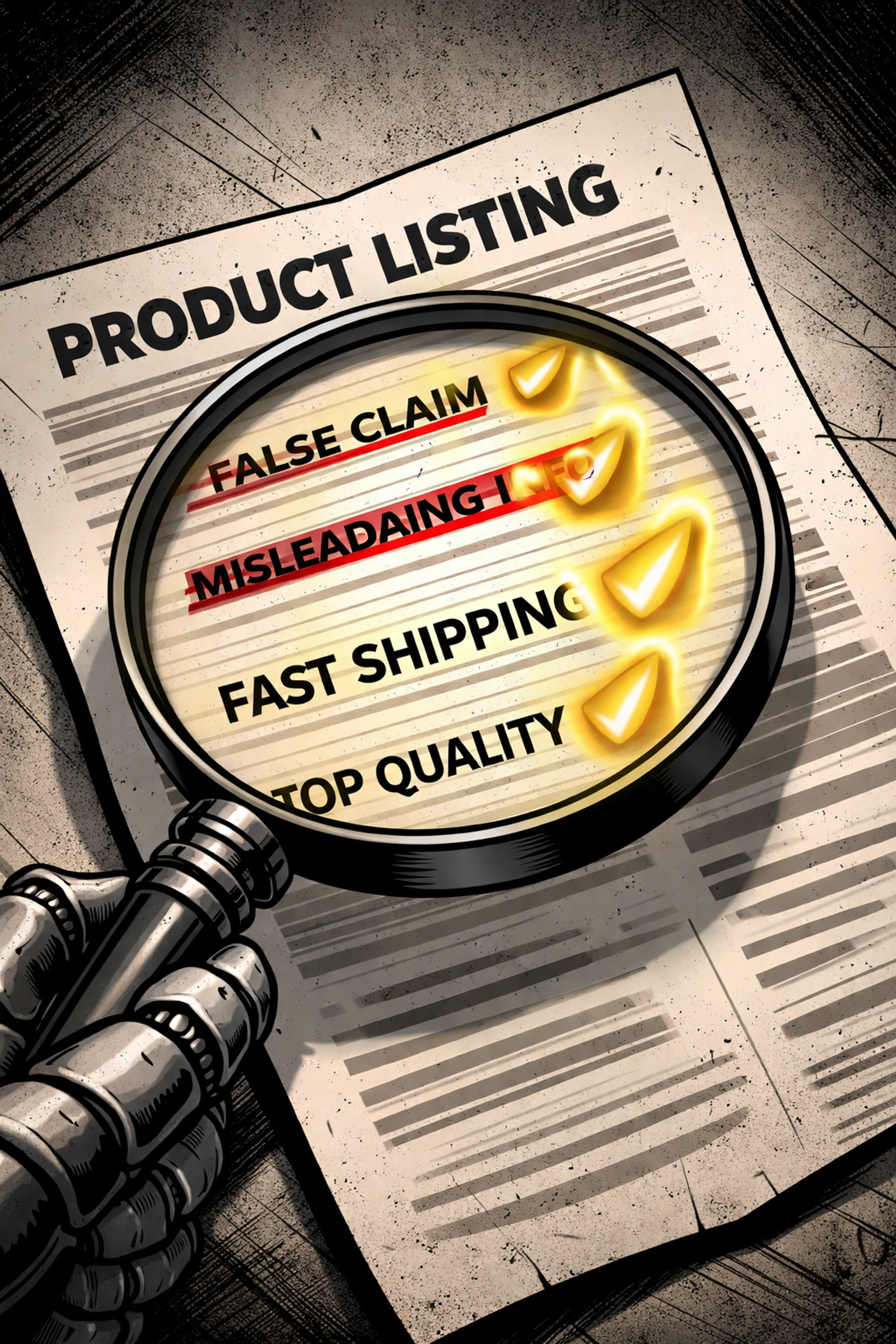
❌ Mistake #7: Using Prohibited Terms and Unverified Claims
This mistake can get you de-listed, suppressed, or worse: so pay attention.
Rufus has a factual verification requirement. It doesn't just read your claims; it checks whether Amazon can verify them. Claims like:
- "Best quality"
- "100% organic" (without certification)
- "#1 rated"
- "Clinically proven"
- "FDA approved" (when it's not)
…will trigger suppression if you can't back them up with documentation. And even subjective claims like "best-selling" or "top-rated" can cause problems if they're not verifiable.
✅ How to Fix It
Before publishing any listing copy:
- Review Amazon's prohibited terms list for your category
- Remove subjective superlatives ("best," "top," "greatest")
- Only make claims you can substantiate with documentation
- If you have certifications (organic, Non-GMO, etc.), make sure they're properly registered with Amazon
- Use specific, factual language instead of marketing fluff
Example transformation:
- ❌ "The best protein powder on Amazon"
- ✅ "25g protein per serving with complete amino acid profile"
One is unverifiable marketing speak. The other is a specific, factual claim Rufus can understand and trust.
🔄 Bonus: Stop Relying on 2023 Playbooks
Here's the uncomfortable truth: most sellers (and even some agencies) are still operating on standard procedures from two years ago. They haven't adapted to how Rufus interprets, ranks, and recommends content.
The landscape is evolving constantly. What worked six months ago might be obsolete today.
✅ How to Stay Current
- Conduct quarterly listing audits that specifically evaluate Rufus optimization
- Monitor Amazon's announcements for algorithm and AI updates
- Track customer search behavior changes in your category
- Test and iterate based on performance data, not assumptions
If you're running ads alongside your organic optimization, these elements need to work together. A well-optimized listing dramatically improves your advertising efficiency: which is why we recommend reading our breakdown of how the right advertising approach can triple your ROAS.
Wrapping Up: Your Rufus Optimization Checklist
Let's bring it all together. Here's your quick-reference checklist for Rufus-ready listings:
✅ Optimize for customer intent, not just search volume
✅ Build semantic depth with related terms and problem-solution connections
✅ Structure your listing cleanly with proper data architecture
✅ Write naturally: ditch the keyword stuffing
✅ Use the TFSD framework to avoid keyword duplication
✅ Complete all backend attributes and seed your Q&A strategically
✅ Eliminate prohibited terms and unverifiable claims
✅ Audit quarterly and stay current with algorithm changes
Amazon listing optimization in 2026 isn't about gaming an algorithm: it's about clearly communicating your product's value in a way that both AI and humans can understand and trust.
The brands that adapt to Rufus will dominate. The ones that don't? They'll keep wondering why their "optimized" listings aren't converting.
Need help getting your listings Rufus-ready? We'd love to hear what challenges you're facing. Drop a comment or reach out to our team at Marketplace Valet: we geek out on this stuff daily.
#AmazonSellers #AmazonFBA #ListingOptimization #Rufus #AmazonAI #Ecommerce #AmazonTips #BrandManagement #MarketplaceValet