

Hitting seven figures on Amazon is a major milestone. But here's the thing: the strategies that got you to $1M won't get you to $10M. The jump from mid-six to eight figures requires a completely different operational playbook, marketing infrastructure, and strategic mindset.
We've helped dozens of brands navigate this exact transition at Marketplace Valet, and we've learned that successful scaling isn't about working harder: it's about implementing the right framework at the right time. In this post, we'll break down the exact five-phase system we use to help Amazon brands 10x their revenue without burning out their teams or hemorrhaging margin.
Here's what you'll learn:
- The three operational shifts that must happen before you can scale
- Our proven framework for scaling from $1M to $10M in revenue
- How to build a team structure that supports eight-figure growth
- Advanced advertising strategies that maintain profitability at scale
- The critical metrics you need to monitor during rapid growth
Let's dive in!
The Reality Check: Why Most Brands Stall at $1M–$3M
Before we get into the framework, you need to understand why most Amazon brands hit a ceiling around the $2M–$3M mark.
The common scaling killers:
- Operational chaos – What worked manually at $50K/month breaks at $200K/month
- Marketing inefficiency – Bidding strategies that generated 3x ROAS suddenly deliver 1.5x ROAS at higher spend
- Inventory nightmares – Stock-outs and overstock situations become more frequent and more expensive
- Team burnout – Your scrappy startup team can't keep up with the volume
- Margin compression – Amazon's fee structures and increased advertising costs eat into profitability
The brands that break through? They recognize that scaling requires systematic transformation, not just increased effort.
Phase 1: Operational Foundation (Years 1-2 | $1M–$2.5M)
The Core Principle: Volume increases, but your operational framework must stay stable.
Before you can aggressively scale, you need infrastructure that won't collapse under growth pressure. Here's what that looks like:
Build Your Core Team Structure
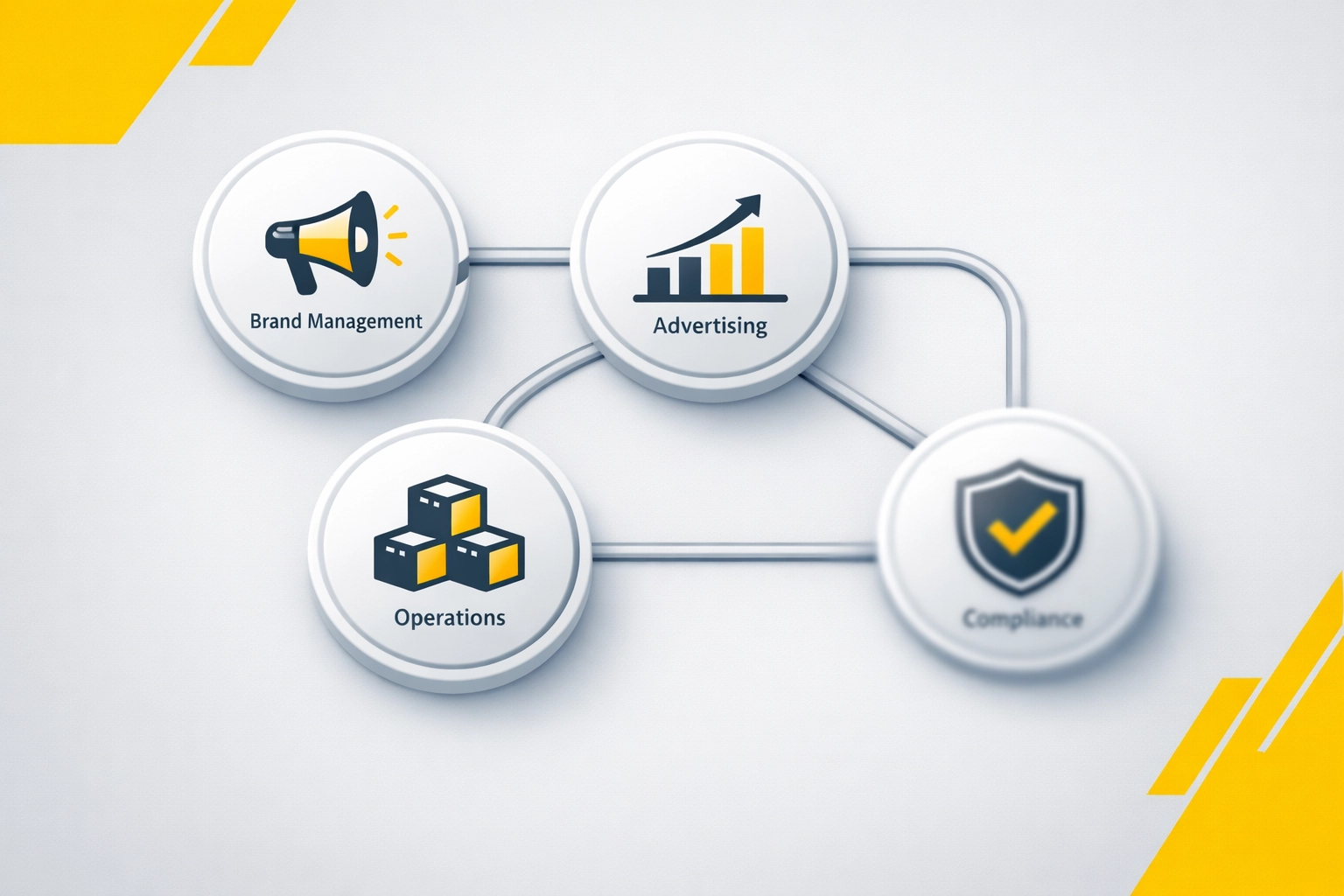
At this stage, you need clear ownership of four critical functions:
1. Brand Management
Your brand manager becomes the strategic quarterback. This person:
- Owns marketplace positioning and competitive analysis
- Monitors keyword performance and search trends
- Ensures all content (images, A+ modules, videos) aligns with brand objectives
- Coordinates between advertising, content, and operations teams
2. Amazon Advertising Management
Dedicated amazon ads management becomes non-negotiable at this level. Whether in-house or through an amazon advertising agency, this role must:
- Manage campaign architecture and bid optimization
- Analyze search term reports for expansion opportunities
- Balance ACoS targets across growth and profit campaigns
3. Operations & Inventory
Someone needs to own forecasting, FBA prep, and shipment coordination. Critical responsibilities include:
- Monitoring sell-through rates and adjusting replenishment schedules
- Managing inventory discrepancies
- Coordinating with suppliers to maintain stock levels during growth
4. Account Health & Compliance
This often-overlooked role handles:
- Policy compliance monitoring
- Amazon seller support escalation when issues arise
- Regular reimbursement audits for lost or damaged inventory
Decision Point: In-House vs. Agency
Many brands at this stage face a critical choice: build an in-house team or partner with an Amazon agency?
In-house advantages:
✅ Complete control over strategy and execution
✅ Deep brand knowledge
✅ No agency fees
Agency advantages:
✅ Specialized expertise across all Amazon functions
✅ Proven playbooks and tools
✅ Faster scaling without hiring headaches
✅ Cross-client insights and best practices
Our recommendation? A hybrid approach. Keep strategic brand direction in-house while leveraging amazon account management services for specialized functions like advanced advertising, catalog optimization, and compliance management.
Phase 2: Product Expansion & Portfolio Strategy ($2.5M–$4M)
The Core Principle: Strategic SKU expansion creates compounding growth.
Once your operational foundation is solid, it's time to expand your catalog intelligently.
The Product Expansion Framework
1. Analyze Your Top Performers
Pull data on your top 20% of SKUs by revenue. Look for:
- Common attributes (size, price point, use case)
- Shared customer demographics
- Keyword overlap and search behavior patterns
2. Identify Expansion Opportunities
Three proven expansion strategies:
- Variation Expansion – Add sizes, colors, bundles of proven winners
- Complementary Products – What do customers buy before/after your hero products?
- Premium Tier – Create higher-margin versions of bestsellers
3. Launch with Intentionality
Don't just throw products at the wall. Each launch needs:
- Pre-launch keyword research and competitor analysis
- Optimized listings from day one (title, bullets, A+, backend search terms)
- Coordinated advertising strategy with dedicated budget
- Review generation plan to build social proof quickly
Portfolio Balance Strategy
Your eight-figure portfolio needs three product tiers:
Hero Products (20% of SKUs, 50%+ of revenue)
- Premium pricing and margins
- Heavy advertising investment
- Full amazon listing optimization treatment
- Continuous improvement and defense
Growth Products (30% of SKUs, 30% of revenue)
- Moderate pricing and margins
- Strategic advertising to build momentum
- Regular optimization and testing
Catalog Depth (50% of SKUs, 20% of revenue)
- Lower advertising spend
- Organic traffic focus
- Strategic variations and bundles

Phase 3: Advanced Advertising Architecture ($4M–$6M)
The Core Principle: Sophisticated campaign structure enables profitable scaling.
This is where many brands hit a wall. The advertising strategies that worked at $2M become prohibitively expensive at $5M+. You need a complete restructure.
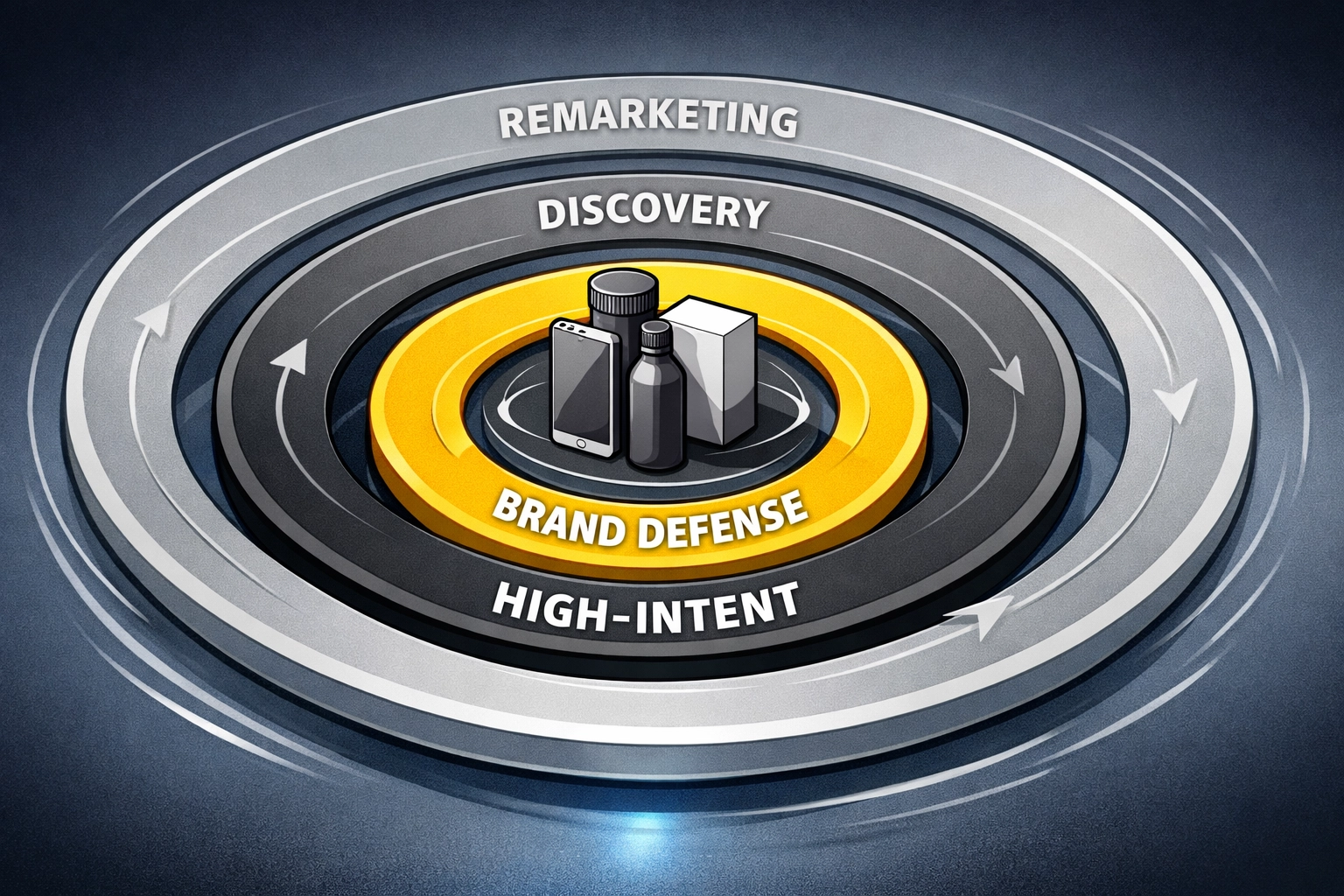
The Multi-Layer Campaign Strategy
Layer 1: Brand Defense (15-20% of ad budget)
- Exact match campaigns on your brand terms
- Low bids, high priority
- Goal: Prevent competitor conquest at minimal cost
Layer 2: High-Intent Conversion (40-50% of ad budget)
- Exact and phrase match on proven converters
- Product-specific and category keywords
- Target ACoS: 15-25% depending on margin
- Goal: Profitable conversions at scale
Layer 3: Discovery & Expansion (20-30% of ad budget)
- Broad match and auto campaigns
- ASIN targeting of competitor products
- Higher ACoS tolerance (35-45%)
- Goal: Find new customer segments and keywords
Layer 4: Remarketing & Upsell (10-15% of ad budget)
- Sponsored Display remarketing
- Cross-sell campaigns for complementary products
- Lowest ACoS campaigns (10-20%)
- Goal: Maximize customer lifetime value
The Search Term Mining System
This is the secret sauce that separates $10M brands from $2M brands.
Weekly process:
- Pull Search Term Report for all campaigns
- Sort by lowest ACoS or highest ROAS
- Identify top 20-30 performing search terms
- Increase bids by 15-30% in existing campaigns
- Add top performers to Exact Match campaigns with dedicated budget
- Incorporate best performers into listing content (title, bullets, A+, backend)
This creates a compounding optimization loop: better ads drive more sales, better rankings drive more organic traffic, better content improves conversion across all traffic sources.
Phase 4: Content Ecosystem & Brand Building ($6M–$8M)
The Core Principle: Premium brand experience commands premium pricing and loyalty.
At this stage, you're not just selling products: you're building a brand that customers actively seek out.
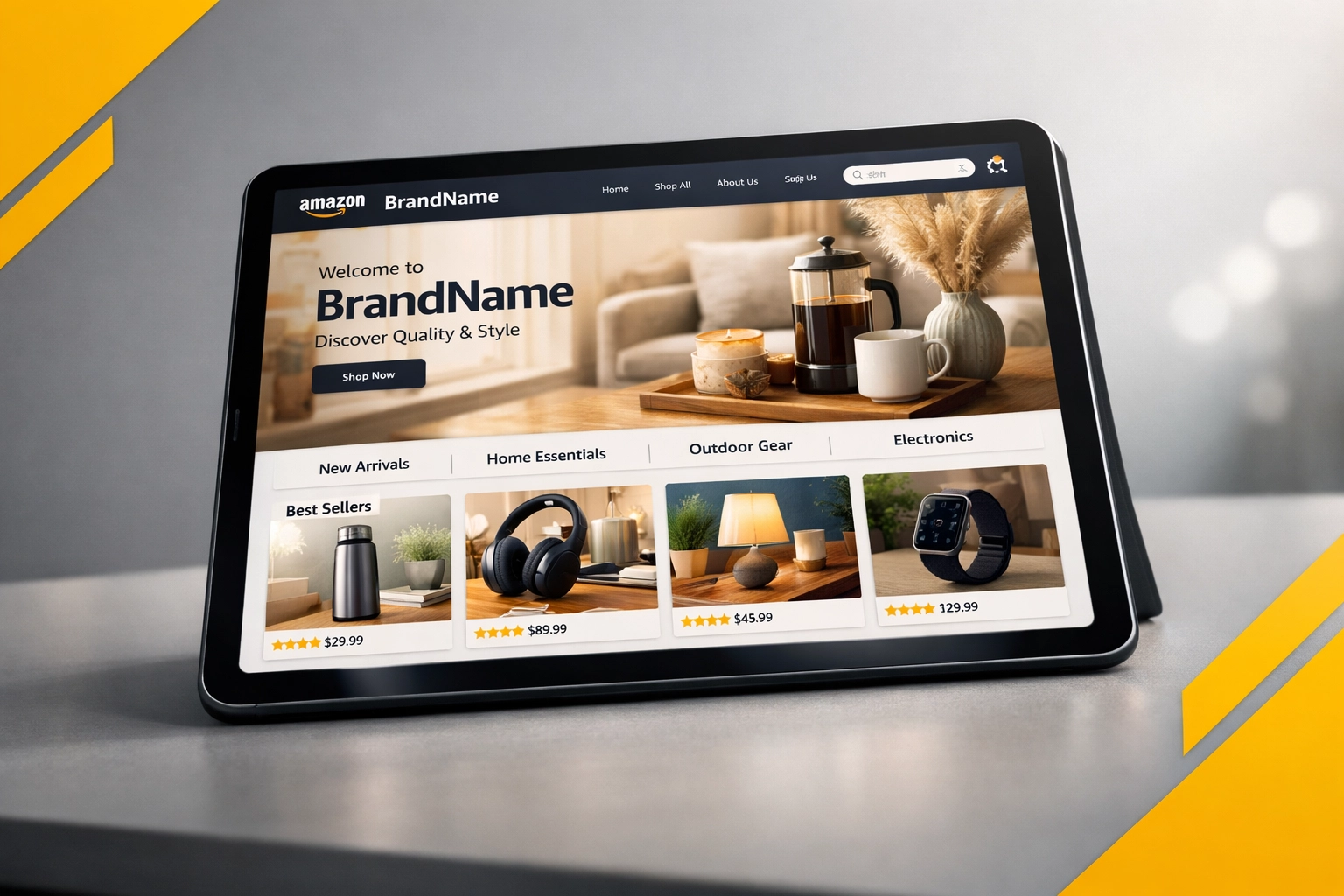
Amazon Brand Store Excellence
Your Brand Store becomes your owned real estate on Amazon. It should:
- Tell your brand story visually
- Organize products by use case, not just category
- Feature customer testimonials and user-generated content
- Include educational content that positions you as the category expert
- Drive customers to your bestsellers and new launches
Pro tip: Track Brand Store traffic sources through Amazon Attribution. If you're running off-platform marketing, this shows which channels drive the most engaged visitors.
A+ Content That Converts
Basic A+ Content isn't enough anymore. You need:
- Comparison modules showing your product vs. competitors
- Lifestyle imagery that demonstrates real use cases
- Educational content that answers pre-purchase questions
- Trust signals like certifications, awards, press mentions
- Video integration showing products in action
The goal? Increase conversion rate by 3-5% across your catalog. At $7M in revenue, a 4% conversion lift adds $280K annually.
Phase 5: Omnichannel Integration & Market Dominance ($8M–$10M+)
The Core Principle: Amazon success enables multi-channel expansion.
The final phase isn't just about Amazon anymore: it's about leveraging your Amazon dominance to build a truly sustainable eight-figure brand.
Off-Platform Traffic Integration
Smart brands at this level drive external traffic to Amazon:
Social Media Campaigns
- Instagram and TikTok influencer partnerships
- Facebook/Meta ads with Amazon Attribution tracking
- Pinterest shopping integration for visual products
Content Marketing
- SEO-optimized blog content with Amazon product links
- YouTube product reviews and how-to content
- Email marketing to warm lists
The tracking mechanism: Use Amazon Attribution to measure ROI from each external channel. This tells you exactly which off-platform marketing drives the most profitable Amazon sales.
Channel Expansion Strategy
Once you've mastered Amazon, use that momentum to expand:
Walmart Marketplace – Similar FBA-style infrastructure, less competition
Target Plus – Premium brand positioning, higher barriers to entry
Your Own DTC Site – Capture email, build brand equity, control margins
But here's the key: Amazon remains your growth engine. It provides the cash flow, customer insights, and operational infrastructure that funds expansion into other channels.
The Metrics Dashboard: What to Track at Each Stage
Growth without measurement is gambling. Here are the critical KPIs at each revenue stage:
$1M–$3M: Operational Metrics
- Inventory turnover rate (target: 6-8x annually)
- Stock-out frequency (target: <2% of days)
- ACoS by campaign type (branded vs. category)
- Conversion rate by top 20 products
$3M–$6M: Efficiency Metrics
- Customer Acquisition Cost (CAC)
- Lifetime Value (LTV) by customer cohort
- Organic vs. paid traffic ratio
- Profit margin by product tier
$6M–$10M: Strategic Metrics
- Market share in primary categories
- Brand search volume trends
- Off-platform traffic conversion rates
- Net Promoter Score (NPS)
Common Scaling Mistakes (And How to Avoid Them)
❌ Mistake #1: Scaling advertising too fast
Fix: Increase daily budgets no more than 20-30% per week. Monitor ACoS closely and pull back if efficiency degrades.
❌ Mistake #2: Ignoring account health during growth
Fix: Implement weekly account health monitoring and maintain relationships with Seller Support for faster issue resolution.
❌ Mistake #3: Launching too many products too quickly
Fix: Launch no more than 1-2 products per quarter. Give each launch proper support and budget.
❌ Mistake #4: Neglecting listing optimization
Fix: Refresh top-performing listings quarterly. Test new images, bullets, and A+ content continuously.
❌ Mistake #5: Treating all products equally
Fix: Implement the Hero/Growth/Depth portfolio strategy. Allocate resources proportionally to revenue potential.
The Build vs. Partner Decision
As you read this framework, you might be thinking: "This is a lot to manage."
You're right. It is.
That's why many eight-figure brands choose to partner with specialized amazon brand management teams rather than building everything in-house.
When an agency makes sense:
- You want to scale faster than your current team can support
- You lack in-house expertise in specific areas (advanced advertising, catalog optimization, compliance)
- Your team is maxed out on strategic priorities
- You want proven playbooks rather than learning through trial and error
When to keep it in-house:
- You have the budget to hire specialized talent
- You prefer complete control over execution
- You have the time to build systems and processes
- Your margins support a larger team structure
At Marketplace Valet, we often work in hybrid models: handling specialized functions like advertising management, listing optimization, and compliance while your team maintains strategic brand direction.
Your 90-Day Action Plan
Ready to start scaling? Here's your immediate roadmap:
Days 1-30: Foundation Assessment
- Audit your current team structure and identify gaps
- Review operational processes for bottlenecks
- Analyze your top 20% of products for expansion opportunities
- Assess current advertising performance by campaign type
Days 31-60: Strategic Planning
- Build your product expansion roadmap for the next 12 months
- Restructure advertising campaigns using the multi-layer framework
- Optimize listings for your top 10 revenue-driving products
- Implement weekly performance tracking dashboard
Days 61-90: Execution & Optimization
- Launch first product expansion or variation
- Begin search term mining process
- Refresh A+ Content for hero products
- Test off-platform traffic sources with Attribution tracking
Final Thoughts: It's a Marathon, Not a Sprint
Scaling from $1M to $10M typically takes 2-4 years. That might feel slow, but sustainable growth beats explosive (then implosive) growth every time.
The framework we've outlined isn't sexy. It's systematic. It's methodical. It requires patience, discipline, and consistent execution.
But it works.
We've seen it work for health & wellness brands, home goods companies, electronics sellers, and everything in between. The specific tactics vary by category, but the strategic framework remains constant.
Key takeaways:
- Build operational foundation before aggressive scaling
- Expand product catalog strategically, not randomly
- Restructure advertising for profitability at scale
- Invest in brand building through content and experience
- Leverage Amazon success for omnichannel expansion
- Track the right metrics at each growth stage
The jump to eight figures is challenging, but it's absolutely achievable with the right framework, the right team (in-house or partnered), and the right mindset.
What stage are you at in your scaling journey? What's your biggest current challenge? Drop a comment below: we'd love to hear where you're at and help point you in the right direction.
Ready to accelerate your Amazon growth? At Marketplace Valet, we specialize in helping ambitious brands scale profitably on Amazon. Whether you need full-service account management or specialized support in advertising, optimization, or operations, we've got you covered. Let's talk about your growth goals.