
How Integrating Inventory Health and Ad Spend Drives Total Channel Profitability
Integrating inventory health and ad spend drives total channel profitability on Amazon. Every advertising dollar must be backed by available, correctly positioned product — and measured against the full revenue picture, not just campaign-level efficiency.
Most brands run two dashboards that never talk to each other. The advertising team watches ACoS. The operations team watches stock levels. Neither is watching the metric that tells you whether the channel is actually healthy.
That metric is TACoS — Total Advertising Cost of Sale measured against total channel revenue, not just ad-attributed revenue. TACoS is the fuel gauge. ACoS is the speedometer. A brand that watches only the speedometer and ignores the fuel gauge will run out of road.
The integration failure is expensive. Products with poor inventory health suffer a 30% organic sales drop that can persist for up to 30 days after replenishment. The ad spend that built that demand is gone. The ranking lost during that window gets rebuilt from zero. Consumer goods companies lose an estimated $22 billion in sales annually due to out-of-stock events that disrupt active marketing pipelines.
Overstocking to prevent that scenario is not a solution. Amazon's aged inventory surcharges produce a 400% storage cost increase for goods sitting over 181 days. Brands that overbuy to protect ad continuity often trade a ranking risk for a cash flow penalty.
The correct framework treats advertising and inventory as a single operating system. When inventory is thinning and organic velocity is about to drop, TACoS rises — and that signal must trigger a bid pullback, not a bid increase. When inventory is healthy and organic momentum is building, a falling TACoS is the signal to invest more aggressively.
Brands that adopt this integrated approach see a 15% to 22% improvement in overall contribution margin compared to brands that optimize ACoS in isolation. That gap is not a rounding error. It is the difference between a channel that grows and one that quietly erodes — until both gauges finally tell the same story.
Last Updated: June 12, 2026
- • Why ACoS Alone Is the Wrong Gauge for Channel Health
- • What Happens to Your Amazon Ranking When Inventory Runs Out
- • How TACoS Optimization Bridges Advertising and Inventory Decisions
- • Building the Integrated Operating Cadence
-
• Frequently Asked Questions
- • How does an out-of-stock event permanently suppress an Amazon ASIN's organic ranking even after inventory is replenished?
- • Why does optimizing for a low ACoS in isolation lead to inventory stagnation and margin erosion?
- • How should a brand restructure its weekly operating cadence to sync advertising bids with warehouse lead times?
- • What are the operational challenges of moving from siloed agency reporting to a full-channel P&L management model?
- • Why will aggressively funding Amazon ad campaigns fail if listing buy boxes are compromised by unauthorized sellers?
- • Both Gauges. One Dashboard.
Why ACoS Alone Is the Wrong Gauge for Channel Health
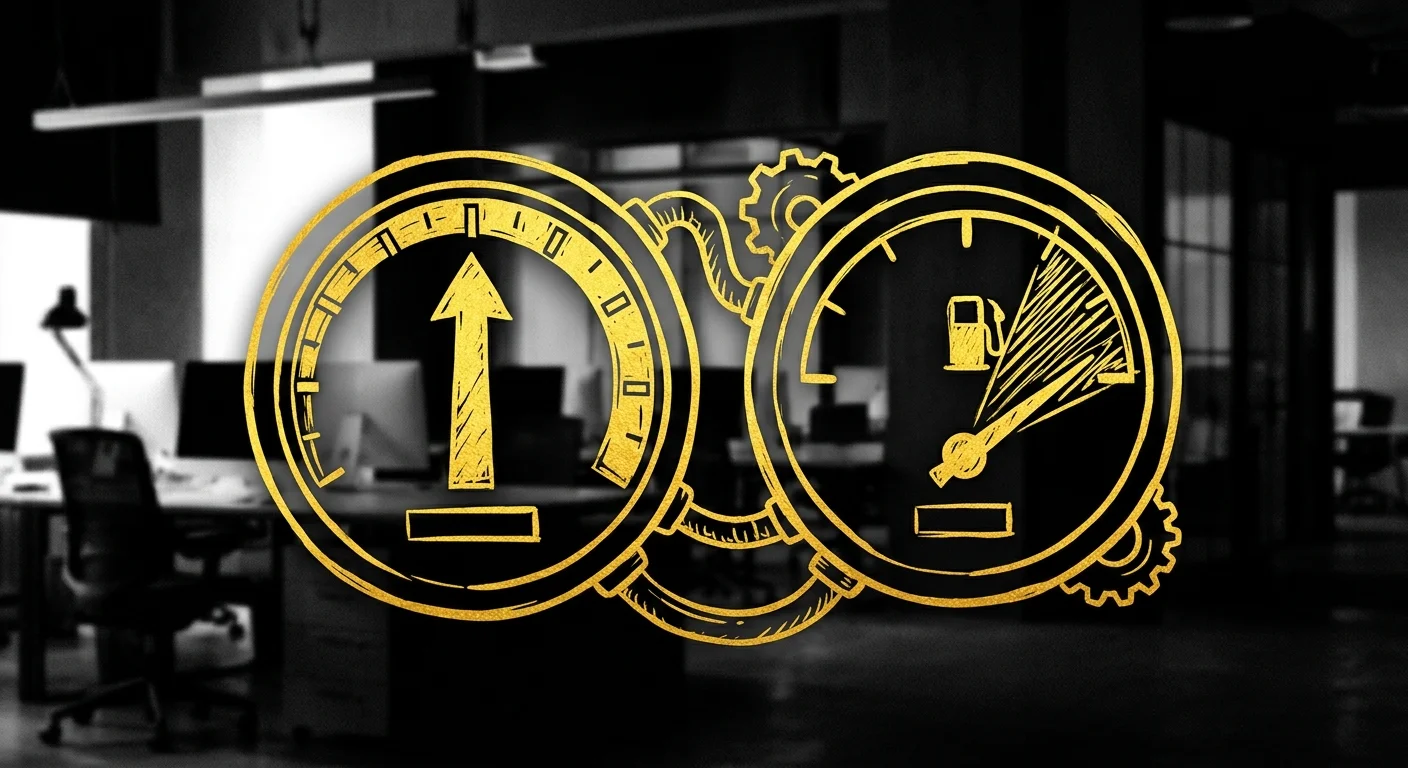
ACoS is a speedometer. It tells you how fast your ad budget is moving relative to ad-attributed revenue. It cannot tell you whether the channel is actually healthy. It never could.
Most brands watch the speedometer and ignore the fuel gauge. ACoS is visible, reportable, and easy to defend in a weekly review. TACoS requires looking at the full revenue picture — organic and paid together. That's a harder conversation. So teams measured on campaign efficiency keep optimizing the metric that makes them look good, not the one that tells the truth.
Here's the broken assumption most brands operate under: a low ACoS means the channel is performing. It doesn't. A low ACoS on a stagnant or shrinking organic base means the brand is spending efficiently on a channel that's quietly losing ground. ACoS is an input metric. TACoS is the outcome metric. That distinction is where what full channel management actually demands starts to become clear.
Why the ACoS-Only Model Fails at the P&L Level
Here's how it breaks. ACoS measures ad spend against ad-attributed revenue only. Organic revenue isn't in that number. So when a brand runs aggressive campaigns and drives organic ranking higher, ACoS rises — ad spend increases — while TACoS falls. Total channel revenue is growing faster than ad spend. The channel is getting stronger. ACoS says it's getting worse.
An agency reporting a rising ACoS in that scenario looks like it's failing. The brand that pulls budget — or fires the agency — at that moment just killed the organic momentum it paid to build. That's what optimizing the wrong gauge actually costs.
But the reverse is just as damaging. A brand achieves a low ACoS by bidding conservatively — pulling back spend, avoiding competitive keywords, reducing campaign pressure. ACoS improves. TACoS holds steady. And the organic rank that was within reach never gets captured. The channel looks fine on paper. Opportunity compounds against it every week.
Brands that move beyond ACoS and optimize for TACoS instead see a 15% to 22% improvement in overall contribution margin. That figure comes from 400+ audited accounts — not a model, not a projection. It's what happens when ad spend decisions are made against the full channel revenue picture rather than campaign-level efficiency scores.
Consumer goods companies lose an estimated $22 billion in sales annually to out-of-stock events that destroy active marketing pipelines. Nearly every one of those events was invisible to a team watching only ACoS.
Amazon Advertising Management requires a different lens than campaign management. TACoS is that lens.
| Metric | What It Measures | What It Misses | P&L Impact When Optimized in Isolation |
|---|---|---|---|
| ACoS (Ad Efficiency Gauge) | Ad spend as a percentage of ad-attributed revenue only | Organic revenue, total channel velocity, inventory health, and contribution margin after fees | Appears to improve when ad spend is cut — masking organic rank stagnation and channel decay |
| TACoS (Channel Health Gauge) | Total ad spend as a percentage of all channel revenue — organic and paid combined | Nothing at the channel level; surface-level campaign breakdowns require ACoS as a supporting input | Improves when organic velocity grows faster than ad spend — the signal of a compounding, healthy channel |
| ACoS in isolation during inventory decline | Campaign-level efficiency while stock is thinning | Falling organic revenue base that inflates TACoS and signals impending rank collapse | Budget continues flowing into campaigns that will be disrupted by out-of-stock — ranking loss compounds after the fact |
| ACoS in isolation during organic growth | Rising ad spend relative to ad-attributed revenue | TACoS falling — the real indicator that total channel revenue is outpacing spend | Brands pull budget or fire the agency at the exact moment organic momentum was building — growth abandoned at its peak |
| Contribution margin | Revenue remaining after cost of goods, Amazon fees, and ad spend are subtracted | Not captured by either ACoS or TACoS alone — requires full P&L integration across inventory cost and ad investment | Low ACoS with high aged-inventory surcharges and poor sell-through erases margin gains — the channel looks efficient while the P&L deteriorates |
What Happens to Your Amazon Ranking When Inventory Runs Out

Running out of inventory isn't a fulfillment problem. It's an algorithmic event. And the algorithm doesn't forgive it quickly.
Amazon's ranking system runs on sales velocity. When a product goes out of stock, velocity drops to zero. The algorithm doesn't wait for context — it reads zero sales as a relevance signal and adjusts rank. When inventory returns, the brand doesn't resume from where it left off. It starts over from a lower position than it held before the listing went dark.
Products with poor inventory health suffer an average organic sales drop of 30% that can persist for up to 30 days after replenishment. That's a month of suppressed organic revenue. Every ad dollar spent during that window is working against a ranking deficit the brand paid to create.
The Organic Rank Suppression Cycle
Here's how the cycle works. An out-of-stock event kills sales velocity. Rank drops. Inventory comes back — but the listing re-enters at a lower organic position than it held before. To recover, the brand has to advertise more aggressively. It's spending money to buy back visibility it already earned.
Ranking gains don't hold while the listing is dark. The advertising momentum you built before the stockout — gone. There's no credit carried forward. You start from scratch and pay again for ground you already bought.
That's the actual cost of a stockout — not the sales missed during the window, but the compounded ad spend required to rebuild the organic position the brand surrendered. For any brand running active advertising, that cost makes proactive account health monitoring a P&L decision, not an operational nice-to-have.
The Overstocking Trap: When Playing It Safe Backfires
So brands overbuy. They keep excess inventory in FBA at all times and never let the listing go dark. It sounds like the disciplined answer. It isn't.
Amazon's aged inventory surcharges can increase storage costs by up to 400% for goods sitting over 181 days. A brand that overstocks to protect ad continuity doesn't escape a financial penalty — it trades a ranking risk for a cash flow penalty. The fuel gauge still reads danger. The number just moved from the organic column to the cost-of-goods column.
The overstocking trap and the out-of-stock cycle share the same root cause. Both are symptoms of managing inventory and advertising as separate decisions. When those two functions don't communicate in real time, the brand is always reacting — either absorbing the damage of a stockout or carrying the compounding cost of too much stock. Neither outcome is a strategy. Both are failures of integration.
| Inventory Event | Immediate Amazon Algorithm Response | Duration of Ranking Impact | Recovery Cost (Ad Spend Required) |
|---|---|---|---|
| Product goes out of stock | Sales velocity drops to zero; algorithm interprets absence of sales as reduced relevance | Up to 30 days post-replenishment | Increased ad spend required to rebuild organic position from a lower starting rank |
| Frequent out-of-stock events (repeat occurrences) | Compounding ranking suppression; algorithm deprioritizes listing with chronic velocity gaps | 30% average organic sales drop per event; impact compounds with each recurrence | Significantly higher ad spend required per recovery cycle as baseline rank deteriorates |
| Overstocking to prevent stockouts (goods held over 181 days) | No ranking impact; algorithm rewards continuous availability — but storage cost penalty activates | Aged inventory surcharges apply beyond 181-day threshold | Up to 400% increase in storage costs offsets margin recovered from ranking stability |
How TACoS Optimization Bridges Advertising and Inventory Decisions
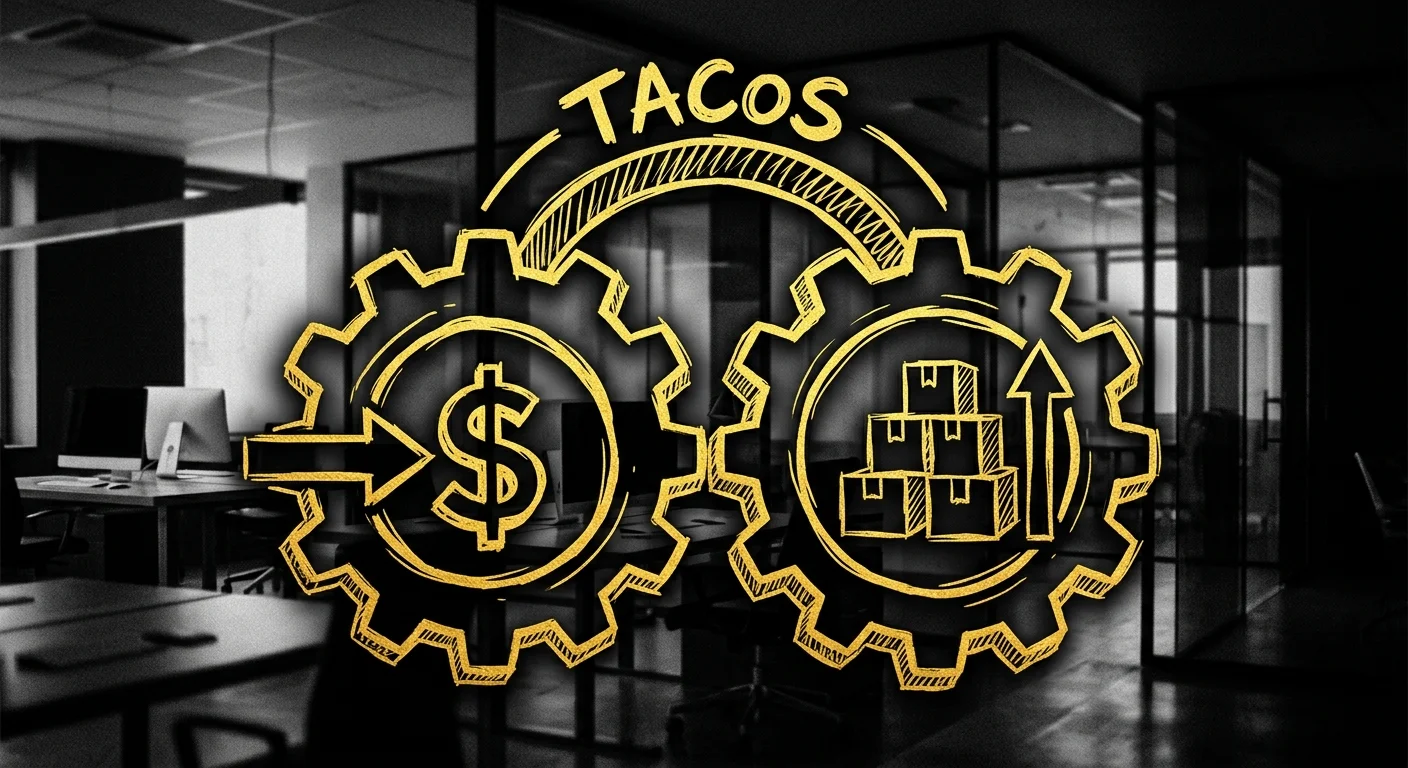
TACoS is the metric that finally makes advertising and inventory speak the same language.
It measures total ad spend against total channel revenue — organic and paid together. Not just what campaigns claimed. Everything the channel actually returned.
That combined view makes the relationship between what you're spending and what you're earning impossible to hide.
Both failure modes covered above — the out-of-stock rank collapse and the aged inventory surcharge — are completely invisible to ACoS.
ACoS only sees ad-attributed revenue. It has no mechanism to register a ranking cliff, a storage fee avalanche, or the organic momentum that quietly bled out while campaigns ran at full spend.
TACoS sees all of it.
Brands that shift their primary optimization target from ACoS to TACoS see a 15% to 22% improvement in overall contribution margin.
That result comes from 400+ audited accounts. Not a model. Not a projection.
It's what happens when both gauges on the dashboard are finally read together.
Reading TACoS as an Inventory Signal, Not Just an Ad Metric
TACoS is not a broader version of ACoS. It is a different kind of signal entirely.
ACoS tells you how efficiently your campaigns are converting spend into attributed sales. That's an input metric.
TACoS tells you whether the channel itself is growing, holding, or eroding — regardless of what the campaigns report. That's an outcome metric.
When inventory runs lean and organic velocity starts slipping, TACoS rises. That's not a campaign problem. The organic revenue base anchoring your TACoS denominator is shrinking — which means ad spend is now carrying a higher share of total revenue than it should. The channel is getting more dependent on paid traffic at exactly the moment inventory risk is highest.
The correct response is a bid pullback. Not a budget increase. Not a campaign push. A pullback — because you're defending a position with spend that inventory cannot sustain.
That decision has to happen fast. It has to be made by someone reading the signal correctly and acting before the stockout lands. Understanding how this model operates week to week inside a real agency operating cadence is what separates brands that catch the warning from brands that read the post-mortem.
Gartner research shows that 70% of retail supply chain organizations name demand forecasting and promotion sync as their top operational friction points.
That's the exact gap TACoS closes — when it's used correctly.
When one metric governs both the ad budget and the reorder trigger, those decisions stop happening in separate rooms by separate teams. The signal travels across both functions at the same time. That's what integration actually looks like — not a shared dashboard. A shared operating variable that forces alignment by design.
This Framework Is Not for Every Brand
This framework requires a counterpart on the brand side who can act on inventory signals in real time.
If your procurement runs on a quarterly cycle with no visibility into advertising velocity, TACoS will surface the warning. But no one will be positioned to respond.
The metric doesn't fix the organizational gap. It makes the gap impossible to ignore.
McKinsey's research on integrated business planning shows that organizations aligning inventory management with demand signals cut holding costs by up to 15% — while improving service levels at the same time.
But that result depends on having the organizational structure to act on the data. The metric alone doesn't produce the outcome.
A rising TACoS is a decision prompt — not a self-executing system. If the team reading the number can't move on it within hours, the signal expired before anyone acted on it.
If your brand requires final approval on every bid adjustment before it goes live, this integration model will not function at the speed the channel requires.
TACoS surfaces time-sensitive signals. A bid pullback that waits three days for an approval chain is not a pullback. It's a post-mortem.
Brands that treat their Amazon operator as a button-pusher waiting for instructions will not see the contribution margin gains this framework produces. The 15% to 22% improvement belongs to brands that buy into the operating system — not brands that supervise it from the outside.
| TACoS Trend | What It Signals About Inventory Health | Recommended Bid Adjustment | P&L Interpretation |
|---|---|---|---|
| TACoS rising while ACoS holds steady | Organic revenue is declining — the channel is becoming more dependent on paid traffic to sustain total revenue | Pull back bids on competitive keywords; protect spend only on high-converting, high-margin ASINs | Contribution margin is eroding; ad spend is subsidizing a shrinking organic base rather than compounding it |
| TACoS falling while ACoS holds steady or rises slightly | Organic velocity is growing — the channel is building momentum independent of ad spend | Increase bids strategically to capture additional organic ranking while inventory levels support the velocity | Contribution margin is expanding; paid spend is amplifying organic growth, not replacing it |
| TACoS and ACoS both rising simultaneously | Inventory levels are likely thinning; organic rank may be at risk; ad spend is increasing without a corresponding revenue lift | Trigger Inventory Signal Detection review immediately; pause spend expansion until reorder status is confirmed | High-risk margin position — spend is accelerating into a potential stockout event that will wipe the organic gains |
| TACoS and ACoS both falling simultaneously | Inventory is healthy and organic rank is compounding; the channel is operating efficiently across both paid and organic dimensions | Maintain current bid structure; evaluate whether additional investment in new keywords or ASINs is supported by inventory | Strongest margin position — organic lift is reducing the ad cost required per revenue dollar across the full channel |
| TACoS stable but ACoS spiking | A campaign-level inefficiency is present, but total channel revenue is holding — likely an isolated keyword or targeting issue, not a channel-level problem | Run Bid Adjustment Gate on the specific campaign or match type driving the ACoS spike; do not pull back channel-wide | Margin is temporarily pressured at the campaign level; total channel health is intact — surgical fix required, not a broad retreat |
| TACoS spiking but ACoS improving | Organic revenue is collapsing while ad efficiency improves — a classic signal of post-stockout rank suppression with campaigns still running | Reduce overall ad spend immediately; prioritize TACoS Recalibration before rebuilding campaign investment | The channel is in recovery mode; spending into a suppressed organic rank compounds the loss — capital preservation takes priority over visibility |
Building the Integrated Operating Cadence

This isn't a quarterly strategy review.
It's a weekly operating rhythm. And it only works when the same team reads both gauges — inventory and ad spend — on the same cadence, at the same time.
Gartner supply chain integration research shows 70% of retail supply chain organizations name demand forecasting and promotion sync as their top operational friction points.
That's not a data problem. It's a calendar problem. One team watches inventory on its own cadence. Another watches campaigns on theirs. They share a channel but never the same conversation.
The integrated operating cadence fixes that by force. Inventory signals and bid decisions get reviewed together — same day, same meeting, same TACoS reading in front of the same operator.
Here's the structural reason the outcomes differ.
An agency optimizes what it owns. Own the campaigns, optimize the campaigns. The inventory decision happens somewhere else, on someone else's timeline, with no view into what the campaigns are signaling.
An operator owns the whole system. The bid decision and the reorder decision come from the same hand, reading the same TACoS number — which is exactly what separates channel operators from campaign managers.
The Weekly Sync: Aligning Bids with Lead Times
The weekly sync runs in three phases.
Phase 1 — Inventory Signal Detection — reads current stock levels against projected sell-through velocity. Phase 2 — Bid Adjustment Gate — cross-references that inventory signal against live TACoS data before any bid change goes live. Phase 3 — TACoS Recalibration — resets the contribution margin target based on what both readings show.
No phase is optional. Skip one and this is no longer an integrated system. It's just three separate decisions wearing the same label.
Here's what it looks like when the numbers are real.
Inventory Signal Detection surfaces a 14-day lead time. Current stock covers 18 days of sell-through. That's a six-day buffer — not a safe one. The Bid Adjustment Gate triggers a spend reduction. Not a pause. A calibrated pullback designed to slow sales velocity just enough to avoid a stockout without killing the channel's momentum.
TACoS Recalibration then resets the margin target against the adjusted organic revenue expectation — not last week's benchmark, which no longer reflects what the channel is actually doing.
McKinsey insight reports on operations confirm that organizations aligning inventory management with real-time demand signals cut holding costs by up to 15%. This cadence is how that alignment happens — not in a planning deck, but in a weekly operating decision.
Brands that run this weekly sync consistently are the ones capturing the 15% to 22% contribution margin improvement documented across 400+ audited accounts at Marketplace Valet.
That number isn't theoretical. It's what happens when the bid decision and the reorder decision come from the same operator, reading the same signal, at the same cadence every week.
Both gauges finally tell the same story. ACoS stops reporting on a channel TACoS no longer recognizes.
| Operating Phase | Inputs Required | Decision Made | Metric Checked |
|---|---|---|---|
| Phase 1 — Inventory Signal Detection | Current stock levels, projected sell-through velocity, supplier lead times | Whether inventory position can sustain current sales velocity for the next replenishment cycle | Days of cover vs. lead time gap |
| Phase 2 — Bid Adjustment Gate | Live TACoS (Channel Health Gauge) reading, inventory signal output from Phase 1, current organic revenue share | Whether to reduce, hold, or increase ad spend based on the inventory runway available | TACoS (Channel Health Gauge) vs. contribution margin target |
| Phase 3 — TACoS Recalibration | Post-adjustment TACoS (Channel Health Gauge) trend, updated organic velocity projection, revised cost-of-goods position | Reset the contribution margin target to reflect the adjusted spend level and expected organic revenue | TACoS (Channel Health Gauge) delta week-over-week |
Frequently Asked Questions
Now comes the part where brands get honest with themselves.
Below are the questions that surface in every account audit — the ones that decide whether this integration model actually applies to your channel.
Don't skim these. The brands that skip this part are the ones who find out the hard way.
How does an out-of-stock event permanently suppress an Amazon ASIN's organic ranking even after inventory is replenished?
An out-of-stock event doesn't pause the algorithm. It sends a signal — and that signal says this listing can't reliably fulfill demand.
Amazon adjusts rank accordingly. And when inventory returns, the rank doesn't follow automatically. Products with frequent out-of-stock events suffer an average organic sales drop of 30% that can persist for up to 30 days post-replenishment. The keyword momentum, the conversion history, the organic impressions lost during that window — none of it restores the day stock arrives. It rebuilds slowly, and only with advertising spend that costs more than the original stockout appeared to.
That's why TACoS rises after a stockout even when campaigns resume at full spend. The organic revenue base that anchors the denominator has collapsed. Paid traffic is carrying the channel alone. ACoS never shows that. It shows efficient spend against diminished impressions — and calls it a win.
Why does optimizing for a low ACoS in isolation lead to inventory stagnation and margin erosion?
A low ACoS on a stagnant channel isn't a win. It means ad spend is converting efficiently against impressions that are already declining. The metric looks healthy. The P&L doesn't.
Here's the cycle. A brand worried about spend cuts bids to lower ACoS. Lower bids reduce visibility. Reduced visibility lowers sales velocity. The algorithm reads lower velocity as lower relevance and drops the listing further. The brand cuts again to maintain ACoS. The channel quietly shrinks with every iteration.
Brands that shift their primary optimization target to TACoS see a 15% to 22% improvement in overall contribution margin. That improvement happens because TACoS forces the brand to look at total channel revenue — not just what campaigns are directly attributing. When total revenue is growing and ACoS is rising slightly, that's organic momentum building. Cutting spend at that moment destroys exactly what the campaigns are generating.
How should a brand restructure its weekly operating cadence to sync advertising bids with warehouse lead times?
One rule first: no bid decision goes live before an inventory check. That's the structural change. Everything else follows.
The three-phase weekly rhythm makes that rule operational. Inventory Signal Detection reads current stock levels against projected sell-through velocity. The Bid Adjustment Gate cross-references that reading against live TACoS data before any bid change is approved. TACoS Recalibration resets the contribution margin target based on what both signals show together.
The calibration point that matters most is warehouse lead time. If current stock covers fewer days of sell-through than lead time requires to replenish, advertising velocity comes down. If stock holds a comfortable buffer, campaigns hold or scale. That decision gets made on a schedule — not reactively after a stockout has already cost the listing its ranking. Amazon Advertising Management is where this integration is built and executed — not bolted on after the fact.
What are the operational challenges of moving from siloed agency reporting to a full-channel P&L management model?
The hardest challenge is organizational, not technical. Siloed agency reporting produces two separate conversations — one about campaign performance, one about inventory. Moving to a full-channel P&L model collapses those into one. Brands that have run them separately for years often discover they don't have an internal counterpart positioned to receive integrated reporting.
The second challenge is accountability structure. When an agency reports on ACoS, the brand still owns the inventory decision. When an operator manages TACoS, the inventory signal and the bid decision are the same conversation. That's a fundamentally different relationship. Brands that require final approval on every bid adjustment before it goes live will experience that difference as friction — not integration.
The third challenge is data latency. Consumer goods companies lose an estimated $22 billion in sales annually due to out-of-stock events that disrupt active marketing pipelines. That figure exists because most brands receive inventory and advertising data on different schedules from different vendors. The integrated model is only as fast as the slowest data feed — which is why the operating cadence must be weekly, not monthly, and why proactive account health monitoring is a structural requirement of the model, not an optional add-on.
Why will aggressively funding Amazon ad campaigns fail if listing buy boxes are compromised by unauthorized sellers?
Ad spend amplifies what's already on the listing. If an unauthorized seller has suppressed the buy box, campaigns are driving traffic to a listing where the brand doesn't control the conversion. The ad spend is real. The revenue goes somewhere else.
This is a channel defense failure — not an advertising failure. But it shows up in the advertising data as poor ROAS and rising TACoS, because total channel revenue is eroding while ad spend holds steady. Brands optimizing only ACoS will diagnose this as a campaign problem and adjust bids. The bids aren't the problem. The listing integrity is.
Unauthorized sellers don't just capture the immediate sale. They train the customer to expect the lower price. That erosion compounds. When the brand eventually reclaims the buy box, it often does so at a margin already damaged by the unauthorized pricing period. Funding aggressive campaigns into a compromised listing accelerates the damage — it drives more traffic into a conversion environment the brand doesn't control. The correct sequence is always channel defense first, then campaign scale.
Both Gauges. One Dashboard.
The dashboard metaphor was never decoration. It was the diagnosis.
A brand managing ACoS without TACoS is watching the speedometer while the fuel gauge drops. The speed looks fine. The channel is running out of road.
When inventory health and ad spend are reviewed together — adjusted together, measured against the same P&L — both gauges tell the same story.
ACoS stops reporting on a channel TACoS doesn't recognize. The three-phase weekly rhythm — Inventory Signal Detection, Bid Adjustment Gate, TACoS Recalibration — is what keeps those two readings in sync.
That's not a reporting improvement. That's TACoS Optimization executed as Institutional Discipline — applied to a channel most brands are still managing in two separate rooms.
Marketplace Valet was built to run this system. Not to report on it.
The 20+ years of operator experience behind this methodology isn't a credential we put on a slide. It's the reason we know what an Amazon channel actually costs when both signals are ignored — and what it compounds into when they're finally managed as one.
Brands capturing real contribution margin growth on Amazon stopped treating inventory and advertising as separate decisions. When they run together, both gauges tell the same story. That's the only way the channel works.
The failure modes in this article aren't hypothetical. They're running right now in accounts that look fine on the surface — until someone checks both gauges at once. Your account is where you start. Not case studies. Not benchmarks. Your inventory data, your TACoS trajectory, your current buy box exposure. That's what a free Amazon account audit actually surfaces — a 15–20 page review of your specific channel, built by operators who've seen what it costs when these systems run out of sync.