

You're stuck in neutral. Your Amazon sales are decent, but you know there's another level waiting, and watching competitors blow past you while you're drowning in daily fires is frustrating as hell.
Here's the truth: Scaling on Amazon isn't about working harder. It's about implementing the right operational framework at the right time. The top brands don't stumble into seven-figure growth, they follow a proven 90-day playbook that transforms chaos into systems.
In this guide, we'll break down the exact 5-step process that elite Amazon sellers use to scale operations without burning out their teams or hemorrhaging cash. You'll learn:
- How to establish brand infrastructure that protects your margins and reputation
- The precise timeline for optimizing listings that convert browsers into buyers
- When to automate (and when not to) your advertising and pricing
- The review acquisition strategy that builds unstoppable social proof
- How to transition from hustle mode to systematic growth that scales
Let's dive in.
Why 90 Days? The Science Behind the Timeline
Three months isn't arbitrary. It's the goldilocks zone for Amazon operations, long enough to gather meaningful data, short enough to maintain momentum and focus.
Amazon's algorithm rewards consistent performance. The first 30 days establish your baseline metrics. Days 31-60 are when you optimize based on real data. Days 61-90? That's when you scale what's working and systematically eliminate what isn't.
Most sellers make one critical mistake: they try to do everything at once, or worse, they wait for "perfect conditions" that never arrive. This playbook gives you a sequenced approach that builds on itself.
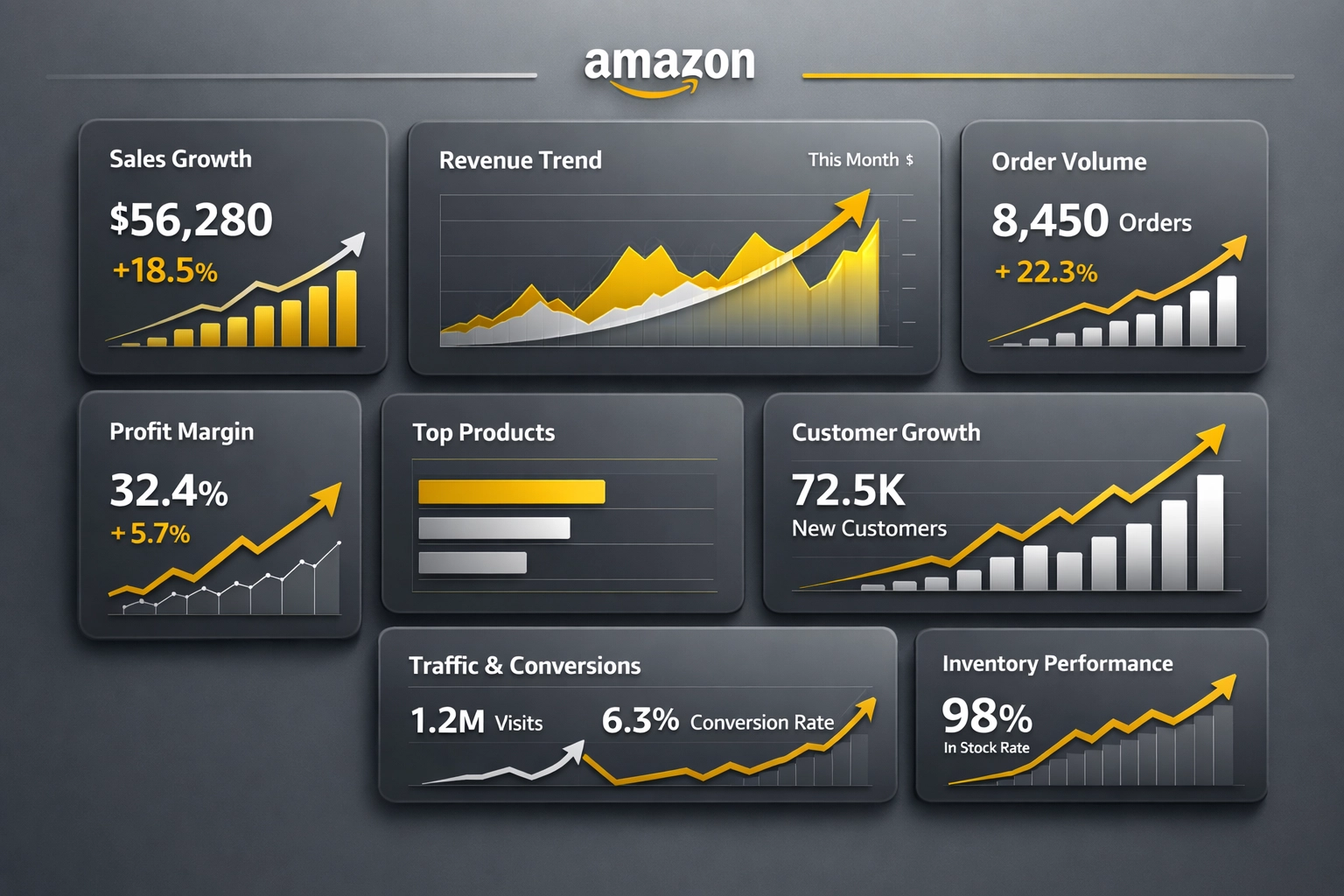
Step 1: Establish Your Brand Foundation (Days 1-15)
Start here or struggle forever. Without proper brand infrastructure, you're building on quicksand.
Brand Registry: Your First Priority
Enroll in Amazon Brand Registry immediately. Not next week. Not after you "get things organized." Now.
What Brand Registry unlocks:
- Protection against hijackers and counterfeiters
- Access to A+ Content and Brand Stores
- Enhanced advertising tools and sponsored brand campaigns
- Detailed analytics through Brand Analytics
- Priority support for intellectual property issues
The setup process takes 5-7 business days, so start this on Day 1. You'll need an active registered trademark with the USPTO or equivalent trademark office in your country.
Document Your SOPs While You Still Remember Them
Here's something most scaling guides won't tell you: Document your systems now, before scaling makes everything more complicated.
Create written SOPs for:
- Customer service response protocols
- Inventory reordering triggers and process
- Weekly PPC review and adjustment procedures
- Listing optimization review cycles
- Reimbursement claim procedures
Each SOP should include: who owns it, frequency, step-by-step process, and success metrics. Boring? Absolutely. Essential for scaling? 100%.
Set Up Your Visual Asset Pipeline
Top brands don't wait until launch to start their photo shoots. Schedule your professional photography and video production in Week 1, even if your products won't arrive for 30 days.
You need:
- Main product images (7 total for each listing)
- Lifestyle images showing product in use
- Infographic images highlighting key features
- At least one product video (15-30 seconds)
- A+ Content modules (5-7 sections)
Pro tip: If budget is tight, prioritize main images and one strong video over dozens of mediocre photos. Conversion rate data consistently shows that one excellent video outperforms five average images.
Step 2: Optimize Listings for Maximum Conversion (Days 16-30)
Now that your foundation is set, it's time to build listings that convert. This isn't about stuffing keywords, it's about creating a buying experience that makes the "Add to Cart" button irresistible.
The Conversion-First Optimization Framework
Title optimization: Include your primary keyword, key benefit, and critical specs. Keep it under 200 characters and prioritize readability over keyword density.
Bullet points that sell: Most sellers waste bullets on features. Top performers structure theirs like this:
- Bullet 1: Primary pain point + how product solves it
- Bullet 2: Secondary benefit + specific result
- Bullet 3: Quality/durability assurance
- Bullet 4: Unique differentiator vs. competitors
- Bullet 5: Guarantee or risk reversal
Backend search terms: Use all 250 bytes. Include common misspellings, abbreviations, and related terms customers might search. Don't repeat words already in your title or bullets.

A+ Content: Your Secret Conversion Weapon
If you're not using A+ Content, you're leaving 5-10% conversion rate improvement on the table. Period.
The winning A+ Content structure:
- Hero module with primary value proposition
- Comparison chart (your product vs. generic alternatives)
- Feature spotlight with supporting visuals
- Use case scenarios showing versatility
- Quality assurance/brand story module
Brands using professional Amazon listing optimization see average conversion rate improvements of 8-12% compared to basic listings.
The Rufus-Ready Checklist for 2026
With AI shopping assistants like Rufus now influencing purchases, your listings need to speak both to humans AND algorithms.
Ensure your listing includes:
- Clear, specific product specifications in bullet points
- Numerical data (dimensions, capacity, duration)
- Comparison terminology (better than, faster than, longer-lasting)
- Use case specificity (ideal for, perfect for, designed for)
- Problem-solution language that AI can parse
Amazon's AI prioritizes listings with structured, factual information over vague marketing speak.
Step 3: Deploy FBA and Lock In Logistics (Days 31-45)
You can't scale if you can't fulfill. Amazon's FBA network gives you Prime eligibility, but only if you set it up correctly.
FBA Prep Compliance: The New Reality
With Amazon ending its FBA prep services in 2026, your prep game needs to be airtight. Non-compliance leads to stranded inventory, delayed shipments, and lost Buy Box.
Critical prep requirements:
- Proper labeling (FNSKU on every unit)
- Polybagging for loose or delicate items
- Case pack requirements (if shipping multiple units)
- Hazmat documentation (if applicable)
- Box weight limits (50 lbs standard, 25 lbs for single units)
Decision time: Will you prep in-house or outsource to a third-party prep service? If you're shipping more than 500 units monthly, outsourcing typically makes financial sense when you factor in labor, mistakes, and opportunity cost.
Inventory Management: Your 90-Day Rhythm
Stockouts kill momentum. Overstocking kills cash flow. You need a system.
The reorder formula top sellers use:
Reorder Point = (Average Daily Sales × Lead Time in Days) + Safety Stock
Where Safety Stock = Average Daily Sales × 7-14 days (depending on sales volatility)
Set these calendar reminders:
- Weekly: Check stock levels vs. reorder points
- Bi-weekly: Review sales velocity trends
- Monthly: Analyze slow-moving inventory for liquidation
- Quarterly: Audit and submit reimbursement claims for lost/damaged inventory
Speaking of reimbursements, most sellers leave thousands on the table. Work with specialists who perform regular Amazon reimbursement audits to recover money from FBA errors, customer return discrepancies, and warehouse damage.
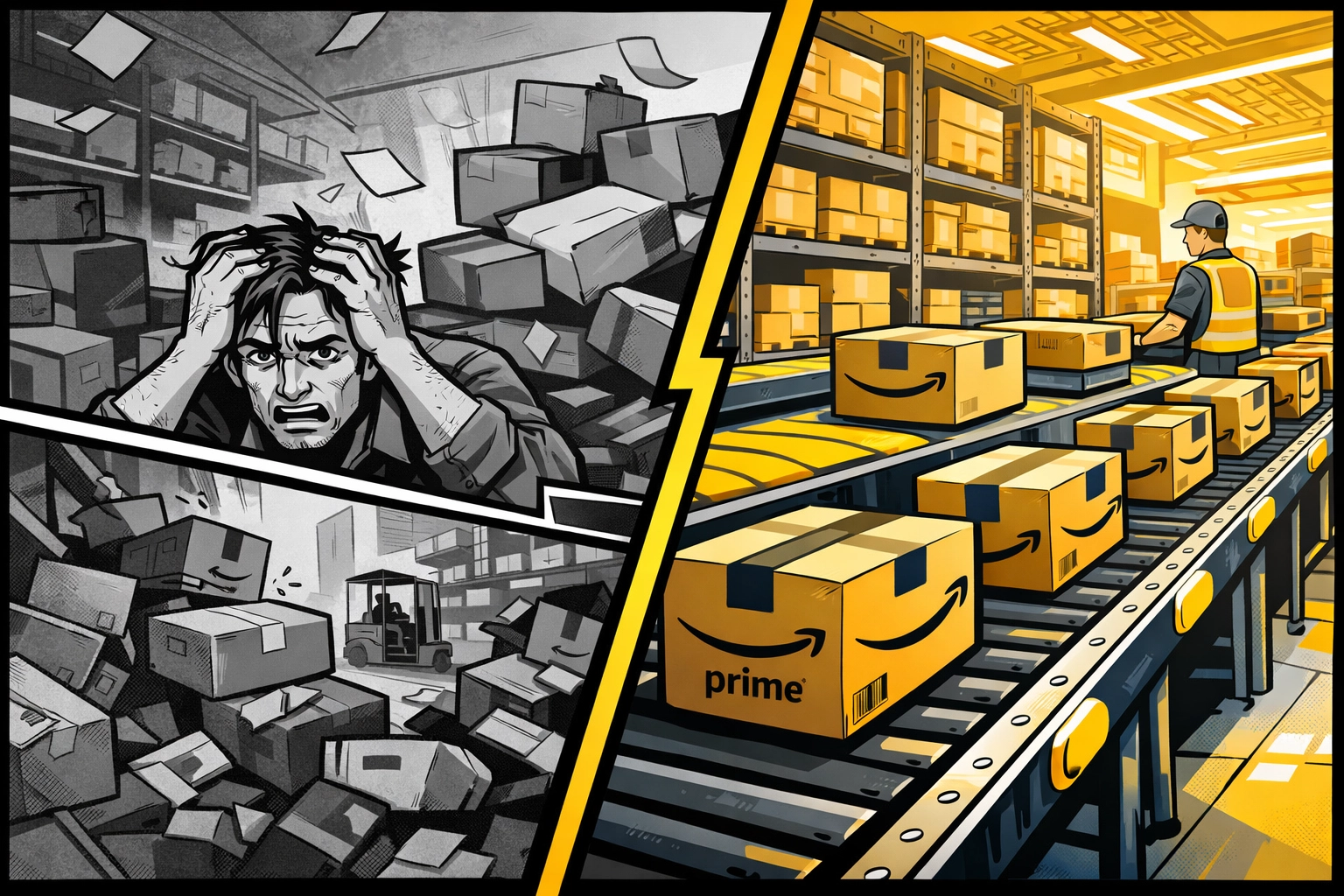
Step 4: Launch Automated Advertising and Pricing (Days 46-70)
This is where most sellers either take off or plateau. The difference? Strategic automation paired with intelligent oversight.
Your First 30 Days of Advertising
Start with $100/day baseline budget. Yes, that's $3,000 for the month. If that makes you uncomfortable, you're not ready to scale yet.
Week 1 (Days 46-52): Data gathering
- Launch one automatic campaign per product
- Launch one manual campaign with 20-30 highly relevant keywords
- Set bids at suggested amounts
- Do NOT make changes: just collect data
Week 2 (Days 53-59): Initial optimization
- Identify top 5 converting search terms from automatic campaign
- Add them as exact match keywords in manual campaign
- Increase bids 20% on keywords with ACoS below target
- Add negative keywords for irrelevant search terms
Week 3-4 (Days 60-70): Scale what works
- Double budget on campaigns with ACoS below 25% of target
- Create dedicated campaigns for top 3 keywords
- Launch Sponsored Brand campaign if eligible
- Begin product targeting campaigns
The ACoS targets that actually work:
- New products: 40-60% ACoS (you're buying visibility)
- Established products: 20-30% ACoS (balancing profit and growth)
- Bestsellers: 15-20% ACoS (maximizing profit)
If you're managing more than 3 product lines or spending $5,000+/month, this is where an experienced Amazon advertising agency becomes worth every penny. The ROI difference between average and expert PPC management at scale is typically 150-300%.
Dynamic Pricing: Automation With Guardrails
Automated repricing sounds appealing until an algorithm race-to-the-bottom destroys your margins.
The safe automation approach:
- Set firm price floors (minimum price you'll accept)
- Define price ceilings (maximum above which you lose Buy Box anyway)
- Use time-of-day rules (higher prices during peak shopping hours)
- Implement competitor-based rules with margin protection
Never automate without these safeguards:
- Daily price change limits (max 5-10% per day)
- Margin protection rules (never price below X% margin)
- Manual override capability
- Alerts when prices hit floors or unusual patterns emerge
Step 5: Build Your Review Engine and Scaling Systems (Days 71-90)
You're not scaling until you have systematic processes that run without you micromanaging every detail.
The 30-100-1000 Review Milestone Strategy
Reviews are social proof currency. Here's the proven acquisition timeline:
First 30 reviews (by Day 80):
- Enroll in Amazon Vine Program (if eligible)
- Use "Request a Review" button for every order
- Include professional product inserts (within TOS)
- Follow up on negative reviews with solutions
Next 70 reviews (Days 80-120):
- Implement automated email sequences
- Optimize product experience to reduce returns/complaints
- Address and resolve issues in negative reviews publicly
- Continue Vine for new product launches
Push to 1,000 reviews (Days 120-365):
- This happens organically as sales velocity increases
- Focus on maintaining 4.3+ average rating
- Respond to questions quickly and thoroughly
- Use review insights to improve product and listing
The review response framework:
- Positive reviews: Thank customer, reinforce key benefit
- Neutral reviews: Address concern, offer solution
- Negative reviews: Apologize, solve problem, take conversation private
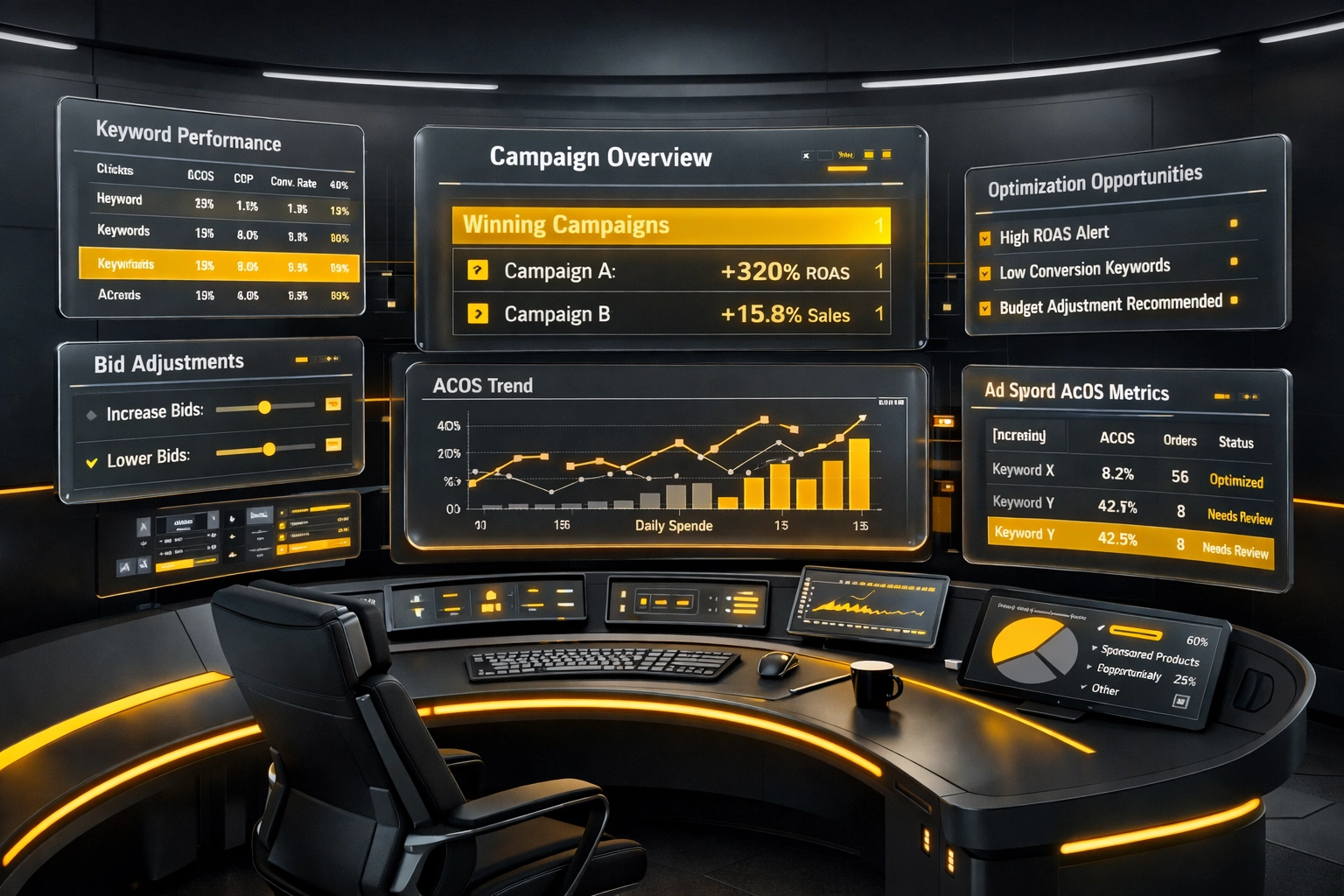
Document Your Scaling Systems
By Day 90, you should have these systematized:
Weekly Rhythms:
- Monday: Review weekend sales and adjust inventory forecasts
- Wednesday: PPC performance review and optimization
- Friday: Competitor analysis and market positioning review
Monthly Processes:
- Financial review (revenue, margins, ad spend, profitability)
- Listing performance audit (conversion rates, traffic sources)
- Reimbursement claim submission
- Inventory health assessment
- Team performance review
Quarterly Strategy Sessions:
- Product line expansion analysis
- Market share assessment
- Competitive landscape changes
- Annual planning and goal setting
When to Bring In the Experts
Here's the honest truth: You can DIY your way to $50K/month. Getting to $100K+ requires specialized expertise.
Consider professional Amazon account management services when:
- You're managing 10+ SKUs
- Ad spend exceeds $5,000/month
- You're expanding to international marketplaces
- Account health issues require escalation
- You lack bandwidth for daily optimization
The decision isn't "can I do this myself?" It's "what's the highest-value use of my time?" If you're the visionary building the brand, let specialists handle the operational execution.
The 90-Day Scaling Checkpoint: Measure What Matters
By Day 90, you should see measurable improvements in these key metrics:
Sales Metrics:
- 30-50% increase in monthly revenue
- 2-3x increase in organic keyword rankings
- Conversion rate improvement of 20%+
- ACoS trending toward target ranges
Operational Metrics:
- Inventory turnover ratio of 4-6x annually
- Less than 2% stockout rate
- Average review rating above 4.3
- Under 1% order defect rate
Systems Metrics:
- All SOPs documented and assigned
- Weekly review rhythms established
- Monthly financial reporting automated
- Team can operate 80% independently
If you're not seeing these improvements, the problem is usually in the execution, not the strategy. Review each of the five steps and identify where the breakdown occurred.
Beyond 90 Days: Transitioning to Sustainable Growth
The playbook doesn't end at Day 90: it evolves. Here's what the next phase looks like:
Months 4-6: Optimization and refinement
- Double down on winning products
- Test new advertising strategies (video, display, audio)
- Expand into complementary product categories
- Build email list and external traffic sources
Months 7-12: Expansion and diversification
- Launch into international marketplaces
- Develop premium product tiers
- Build brand store and loyalty programs
- Implement advanced analytics and attribution
Year 2 and beyond: Building the moat
- Develop proprietary products
- Build brand recognition outside Amazon
- Create content ecosystem (YouTube, blog, social)
- Establish wholesale or retail partnerships
The brands that win long-term don't just scale revenue: they build defensible positions that competitors can't easily replicate.
Your Next 48 Hours: The Action Plan
Don't let this guide become another piece of content you read and forget. Here's what to do in the next two days:
Today:
- Audit your current Brand Registry status (enroll if needed)
- Document one critical SOP that lives only in your head
- Schedule your photo/video shoot
- Set your Day 1 calendar date and commit
Tomorrow:
- Review your current listing optimization (use the framework above)
- Calculate your inventory reorder points
- Audit your advertising account structure
- Book time on your calendar for weekly and monthly rhythms
This week:
- Share this playbook with your team
- Assign ownership for each of the 5 steps
- Set up progress tracking (spreadsheet or project management tool)
- Join or create accountability group for regular check-ins
Scaling Amazon operations isn't mystical. It's systematic. The top brands you see dominating your category didn't get there by accident: they followed proven frameworks like this one.
The question isn't whether this playbook works. It's whether you'll implement it with the discipline and consistency that separates seven-figure sellers from everyone else.
Need expert guidance through this process? The team at Marketplace Valet specializes in taking brands from operational chaos to systematic growth. We've helped dozens of sellers implement this exact playbook: and we can help you too.
What's your biggest scaling challenge right now? Drop a comment below or reach out: let's solve it together.
#AmazonFBA #AmazonSeller #EcommerceTips #AmazonBusiness #FBABusiness #AmazonStrategy #AmazonGrowth #EcommerceGrowth #AmazonSuccess #ScalingAmazon