
In-House Amazon Manager vs. Agency: An Operational Model Comparison
An in-house Amazon manager and an Amazon agency are not two versions of the same solution. They represent different operational models with different accountability structures. The difference does not appear on an org chart. It shows up on the P&L.
A brand with someone in the building managing Amazon feels like it has Amazon managed. That feeling is the problem. One person cannot realistically cover the four distinct disciplines a healthy account demands: advertising management, logistics alignment, creative listing optimization, and compliance resolution. When those disciplines go uncovered, the gaps do not announce themselves. They accumulate — in suppressed listings, eroding margins, and advertising spend that never connects to total channel revenue.
Agency models introduce a team and a distributed skill set. But most agency engagements are task-based. The agency executes. The brand still owns the outcome. Accountability disappears at the handoff.
The operational comparison comes down to one question: who is accountable for the P&L? Not who manages the campaigns. Not who submits the listing updates. Who owns the outcome when the channel underperforms?
Platform fees — fulfillment, referral, and advertising — can consume more than 50% of merchant revenue. Over 60% of total paid units on Amazon are sold by third-party sellers, which means the competitive and compliance demands on every account are significant and compounding. A single internal hire or a task-based agency leaves the brand exposed to both.
The metric gap compounds the problem. Brands optimizing ACoS in isolation are measuring campaign efficiency — not channel health. TACoS, Total Advertising Cost of Sale measured against total channel revenue, is the metric that tells the real story. An agency that does not manage to TACoS is not managing the channel. It is managing a report.
The right comparison is not in-house versus agency. It is accountability-free execution versus a partner that assumes Full Operational Responsibility for the Amazon channel and measures success at the P&L level.
Last Updated: June 11, 2026
- • Why Most Brands Default to the In-House Hire
- • The Control Illusion Is Expensive
- • Why the In-House Hire Hits a Ceiling
- • What Full Operational Responsibility Actually Covers
- • How to Evaluate Which Model Fits Your Brand
-
• Frequently Asked Questions
- • What are the hidden costs of hiring an in-house Amazon manager?
- • How does an Amazon agency differ from an in-house hire in managing TACoS?
- • Why do brands experience P&L leakage with a single internal Amazon specialist?
- • What is the operational downside of the traditional task-based Amazon agency model?
- • How does Marketplace Valet assume Full Operational Responsibility differently than a general marketing agency?
- • At what revenue threshold does an Amazon agency typically outperform an in-house hire?
- • The Model That Actually Owns the Outcome
Why Most Brands Default to the In-House Hire

Most brands don't land on the in-house hire after a careful operational analysis. They land on it because it feels obvious. Amazon is too big to ignore. Someone needs to own it. Hiring someone feels like owning it.
The logic is simple: the channel is growing, it needs attention, and a dedicated person in the building means someone's always on it. That logic feels sound. It's also how brands end up with a channel that's being monitored instead of run.
That logic has a cost. And it almost never shows up on the invoice.
The Logic That Makes the In-House Hire Feel Safe
The in-house hire feels safe because it keeps the channel visible. Someone on payroll is running Amazon. Leadership can walk down the hall and get an update. That proximity reads as control — and for brands that built themselves on owned operations, it maps cleanly onto the org chart they already trust.
There's a cultural logic underneath it too. Brands that built their business on owned infrastructure — manufacturing, sales, distribution — are wired to own the function, not hand it off. Amazon looks like another function to own. So they hire for it the same way they'd hire a warehouse manager or a logistics coordinator. Same instinct. Different kind of problem.
That instinct isn't wrong. It's just built for a different kind of complexity. Over 60% of total paid units on Amazon are sold by third-party sellers. Every account is competing inside a platform designed to surface the best-operated listings — not the best-resourced brands. The question isn't whether to own the channel. It's whether one person can actually run it at the level the platform demands.
The Problem With Proximity as a Proxy for Control
Here's what proximity actually delivers: awareness. The in-house manager sees what's happening. They flag a suppressed listing. They pull a campaign report. They escalate a compliance ticket. But awareness isn't operation. What one person can't do is cover the four distinct disciplines a healthy Amazon account demands — advertising management, logistics alignment, creative listing optimization, and compliance resolution — with the depth each one requires. Not because they're not capable. Because no single hire is built to hold all four at once.
The gaps don't announce themselves. They show up as slow margin erosion. Underperforming listings that never quite convert. Advertising spend that climbs without a corresponding lift in channel revenue. By the time leadership notices, the leakage has been running for months. That's when brands start asking what they're actually paying for — and what full channel management looks like in practice.
Proximity to a decision isn't command over its outcome. A brand with someone in the building managing Amazon feels like it has Amazon managed. Those two things aren't the same. The P&L is where the difference becomes measurable.
| Decision Driver | What the Brand Believes | What It Actually Delivers |
|---|---|---|
| Channel visibility | Someone on the team means Amazon is always being watched — and watched means managed. | Awareness of what's happening on the account. Not command over the outcome. |
| Internal ownership culture | If we own manufacturing, sales, and distribution, we should own Amazon the same way. | A single hire structured for function ownership — not for a multi-discipline platform that rewards specialization at every layer. |
| Org chart familiarity | A dedicated headcount maps cleanly to how we manage every other function in the business. | A role that looks like every other internal hire — but operates in an environment with no internal equivalent. |
| Speed of response | Someone in-house can act immediately without the lag of an external partner. | Fast response to visible problems. Slow or no response to the structural gaps that don't announce themselves. |
| Cost optics | One salary is simpler and more predictable than an agency engagement. | A visible fixed cost — with invisible variable losses accumulating in margin erosion, suppressed listings, and advertising inefficiency. |
| Control narrative | Keeping the channel in-house means leadership stays in control of the brand's Amazon presence. | Proximity to the channel. The P&L accountability for how it performs remains unresolved. |
The Control Illusion Is Expensive

The control illusion isn't a mindset problem. It's a financial one.
Brands running Amazon with an in-house hire feel like they own the channel. The P&L disagrees.
Platform fees — fulfillment, referral, and advertising — can consume more than 50% of merchant revenue.
That's not a marginal drag. It's a structural reality every operational decision inside the channel has to account for.
An in-house hire who isn't managing to that number isn't managing the channel. They're managing the surface of it.
Proximity makes the gap invisible. Someone in the building running Amazon every day reads to leadership as the channel being under control.
It isn't. The erosion runs underneath the daily activity — in margin, in velocity, in brand position. It doesn't surface until it's already compounded.
That's what happens when presence gets confused with accountability. See The cost of that gap.
Where P&L Leakage Begins
P&L leakage doesn't announce itself.
It accumulates in suppressed listings, eroding buy-box share, and advertising spend that scales without a corresponding lift in total channel revenue. The hire doesn't see it coming. Neither does leadership.
The problem is depth. One person doesn't have enough of it.
Advertising management, logistics alignment, creative listing optimization, compliance resolution. One hire covering all four can't go deep on any of them simultaneously. Something gets the attention. The other three accumulate debt.
That debt doesn't look like failure. It looks like slow progress — right up until the P&L says otherwise.
Here's what that debt looks like on the account: a suppressed ASIN that takes two weeks to resolve. An advertising budget that scales without a corresponding increase in organic velocity. Listing content that hasn't been touched since launch.
Each one is a slow leak. Together, they explain why a brand that feels like it's managing Amazon is actually watching it underperform.
The channel isn't failing. It's just not being run.
Why ACoS-Only Reporting Hides the Real Problem
ACoS-only reporting is one of the most expensive habits in Amazon management.
It measures how efficiently advertising spend is working on ad-attributed revenue. It tells you nothing about whether the channel is actually profitable.
TACoS — Total Advertising Cost of Sale measured against total channel revenue — is the metric that tells the real story.
A brand with a rising ACoS but falling TACoS is building organic velocity. A brand with low ACoS on flat total revenue isn't building anything.
An in-house manager optimizing ACoS in isolation is handing leadership a number that looks healthy while the channel stagnates underneath it.
The Forbes-published work of Marketplace Valet co-founder Justin W. Boggs makes this point directly: TACoS is the metric that connects advertising efficiency to actual product unit economics.
Any reporting framework that excludes it isn't channel management. It's campaign management dressed up as channel management.
What gets measured determines what gets protected. That's not a philosophy. It's a P&L consequence.
The Invisible Cost of Unmanaged Brand Defense
Unauthorized sellers don't just undercut your price. They train your customer to expect the lower price.
That expectation erodes brand equity long after the unauthorized listing is removed. Audit data across more than 400 Amazon merchant accounts shows recurring revenue loss tied directly to unauthorized sellers and buy-box suppression.
The damage isn't visible. That's what makes it expensive.
An in-house hire focused on growth — advertising, listings, ranking velocity — doesn't have the bandwidth to run active brand defense at the same time. That's not a skills problem. It's a capacity problem.
Unauthorized seller enforcement, MAP compliance, buy-box integrity — these require dedicated monitoring. Not occasional check-ins.
Without it, the channel bleeds revenue the brand never sees leaving.
This is the part of the control illusion that costs the most.
The brand thinks Amazon is managed because someone is running the growth side. The defense side — the thing protecting what the brand already built — is running on autopilot.
The absence of a visible problem isn't a healthy channel. It's an unmonitored one. Those two things look identical until they don't.
| Leak Source | What It Looks Like on the Surface | What It Costs at the P&L Level |
|---|---|---|
| ACoS-only reporting | Campaign metrics look healthy — low cost per click, strong ROAS on sponsored placements | Total channel revenue stagnates while advertising spend climbs; organic velocity is never built |
| Unauthorized seller activity | No compliance alerts, no visible listing suppression, no obvious red flags in the dashboard | Pricing integrity erodes, buy-box share shrinks, and customer price expectations reset downward |
| Single-discipline focus | The in-house manager is active, responsive, and visibly working the account every day | Three of the four required disciplines — logistics alignment, compliance resolution, listing optimization — accumulate operational debt |
| Platform fee exposure | Gross revenue numbers look strong in internal reporting | Fulfillment, referral, and advertising fees consume a structural share of revenue that never appears in headline performance summaries |
| Listing content decay | Listings are live, indexed, and generating some traffic | Conversion rates erode as content ages, competitor listings improve, and algorithm signals drift without active optimization |
| Reactive compliance posture | Issues get resolved when they surface — the account is never formally suspended | Resolution lag creates recurring revenue gaps; unmonitored risk accumulates invisibly until a suppression or account action forces the issue |
Why the In-House Hire Hits a Ceiling

Here's the thing — the ceiling doesn't announce itself. A capable hire who knows the brand, knows the product, and knows the category feels like the right answer to Amazon's growing complexity.
It's not the person. It's the model.
Over 60% of total paid units on Amazon are sold by third-party sellers. That's not a stat about market share — it's a stat about competition density.
Every active account on that platform is competing against operators who specialize. Advertising precision. Listing integrity. Compliance responsiveness. Logistics alignment.
Not headcount. Depth. One person can't own all of that. Something always gets deprioritized.
And the gaps aren't dramatic. That's what makes them expensive.
A listing that goes weeks without optimization. An ad budget that scales without a corresponding lift in organic velocity. A compliance flag that sits in a queue three weeks longer than it should.
The hire is working hard. The channel is still underperforming. Those two things aren't contradictions — they're the predictable outcome of how this model works.
The Four Disciplines One Person Cannot Own
Running an active Amazon store requires at least four distinct disciplines: advertising management, logistics alignment, creative listing optimization, and compliance resolution.
Each one demands specialized knowledge. Each one changes constantly. Each one has direct P&L consequences when it falls behind.
That's not a job description. That's four jobs.
So a single hire moves between those four disciplines all day. That's not management. That's triage.
Whatever is loudest gets the attention. Whatever is quiet accumulates debt. The Jungle Scout Amazon benchmarks confirm what operators already know: these disciplines don't compress into one role.
But the brand still owns every gap. That's not a management failure. That's the structural reality the in-house model never resolves.
When advertising is the priority, listing content drifts. When compliance demands attention, ad efficiency drops. The in-house manager isn't failing.
The role itself is impossible to execute well across all four disciplines at once.
This Is Not the Right Engagement for Every Brand
So the right answer to the in-house ceiling isn't automatically an agency. It's a partner that assumes Full Operational Responsibility for the channel — and takes the outcome off the brand's plate entirely.
Not every brand is built to work inside that model.
Brands that need final approval on every tactical decision aren't a fit. Brands that want to own the strategy while the agency handles execution — they're describing the same model that produced the ceiling, just with an external vendor at the keyboard.
The accountability gap doesn't close when the title changes.
The model works when a brand is ready to hand off channel ownership — not just channel execution. That means a counterpart on the brand side who can make decisions, not one who needs to approve every bid adjustment.
If the brand is still running Amazon strategy and the agency is running Amazon tasks, the P&L is still the brand's problem.
Full Operational Responsibility requires a partner on both sides of the table.
| Discipline Required | In-House Reality | Agency Model Coverage |
|---|---|---|
| Advertising Management | Handled reactively — campaigns get attention when performance drops or budget spikes, not as part of a continuous TACoS-aware strategy | Dedicated advertising management aligned to total channel revenue, not isolated campaign metrics |
| Logistics Alignment | Monitored alongside three other disciplines — inventory health and FBA compliance fall behind when other fires are louder | Ongoing logistics alignment integrated into channel strategy, not treated as a separate operational task |
| Creative Listing Optimization | Updated at launch and revisited infrequently — listing content drifts while the in-house hire manages competing priorities | Continuous listing optimization tied to conversion data, competitive shifts, and catalog changes |
| Compliance Resolution | Addressed when a flag surfaces — no proactive monitoring means suppressed ASINs and policy violations accumulate before action is taken | Active compliance monitoring prevents flags from compounding into account-level risk |
| Brand Defense | Rarely prioritized — unauthorized seller enforcement and MAP compliance require dedicated bandwidth the single-hire model doesn't have | Systematic brand defense runs in parallel with growth strategy, not as an afterthought |
| P&L Accountability | The brand retains ownership of outcomes — the in-house hire reports activity, not channel profitability | Full Operational Responsibility transfers outcome accountability to the agency, measured at the P&L level |
What Full Operational Responsibility Actually Covers

Full Operational Responsibility isn't a service tier.
It's a different accountability structure entirely. The partner owns the outcome — not just the deliverable.
Here's where a single hire hits the ceiling — and hits it fast. Advertising, listing integrity, compliance, brand defense. Four disciplines. One person cycling through all four can't go deep on any of them simultaneously. Something always slips — and it's usually the thing nobody's watching that week.
Full Operational Responsibility replaces that rotation with a dedicated operational structure. All four disciplines run in parallel — not in sequence, not on a priority queue.
Accountability extends to the P&L — not the task log. A channel being managed and a channel actually performing are two different things. The model that closes that gap owns the outcome. It doesn't report on it. What that growth looks like
TACoS vs. ACoS: The Metric That Tells the Real Story
ACoS isn't the wrong metric. It's an incomplete one.
It measures how efficiently ad spend is working on ad-attributed revenue. Nothing more. Everything else — organic velocity, total channel health, actual margin — sits outside its frame.
TACoS — Total Advertising Cost of Sale measured against total channel revenue — is the metric that connects advertising efficiency to actual product unit economics. It tells you whether the channel is healthy, not just whether your campaigns look clean.
As Helium 10 ad cost data confirms, CPC rates near historic highs mean optimizing ACoS in isolation isn't efficiency. It's misdirection dressed up as performance management.
Published work from Forbes Business Development Council contributor and Marketplace Valet co-founder Justin W. Boggs makes this explicit: a brand with rising ACoS but falling TACoS is building organic velocity. A brand with low ACoS on flat total revenue isn't building anything.
Any reporting framework that excludes TACoS isn't measuring the channel. It's measuring a fraction of it — and calling it done.
Channel Defense as a Revenue Strategy
Growth strategy and channel defense aren't two separate workstreams.
They're the same workstream. The brands that treat them as separate are the ones bleeding revenue they never see leaving.
Audit data across more than 400 Amazon merchant accounts shows recurring revenue loss tied directly to unauthorized sellers and buy-box suppression. That's not a theory. That's what shows up when someone actually looks.
An in-house hire running advertising doesn't have the bandwidth to also run active brand defense. So the defense side goes unmonitored. The result isn't a one-time loss — it's a compounding erosion that accelerates the longer nothing is watching it.
Full Operational Responsibility means the defense side isn't an afterthought. MAP enforcement, unauthorized seller removal, and buy-box integrity are built into the operational model — not patched in after something breaks.
That's what P&L control actually looks like. Not someone in the building running tasks. A partner accountable for what the channel produces — and watching the whole thing, not just the ad dashboard.
| Metric or Activity | Task-Based Agency Approach | Full Operational Responsibility Approach |
|---|---|---|
| Advertising Management | Optimizes campaign-level ACoS in isolation; reports efficiency metrics without connecting them to total channel revenue or organic velocity | Manages advertising as one input into TACoS — measuring ad spend efficiency against total channel revenue, not just ad-attributed sales |
| Listing Integrity | Refreshes content on a project or request basis; listing optimization competes for attention against advertising and compliance demands | Maintains listing health as an ongoing operational discipline — not a task completed once and left to drift |
| Brand Defense | Responds to unauthorized sellers and buy-box suppression when flagged; no proactive monitoring infrastructure in place | Runs active MAP enforcement, unauthorized seller removal, and buy-box integrity as built-in operational functions — not reactive fixes |
| Compliance & Account Health | Addresses compliance flags as they surface; resolution speed depends on whoever has bandwidth at the time | Monitors account health continuously with dedicated resolution ownership — compliance issues don't queue behind advertising priorities |
| Reporting Framework | Delivers campaign dashboards and metric snapshots; client interprets performance and determines strategic direction | Reports against P&L outcomes — contribution margin, channel profitability, TACoS trajectory — not vanity metrics the brand has to decode |
| Accountability Structure | Accountable for task delivery; the brand remains accountable for whether the channel performs | Accountable for channel outcomes — the partner owns the P&L result, not just the deliverable list |
How to Evaluate Which Model Fits Your Brand
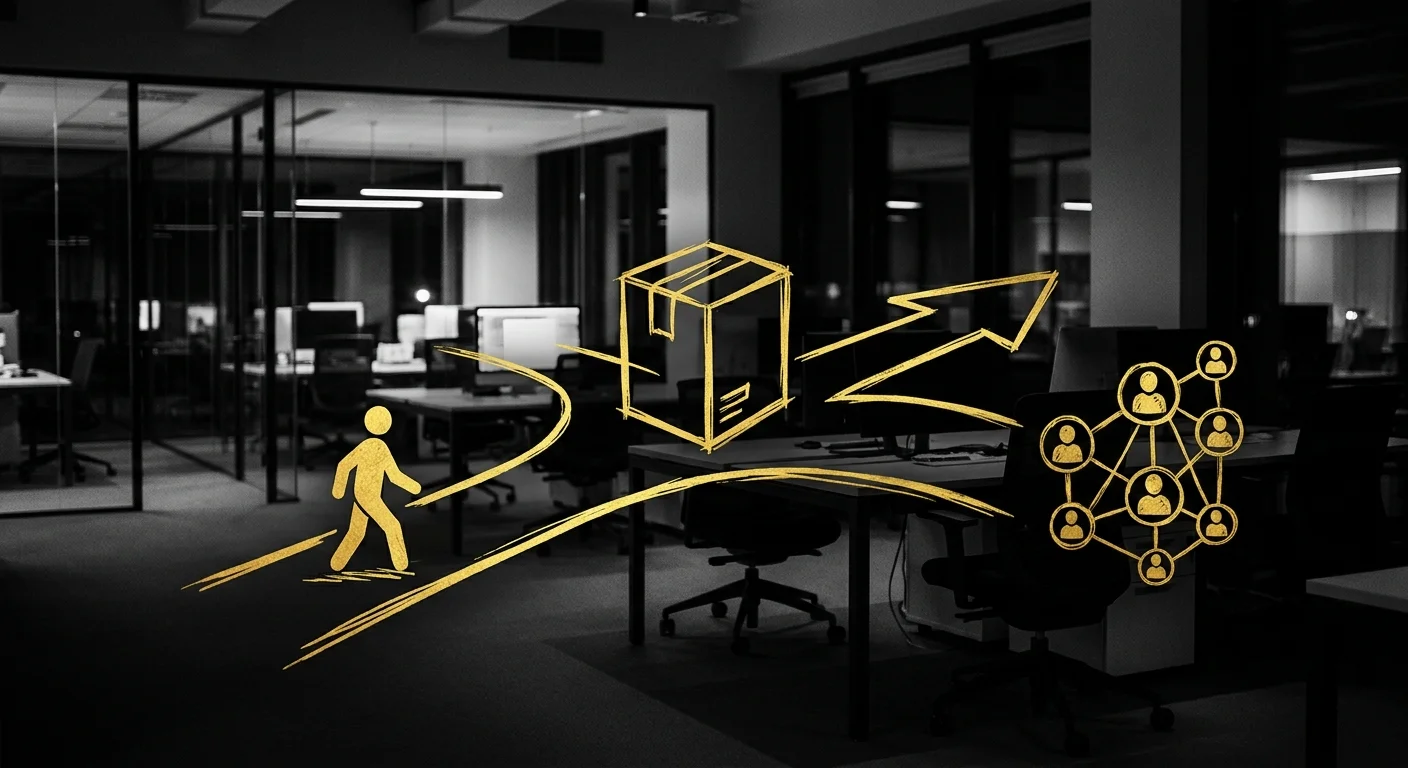
This isn't a philosophy debate. It's an operations problem.
And the answer isn't in your budget. It's in how your channel is actually structured right now.
Platform fees can consume more than 50% of the product selling price. CPC rates are near historic highs. And running the channel correctly demands four distinct disciplines running in parallel — advertising, compliance, listing integrity, logistics alignment — not one after the other.
That's the environment a brand is operating inside when it asks: do we hire in-house, or do we find a partner who actually owns the outcome?
The wrong question is: which model looks most like control?
The right question is: which model produces the P&L result the brand needs — and which one the brand is structurally ready to use.
Signals That Point Toward a Dedicated Agency Partner
There are specific signals. And once you know what they are, they're not hard to spot.
The clearest signal: leadership is still making day-to-day Amazon decisions.
When the people who should be running the business are resolving compliance flags, adjusting bids, and reviewing suppressed listings — the in-house model has already failed. The channel is consuming executive bandwidth it was never supposed to require.
That's not a resourcing problem. It's a model problem.
The second signal: the brand has already hired an agency. And it didn't work.
Not because the agency model is broken. Because that agency was accountable for tasks while the brand stayed accountable for outcomes. That's not a partnership. That's a vendor relationship with an extra invoice.
The accountability gap never closed. The right partner closes it entirely. Clutch agency ratings show what that looks like when the model is executed correctly — operational depth, not deliverable volume.
What the Evaluation Process Should Actually Look Like
Start with the P&L. Not the pitch deck.
Pull what the channel actually costs to run — fees, advertising, fulfillment overhead — and set it against what it's returning at the contribution margin level. That number tells you whether the current model is working or just present.
If you don't know that number offhand, that's already your first answer.
Then ask the harder question: who on the brand side is accountable for that number?
If the answer is "our Amazon manager" — and that same person is running advertising, managing listings, and resolving compliance flags — the role is structurally impossible to execute well. Justin W. Boggs has made this case directly: it's a model design failure, not a personnel failure.
The person isn't the problem. The job description they were handed is.
The evaluation comes down to one question: is the brand ready to hand off channel ownership — not just channel execution?
If yes, Full Operational Responsibility is the model that matches.
If the brand still wants to own the strategy and direct every tactic, it hasn't solved the problem. It's moved the triage outside the building. That's not control. That's the illusion of control wearing a different label — and it produces the same P&L result.
| Brand Signal | In-House Hire Sufficient? | Agency Partner Required? | Why It Matters |
|---|---|---|---|
| Leadership is making day-to-day Amazon decisions | No | Yes | Executive bandwidth is a finite resource. When it routes into bid adjustments and compliance flags, it's no longer running the business. That's a structural failure, not a staffing one. |
| A previous agency relationship failed to move the needle | No | Yes — with accountability requirements | Task-based agency models leave outcome ownership with the brand. The right question isn't whether to try an agency again — it's whether the next agency assumes Full Operational Responsibility or just executes deliverables. |
| Channel revenue is growing but contribution margin is flat or shrinking | No | Yes | Revenue growth without margin improvement signals that platform fees, advertising overhead, or unauthorized sellers are absorbing the gains. That's a channel health problem, not an advertising problem. |
| Brand has one person managing advertising, listings, compliance, and brand defense simultaneously | No | Yes | These are four distinct disciplines with separate operational demands. A single hire managing all four is running triage, not strategy. Whatever is quiet is accumulating debt. |
| Brand requires approval on every tactical adjustment | Possibly — with constrained growth ceiling | No — not yet | Full Operational Responsibility requires a counterpart who can make decisions, not a brand-side operator who approves every bid change. The approval model recreates the same bottleneck outside the building. |
| Channel is early-stage with limited revenue and no advertising history | Yes — as a controlled starting point | Premature | An agency assuming Full Operational Responsibility is built to protect and grow an established channel. Brands without social proof, advertising history, or demand signals aren't yet at the stage where the model delivers maximum return. |
| Brand can identify who on the team is accountable for the Amazon P&L number | Yes — if that accountability is real | Yes — if the answer is unclear or distributed | Accountability without authority produces the same result as no accountability. If multiple people share partial ownership of the channel outcome, no one owns it. That gap is what Full Operational Responsibility is designed to close. |
Frequently Asked Questions
The framework comparison handles the big picture. But the objections that move deals — or kill them — live in the specifics.
These answers are direct. If a question sounds like it resists a clean answer, that's usually the question hiding a bad assumption.
What are the hidden costs of hiring an in-house Amazon manager?
The visible cost is the salary. The invisible cost is everything that salary was never designed to cover.
One hire managing an active Amazon channel has to run four distinct disciplines at once: advertising management, logistics alignment, listing optimization, and compliance resolution. No single person executes all four at the level the channel demands. Whatever gets the least attention that week is the discipline quietly accumulating cost.
And the platform makes that exposure structural. Total fees — fulfillment, referral, and advertising — can consume more than 50% of the product selling price. A manager who isn't actively defending against that number isn't protecting margin. They're watching it erode and filing the reports.
How does an Amazon agency differ from an in-house hire in managing TACoS?
An in-house hire tracks what the dashboard surfaces — ACoS, session volume, conversion rate. Those are campaign metrics. TACoS is a channel metric. They're not the same question.
ACoS measures advertising spend against ad-attributed revenue only. TACoS measures total advertising spend against total channel revenue — organic velocity included. Most internal hires never get there. They optimize the campaign view because that's what's in front of them.
A partner operating with Full Operational Responsibility tracks TACoS because it connects advertising efficiency directly to product unit economics. That gap between the two measurement frameworks? That's where margin exits the channel — undetected, unattributed, and compounding every month no one closes it.
Why do brands experience P&L leakage with a single internal Amazon specialist?
The leakage isn't incompetence. It's scope.
Four disciplines — advertising, logistics, listing integrity, compliance — don't share bandwidth. When one person is accountable for all four, the channel runs in triage mode. Whatever is loudest gets attention. The others accumulate invisible risk.
Unauthorized sellers and buy-box suppression are the most common sources of that invisible loss. Audit data across more than 400 Amazon merchant accounts confirms recurring revenue erosion tied directly to those two failure points. A single internal hire rarely has bandwidth to run active brand defense while simultaneously managing advertising performance. The P&L records the gap whether leadership sees it or not.
What is the operational downside of the traditional task-based Amazon agency model?
The task-based model creates an accountability gap that the engagement structure never closes.
The agency owns the deliverable. The brand still owns the outcome. So when the channel underperforms, there's no one accountable for the P&L — only someone accountable for whether the tasks were completed. Completed tasks on a failing channel aren't a win. They're a vendor relationship wearing a partnership label.
Metric isolation compounds it. A task-based agency optimizes what's inside its scope. If its scope is advertising, it optimizes ACoS. It doesn't own what ACoS does to TACoS, and it doesn't own what TACoS does to contribution margin. The channel's actual health is no one's job. That's the model's defining failure.
How does Marketplace Valet assume Full Operational Responsibility differently than a general marketing agency?
A general marketing agency manages deliverables. Marketplace Valet assumes Full Operational Responsibility for the Amazon channel — which means accountability for what the channel produces, not what tasks got checked off. That distinction changes every decision in the engagement.
Brand defense isn't an add-on here. MAP enforcement, unauthorized seller removal, and buy-box integrity are built into the operating model from day one — not optional services bolted on at renewal. Audit data across more than 400 accounts confirms that invisible margin erosion from those failure points is the norm, not the exception.
The measurement framework isn't ACoS. It's TACoS measured against total channel revenue. And the foundation under all of it is 20+ years of physical product P&L experience. That's what Institutional Discipline means in practice — methodology built from running the operator's side of the business, not just the platform side. Those two vantage points produce very different decisions at the margin level.
At what revenue threshold does an Amazon agency typically outperform an in-house hire?
Revenue threshold is the wrong frame. The right frame is operational complexity.
A brand generating meaningful Amazon revenue but still pulling executive leadership into day-to-day channel decisions has already hit the ceiling — regardless of what the top-line number looks like. The signal isn't revenue. It's whether the channel is consuming bandwidth it was never supposed to require.
That said, the economics become undeniable at a specific intersection: total platform fees absorbing more than 50% of the product selling price, while the channel simultaneously demands active management across advertising, compliance, listing integrity, and brand defense. At that point, a single internal hire isn't a cost-efficient solution. It's a structural mismatch — the complexity of the job is greater than the capacity of the model assigned to execute it. Full Operational Responsibility is what closes that gap.
The Model That Actually Owns the Outcome
The illusion of control is a financial problem.
Someone in the building managing Amazon feels like Amazon is managed. It isn't. Proximity to a decision is not the same as command over its outcome.
An in-house manager triaging four disciplines at once isn't controlling the channel. They're reacting to it. The P&L doesn't care how close the manager sits to the problem. It only records what the channel produced.
Full Operational Responsibility is what genuine channel ownership looks like — and it doesn't resemble any vendor relationship most brands have tried.
Not a task list handed off to an executor. Not a reporting structure where the brand owns strategy and the agency owns the to-do list. A partner accountable for what the channel actually produces — advertising efficiency, listing integrity, brand defense, and compliance — running all four disciplines in parallel, measured against the P&L.
That's where accountability lives. Not on the org chart. On the outcome.
Marketplace Valet operates as that partner.
The founders brought 20+ years of physical product operator experience to this agency before it opened. That's not a slide-deck credential. It's why Marketplace Account Management at this level runs on Institutional Discipline — not growth tactics, not vanity metrics. The P&L is the only scoreboard that matters here.
If your brand is ready to hand off channel ownership — not just channel execution — that's where this conversation belongs.
If the channel is absorbing more than it should — in fees, in bandwidth, in executive attention — the account audit shows you exactly where. It's a 15–20 page review of your specific account, delivered within 3–5 business days, built by operators who've audited 400+ Amazon accounts and run the P&L themselves. Request your Amazon account audit. The findings are yours regardless of what comes next.