

You've hit the million-dollar mark on Amazon. Congrats: that's massive. But here's what nobody tells you about scaling past seven figures: every percentage point of margin you lose makes the next million exponentially harder to reach.
Most brands scaling to $2M, $5M, or $10M on Amazon make the same mistake. They assume the strategies that got them to $1M will carry them forward. They throw more budget at ads, hire more people, launch more SKUs, and watch their profit margins shrink from 25% to 18% to 12%… and suddenly they're doing triple the revenue but making less actual money.
There's a better way. The brands that scale profitably don't just grow bigger: they grow smarter. They use what we call the Agency Playbook: a proven framework that prioritizes margin protection at every decision point.
Here's what we'll cover:
- The 3 margin killers that destroy 7-figure brands (and how agencies prevent them)
- The exact framework successful brands use to scale without bleeding profit
- When to handle operations in-house vs. when to partner with an amazon agency
- Real tactics to grow revenue while improving (not destroying) your margins
Let's dive in.
The 7-Figure Scaling Trap: Why Revenue Growth Kills Margins
Here's the uncomfortable truth: scaling on Amazon is a margin compression exercise if you do it wrong.
Three things happen when brands hit $1M and push toward $3M+:
1. Ad Spend Becomes a Black Hole
Your ACoS was 18% when you were smaller. Now it's 32% because you're competing in more competitive keywords, launching new products without sufficient review velocity, and scaling campaigns without proper structure.
2. Operational Complexity Explodes
You're now managing 15-30 SKUs instead of 5. Your amazon fba prep service costs are higher. You're dealing with more customer service issues, more reimbursement claims, more inventory planning nightmares.
3. Hidden Costs Multiply
Storage fees, long-term storage charges, removal fees, return processing, chargebacks you're not auditing: all these small leaks become rivers when you're moving serious volume.
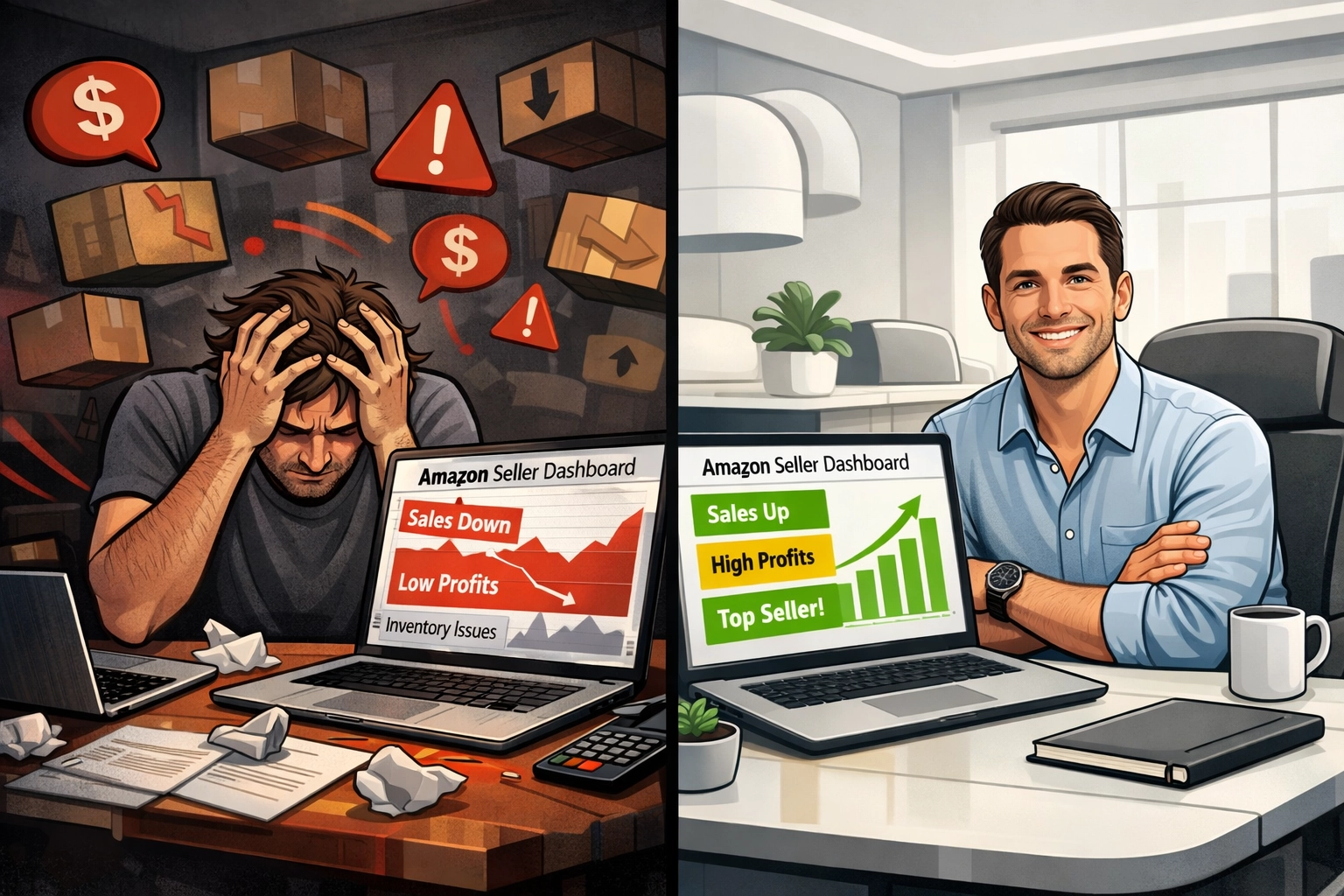
The result? You're doing $3M in revenue but taking home the same profit you made at $1.2M. You're working three times harder for the same paycheck.
The Agency Playbook: The 5-Pillar Framework for Profitable Scaling
The brands that scale to 8-figures without destroying margins follow a specific playbook. Whether you execute this in-house or partner with an amazon advertising agency, these five pillars are non-negotiable.
Pillar 1: Margin-First Ad Strategy (Not Just Revenue-First)
Most brands optimize for sales. Agencies optimize for profit per unit sold.
Here's the shift:
- Stop: Scaling campaigns just because ACoS is "acceptable"
- Start: Calculating true profitability (landed cost + FBA fees + ad spend + returns) before scaling any campaign
The framework:
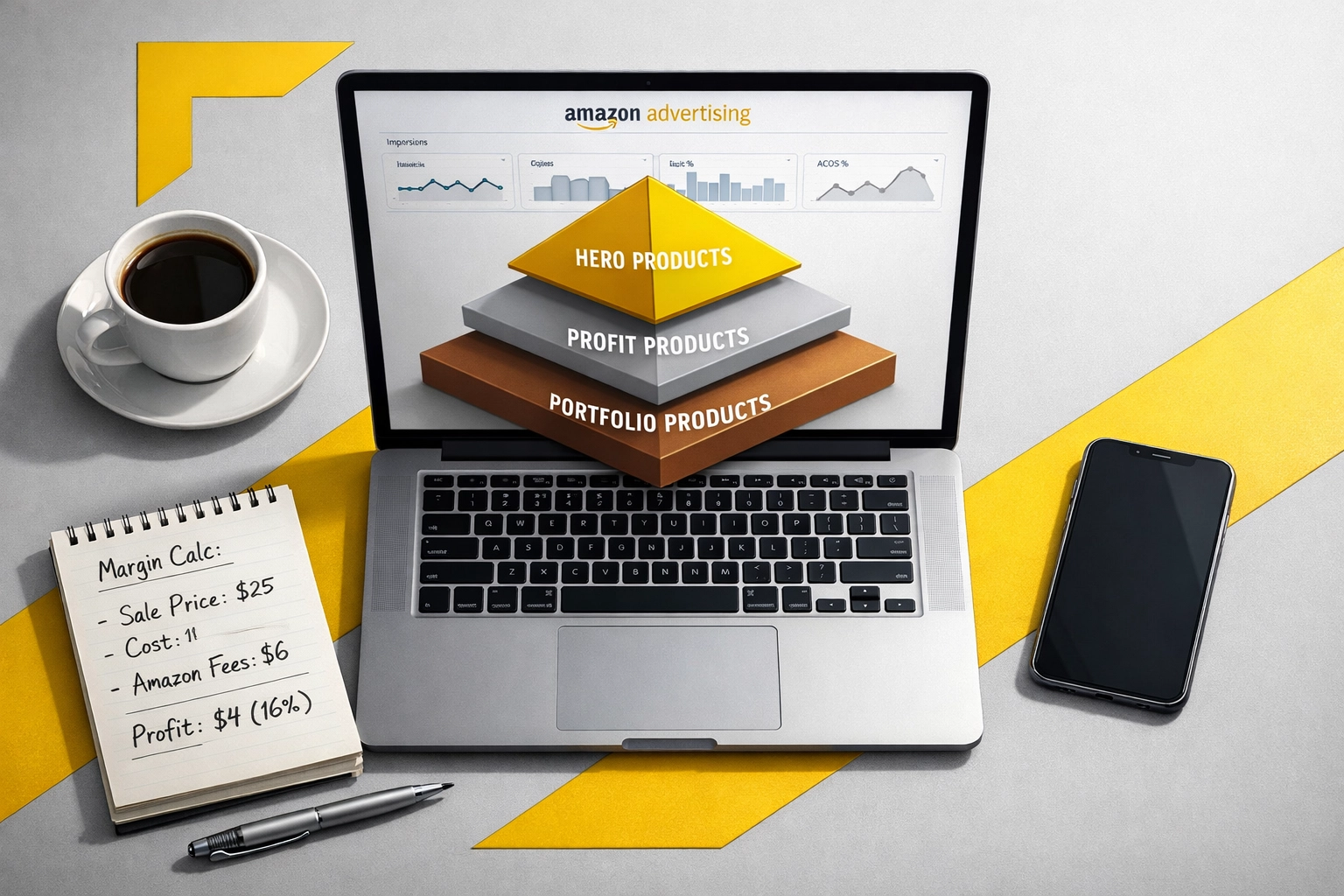
- Calculate your Break-Even ACoS for every product
- Run campaigns in tiers: Hero products (scale aggressively), Profit products (optimize for efficiency), Portfolio products (test and learn)
- Use Target ACoS bidding to cap spend at profitability thresholds
An experienced amazon ads management team does this automatically. If you're in-house, you need a system to track this monthly per SKU.
Pillar 2: Listing Optimization as a Conversion Multiplier
Here's where brands leave millions on the table: they treat listing optimization as a one-time setup task instead of an ongoing conversion engine.
The playbook approach:
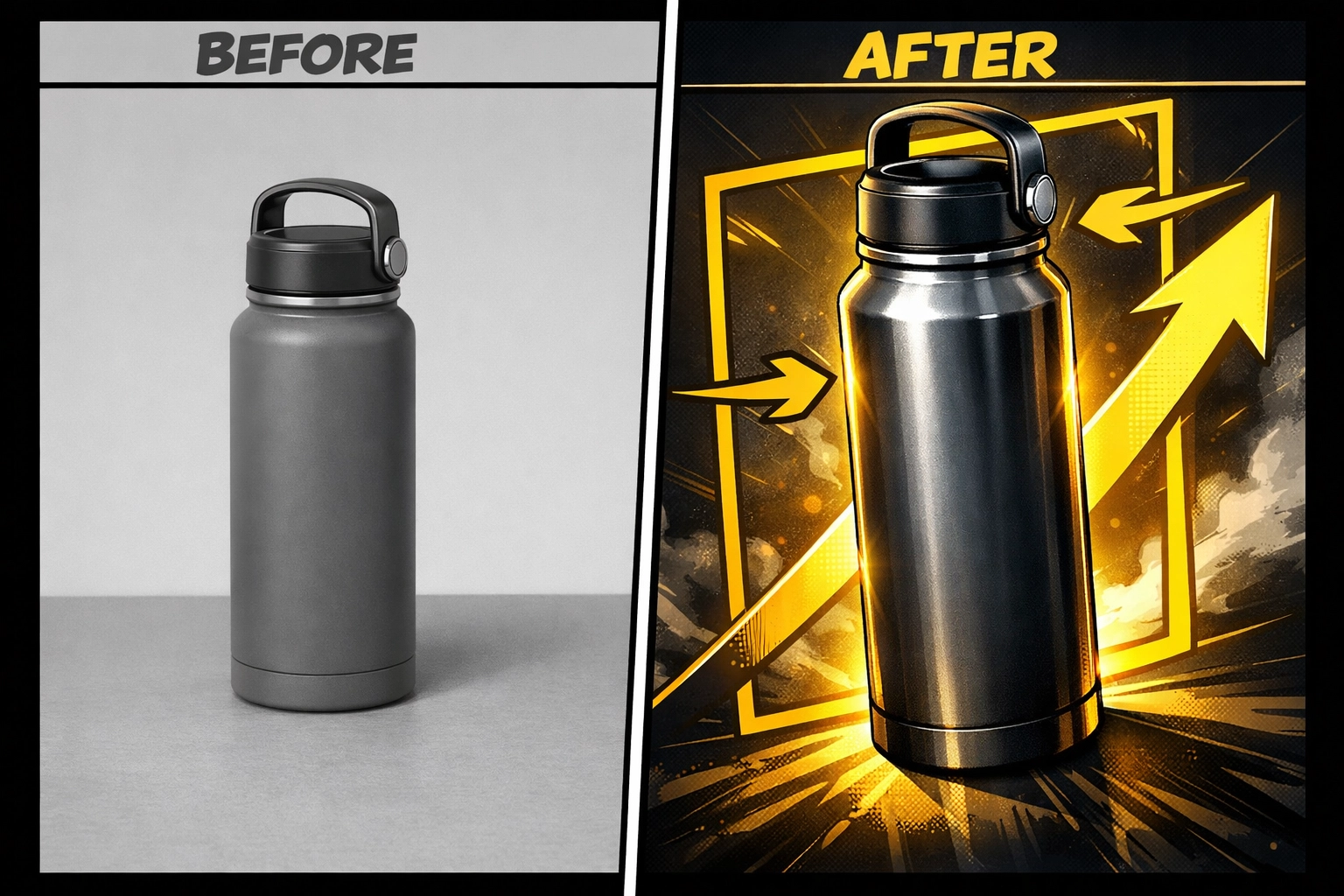
- Test new main images every 60-90 days (split test using Amazon's tools)
- Refresh A+ Content quarterly based on review feedback and competitor analysis
- Update bullets and descriptions when search term reports show new customer language
- Monitor conversion rate by traffic source and optimize accordingly
Amazon listing optimization isn't about making your listings "pretty." It's about systematically removing friction from the buying decision.
Example: A supplement brand we worked with increased their conversion rate from 12% to 19% by changing one thing: their main image. That's a 58% lift in orders from the same traffic. Same ad spend, 58% more revenue.
Pillar 3: Operational Excellence (The Unsexy Margin Saver)
This is where most brands fail. They focus on the sexy stuff (ads, launches) and ignore the operational details that quietly destroy 3-7% of their margins.
The playbook checklist:
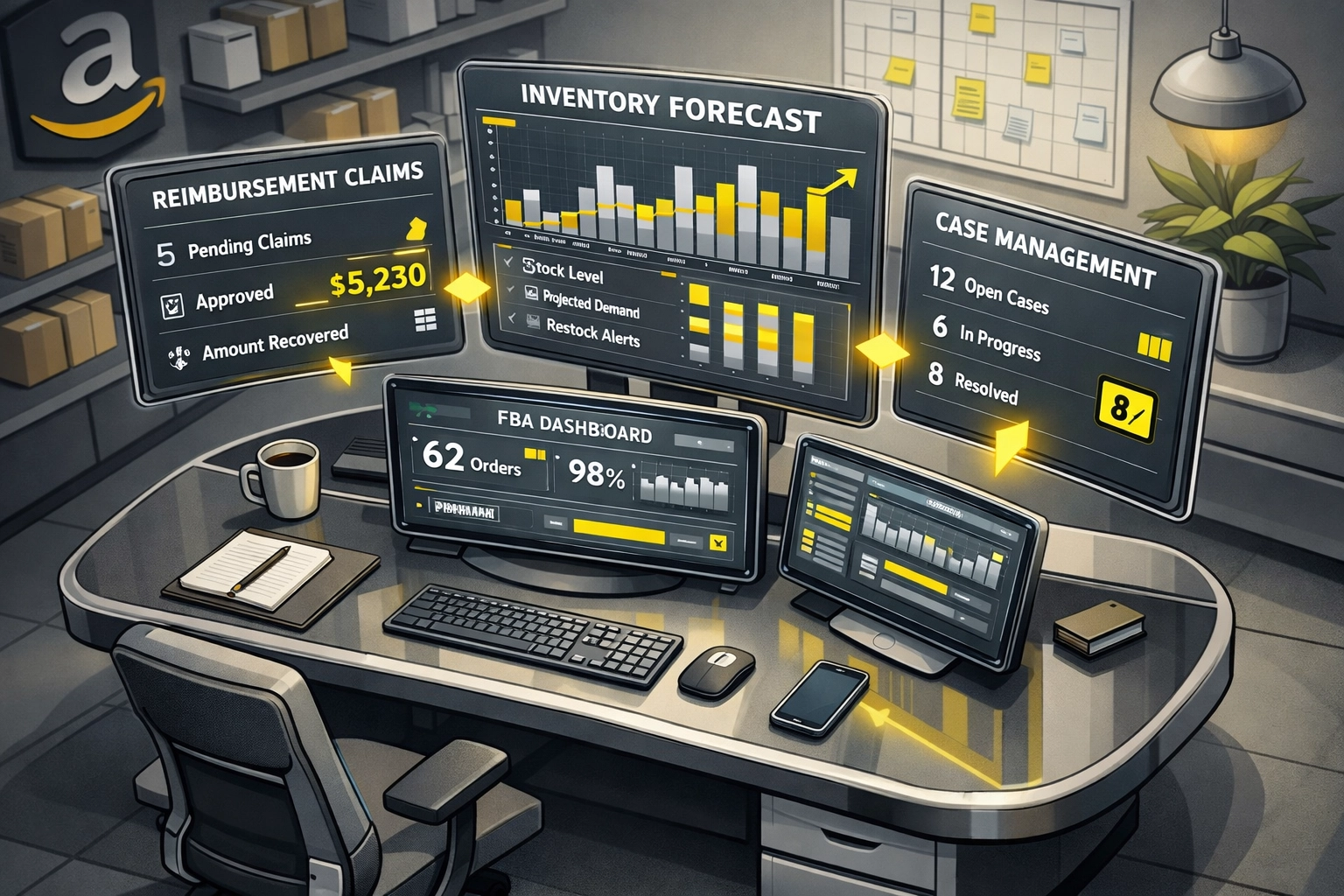
- Monthly amazon reimbursement audit (most brands are owed $5K-50K+ from Amazon)
- Inventory planning with 90-day rolling forecasts (prevent stockouts AND overstock fees)
- Case management system for amazon seller support escalation (don't leave money on the table from solvable issues)
- Return rate analysis (identify and fix product issues before they destroy margins)
This is where amazon account management services provide massive ROI. A good agency or operator saves you 2-5% of gross revenue through operational rigor alone.
Pillar 4: Strategic Product Launches (Not Just "More SKUs")
Scaling brands often fall into the trap of launching SKUs hoping something sticks. Every failed launch costs you $10K-30K in wasted inventory, prep, ads, and opportunity cost.
The agency playbook approach:
- Launch products that share existing customer cohorts (expand wallet share, not just market reach)
- Validate demand with pre-launch market research (Helium 10, Jungle Scout, review mining)
- Budget for 8-week launch campaigns minimum with proper ranking strategy
- Use launch periods to gather 50+ reviews before scaling (velocity matters)
Before launching Product #16, ask: "Will this increase average order value or customer lifetime value with our existing buyers?" If not, it's probably margin dilution disguised as growth.
Pillar 5: Brand Protection and Defense
As you scale, you attract more problems:
- Hijackers and counterfeiters
- MAP violations from unauthorized resellers
- Policy violation flags from increased visibility
- Review manipulation from competitors
The playbook includes:
- Active amazon brand management through Brand Registry and transparency programs
- Monthly brand protection audits (check for unauthorized sellers)
- Proactive communication with Seller Performance on any flags
- Review monitoring and response protocols
Ignoring this costs 7-figure brands $50K-200K+ annually in lost buybox, suppressed listings, and account health issues.
In-House vs. Agency: When to Make the Move
Here's the honest breakdown: not every brand needs an agency, but every brand needs the Agency Playbook.
You Can Probably Handle In-House If:
- You're doing under $2M annually
- You have 1-2 dedicated full-time Amazon operators
- Your margin is healthy (20%+) and stable
- You're comfortable with slower, iterative learning
You Should Consider an Agency When:
- You're at $2M+ and growth is slowing or margins are shrinking
- You don't have 40+ hours/week to dedicate to Amazon management
- Your ad spend is $20K+/month and ACoS is creeping up
- You're launching in new categories or marketplaces
- Your time is better spent on product development or wholesale channels
This guide breaks down the math in detail, but the simple version: if you're spending $8K+/month on Amazon labor and still seeing margins compress, an agency probably makes financial sense.
The Real Secret: Systems Over Heroics
Here's what separates 7-figure brands that scale profitably from those that plateau or profit-crash:
They build systems, not dependencies.
The Agency Playbook isn't about being smarter than your competition. It's about having better systems:
- A systematic approach to ad optimization (not checking campaigns "when you have time")
- A systematic approach to listing improvements (not updating "when sales dip")
- A systematic approach to operational cleanup (not fixing issues "when they become emergencies")
Whether you execute this with an in-house team or partner with an agency, the framework is the same.
Your Next 90 Days: The Margin Protection Sprint
If you're serious about scaling past 7-figures without destroying your margins, here's your 90-day action plan:
Month 1: Audit and Baseline
- Calculate true profitability by SKU (including ALL costs)
- Run a complete reimbursement audit
- Review last 90 days of ad performance and identify margin-killing campaigns
- Document your current systems (or lack thereof)
Month 2: Implement Core Systems
- Set up target ACoS guardrails on all campaigns
- Create monthly inventory forecasting process
- Establish listing optimization testing calendar
- Build case management system for Seller Support issues
Month 3: Optimize and Scale
- Scale profitable campaigns within margin targets
- Launch listing tests on top 20% of SKUs
- Clean up operational issues uncovered in Month 1
- Evaluate: keep optimizing in-house or bring in agency support
The Bottom Line
Scaling to 7-figures is impressive. Scaling to 8-figures profitably is where the real money is made.
The brands that win don't just grow bigger: they protect margins at every decision point. They use the Agency Playbook whether they have an in-house team or partner with external experts.
Your margins aren't a byproduct of your strategy. They ARE your strategy.
If you're ready to scale without the margin squeeze, let's talk about what the next million dollars should actually look like. The brands that win in 2026 won't be the ones doing the most revenue: they'll be the ones banking the most profit.
What margin challenges are you facing as you scale? Drop a comment below or reach out: we've seen (and solved) most of them.
Related Reading:
- Scaling on Amazon in 2026: 7 Mistakes You're Making Without an Amazon Agency
- How to Handle Crazy Amazon Sales Fluctuations and Stabilize Revenue
- In-House vs Amazon Agency: Which is Better for Your Brand Management in 2026?
#AmazonAgency #AmazonFBA #EcommerceProfitability #AmazonScaling #MarginProtection #AmazonAdvertising #FBA #AmazonSeller #EcommerceGrowth