
Why Your Agency’s Service List Is a Red Flag for 8-Figure Brands
An agency's service list isn't a selling point. It's a red flag.
When an Amazon agency leads with a long menu of line-item services, it's signaling a task-based vendor model built around retainer security — not bottom-line accountability. For an 8-figure brand, that distinction is the difference between a partner who owns your channel outcomes and a contractor who completes assigned tasks and invoices accordingly.
The service-list model works like this: scope is defined by deliverable. Listing optimization. PPC management. Review management. Account health monitoring. Accountability stops at the edge of each line item. Nobody owns the P&L. Nobody is accountable for contribution margin. If ACoS looks clean but the channel is losing ground, that's the brand's problem to diagnose — not the agency's.
This structure fails 8-figure brands specifically because the economics don't allow for it. Platform fulfillment fees, commissions, and advertising costs now consume an average of 45% or more of gross marketplace revenue. Advertising costs are rising up to 21% year over year. Siloed optimization — running campaigns in isolation from organic velocity and channel health — is leaving 62% of brands experiencing profitability decline despite positive ad-attributed metrics. At that scale, an agency that manages tasks without owning outcomes compounds the exposure.
What 8-figure brands actually need is Full Operational Responsibility. A single partner who treats the Amazon channel as a P&L to be managed — not a service list to be executed. That means advertising strategy and channel defense are integrated, not siloed. It means TACoS is the primary metric, not ACoS in isolation. It means unauthorized sellers, MAP enforcement, account compliance, and listing integrity are built into the operating model — not add-on line items the brand has to request.
The agency service list looks like thoroughness. It isn't. It's a structural mechanism for avoiding accountability. A restaurant that hands you a twenty-page menu is signaling that nothing on it is truly mastered. The brands that win on Amazon don't need a longer menu. They need one partner who owns the kitchen.
Last Updated: June 12, 2026
- • What a Service List Actually Signals
- • Why Most Agencies Lead With a Long Menu
- • The Hidden Cost of Disjointed Execution
- • What Full Operational Responsibility Actually Looks Like
- • What 8-Figure Brands Should Demand Instead
-
• Frequently Asked Questions
- • Why is a compartmentalized agency service list a major risk for 8-figure brands?
- • What is the operational difference between tactical execution and full operational responsibility?
- • How does optimizing for campaign ACoS in isolation erode an 8-figure brand's total marketplace margin?
- • Why do typical service-list agencies consistently fail to execute defensive measures like MAP enforcement?
- • What core metrics should an 8-figure enterprise demand from a marketplace account management partner?
- • How do I know if my current agency is actually accountable for channel outcomes or just deliverable volume?
- • The Bottom Line on Agency Service Lists
What a Service List Actually Signals
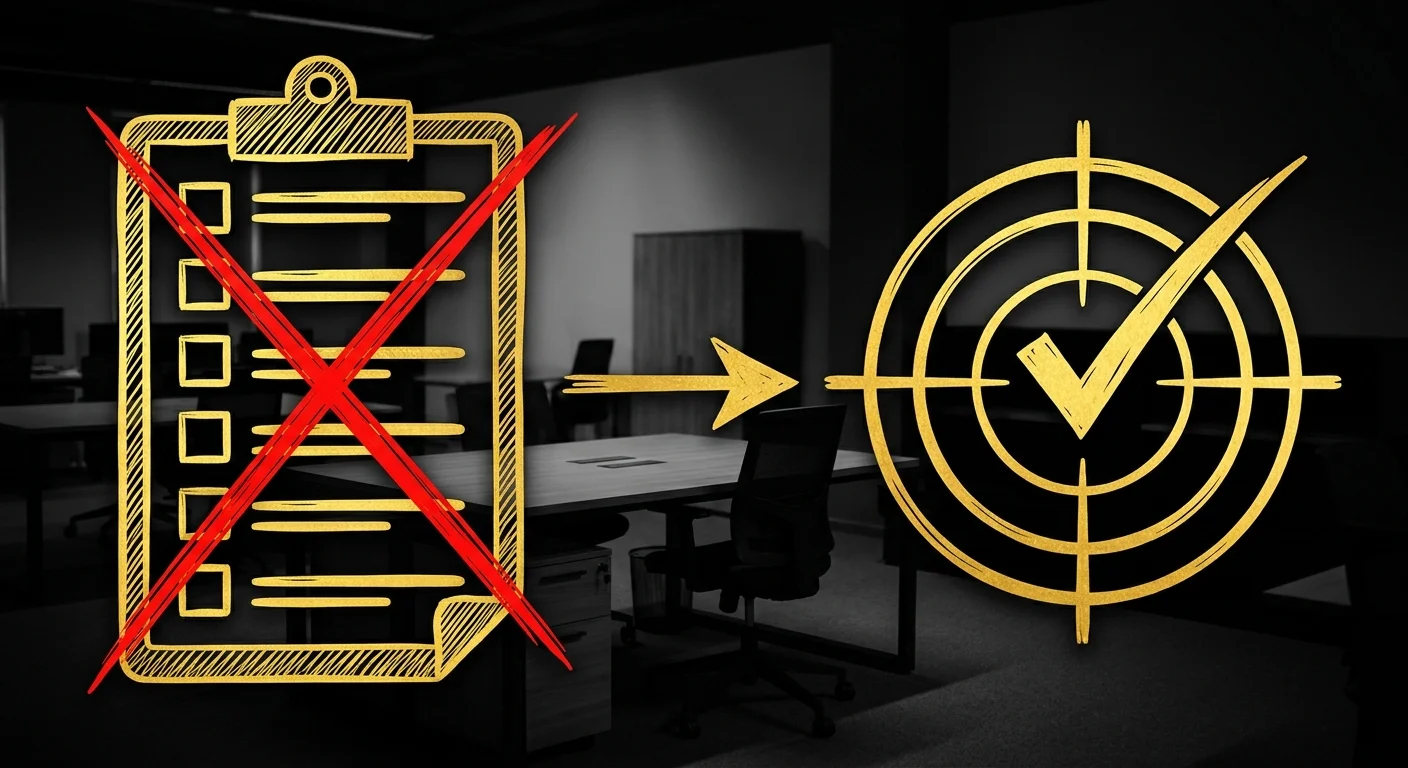
A service list doesn't tell you what an agency will do for your channel. It tells you exactly where their accountability ends — and where yours picks up.
Here's the thing: a restaurant with a twenty-page menu isn't signaling mastery. It's signaling that nothing on it has been truly refined.
An agency leading with a long bulleted list of deliverables sends the same message. Breadth of offerings. Not depth of ownership. And the longer that list gets, the clearer the signal becomes: someone else is responsible for the outcome.
Smart enterprise buyers are already drawing this conclusion. Gartner marketing technology reports found that 71% of marketing leaders are now shifting investment away from generic agencies toward specialized operations built to manage platform complexity. Not execute a predetermined checklist.
They're not shopping for a longer list. They're shopping for someone who will own the result.
The Checklist as a Liability Shield
The service list is a liability shield. And it's engineered to work that way.
When scope is defined by deliverable, responsibility dies at the deliverable's edge. Listing optimization is in scope. What happens to your contribution margin when those listings don't convert — not in scope.
PPC management is in scope. Whether your TACoS is trending toward channel health or slow-motion erosion — not in scope.
Every line item on that list is a wall. And every wall keeps accountability on your side of the fence.
There's a cost to this arrangement — and it's not theoretical. Research on strategic outsourcing frameworks shows that outsourcing holistic strategic control of a core channel — instead of building shared operational accountability — produces a 15% drop in operational efficiency.
That's not a bad-vendor problem. That's a structural failure baked into the task-based model from day one.
The checklist makes the whole thing look organized. Your P&L absorbs the damage.
Why Task Volume Is Not Channel Ownership
Task volume is not channel ownership. It's the illusion of it.
An agency can complete every single item on its deliverable list — every campaign managed, every listing refreshed, every support ticket closed — and still leave your Amazon channel in worse shape than when they found it.
That's not a paradox. That's what happens when completing tasks and owning outcomes are treated as the same work. One is execution. The other is responsibility for what the channel actually produces. full channel management
The executive reporting structure at an accountability-first agency looks nothing like a deliverable log. It's a P&L conversation — TACoS, contribution margin, channel health signals, and what's actively being done about each one.
That's the difference between an agency that reports what it did and a partner that owns what happened.
At Marketplace Valet, the engagement is measured at the P&L level. Because that's the only level that matters to an 8-figure brand.
| Agency Model | Accountability Structure | What Gets Reported | Who Owns the P&L Outcome |
|---|---|---|---|
| Task-Based Service List Agency | Bounded by deliverable scope — accountability stops at each line item | Deliverable completion log: campaigns managed, listings updated, tickets closed | The brand — the agency is contracted for tasks, not outcomes |
| ACoS-Only Advertising Optimizer | Limited to ad-attributed metrics — organic velocity and channel health sit outside the contract | Campaign ACoS, impression share, click-through rates — disconnected from total channel revenue | The brand — improving ad efficiency on a declining channel still counts as a win for the agency |
| Reporting Agency (Vanity Metrics Model) | No accountability beyond the dashboard — what the numbers mean for margin is not in scope | Session counts, keyword rankings, Buy Box percentage — metrics that look healthy while contribution margin erodes | The brand — the agency reports what happened; the brand figures out what to do about it |
| Full Operational Responsibility Partner | Shared ownership of channel P&L — advertising, defense, compliance, and listing integrity are integrated, not siloed | TACoS trend, contribution margin signals, unauthorized seller exposure, account compliance health | The partner — outcomes are the engagement metric, not deliverable volume |
Why Most Agencies Lead With a Long Menu

Agencies build service lists because service lists protect agencies.
Not brands. Agencies.
The deliverable-based model exists to create a clean, defensible scope of work — one that limits liability and locks in a monthly retainer. It's a business model wearing the costume of a service offering.
Think about a restaurant with a twenty-page menu. That's not mastery. That's breadth chosen because breadth is easier to sell.
An agency leading with a long bulleted list is making the same declaration. Here's everything we can do. Not here's what we own.
Most service-list agencies can execute the tasks. That's not the problem.
The problem is that executing tasks and owning a channel are two completely different engagements. And at eight figures, confusing the two is expensive.
The Retainer Incentive Problem
Here's the incentive math an agency runs internally: more line items in scope means a larger retainer. Tighter scope definition means it's harder for the client to hold the agency accountable for anything outside those lines.
A long service list isn't evidence of capability. It's a negotiated liability ceiling.
The agency wrote that ceiling into the contract. On purpose.
Once scope is defined by deliverable, accountability stops at the edge of each line item.
Listing optimization is billable. Whether those listings convert at a margin that makes the channel profitable is not. Campaign management is on the invoice. Whether your TACoS is trending toward health or erosion is off it.
Every line item is a wall. The wall keeps accountability on your side of the fence.
Enterprise marketing leaders are catching on. Gartner marketing technology reports show that 71% are now shifting investment away from generic agencies toward specialized operations that manage platform complexity as an integrated system — not a checklist.
They're not looking for a longer list. They're looking for actual accountability.
The market already knows what the service-list model costs. Most brands just haven't done the math on their own P&L yet.
Why the Service-List Model Fails 8-Figure Brands Specifically
At eight figures in annual Amazon revenue, the service-list model doesn't just underperform. It compounds risk with every quarter it stays in place.
Harvard Business Review research on strategic outsourcing frameworks found that outsourcing holistic strategic control of a core channel — rather than co-managing it with full operational accountability — produces a 15% drop in operational efficiency. That gap doesn't show up in a deliverable report. It shows up on the P&L.
Siloed optimization makes this worse. When advertising campaigns are managed in isolation from organic velocity, listing health, and channel compliance, the metrics can look clean while the margin quietly erodes.
Feedvisor data shows 62% of brands experiencing profitability decline despite positive ad-attributed results. That's not a coincidence. That's exactly what a task-based agency model produces when no one owns the full picture.
Good numbers on the report. Bad numbers on the P&L. The service list makes that outcome structurally predictable.
What the integrated channel management case study proves is that the right engagement is never a deliverable log. It's a P&L conversation — TACoS, contribution margin, channel health signals, and what's being done about each one.
At Marketplace Valet, that's the baseline. Not because it's a better reporting format. Because for an 8-figure brand, the only question that matters is whether the channel is actually healthier than it was last quarter.
| Service-List Agency Behavior | The Structural Reason | What the Brand Experiences |
|---|---|---|
| Defines scope by individual deliverable line items | Limits liability to only the tasks explicitly listed in the contract | Brand absorbs accountability for everything outside the defined scope — including channel outcomes |
| Optimizes advertising campaigns in isolation from organic channel health | Campaign metrics are the only measure of agency performance — TACoS and contribution margin fall outside the contract | Ad reports look clean while overall channel profitability quietly erodes |
| Excludes channel defense work — unauthorized seller removal, MAP enforcement, listing compliance — from standard scope | Defense work is labor-intensive and unpredictable; it disrupts a clean retainer model | Brand loses margin to pricing erosion and brand dilution that never appears on an agency deliverable report |
| Grows retainer size by expanding the number of line items in scope | More deliverables justify higher fees and make it harder for clients to evaluate true performance | Brand pays for task volume rather than channel results — complexity increases, accountability does not |
| Reports on completed tasks rather than P&L outcomes | Deliverable logs are verifiable and defensible; channel health requires owning the full picture | Brand receives documentation of activity but no clear answer on whether the channel is actually healthier |
The Hidden Cost of Disjointed Execution
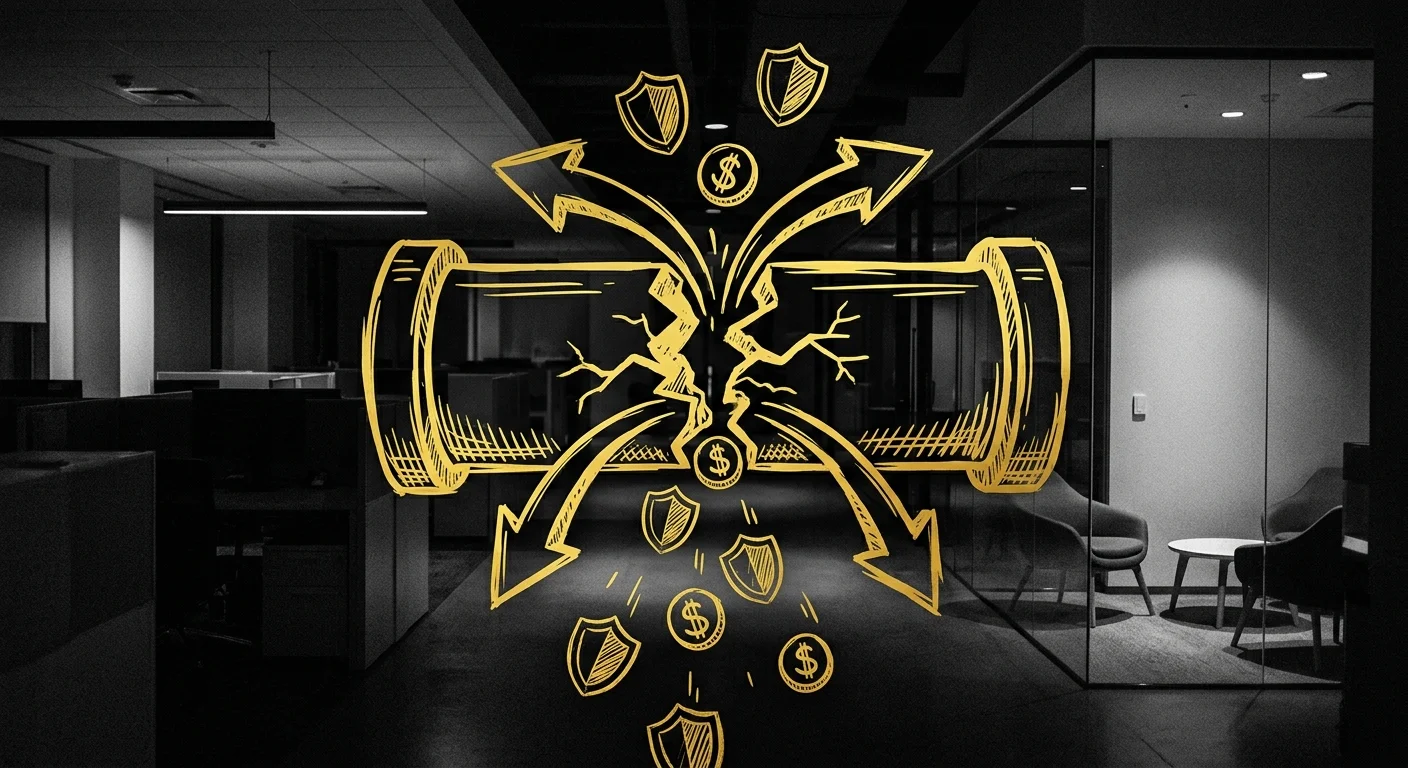
The damage doesn't show up in a deliverable report. It shows up on the P&L — quietly, month after month, in the gaps between line items that nobody owns.
Platform fulfillment fees, commissions, and advertising costs now consume an average of 45% or more of gross marketplace revenue. Advertising costs alone are rising up to 21% year over year. When those pressures compound and no one owns the complete channel, the margin erosion isn't linear. It accelerates.
That's the hidden cost. Not one catastrophic failure. A slow drain — campaigns that don't talk to listing health, listing health that doesn't talk to compliance, compliance that nobody owns.
How ACoS Optimization Erodes Total Channel Margin
ACoS-only optimization is the most persistent way the service-list model destroys margin while appearing to perform.
Here's how it works: the agency optimizes ACoS because that's the metric the brand asks about. ACoS looks clean. The report goes out. But ACoS only measures efficiency on ad-attributed revenue — it says nothing about organic velocity, nothing about listing health driving non-ad traffic, nothing about whether the channel is profitable after fees. According to Feedvisor brand performance statistics, 62% of brands are experiencing profitability decline despite positive ad-attributed metrics. That's not a coincidence. That's the ACoS-only model running exactly as designed.
TACoS — Total Advertising Cost of Sale measured against total channel revenue — is the metric that tells the real story. A brand with a rising ACoS but a falling TACoS is building organic velocity. A brand with low ACoS on flat revenue isn't building anything. That distinction matters even more when Jungle Scout advertising cost metrics show average CPCs rising up to 21% year over year — because a metric that ignores the full revenue base gets more expensive to optimize every single quarter.
The Defensive Gap: What Nobody on Your Service List Owns
MAP enforcement. Unauthorized seller removal. Listing integrity. Account compliance. None of it appears on a standard service list — not because it's unimportant, but because it's nearly impossible to define as a deliverable. So agencies quietly leave it off.
According to brand protection measures on Amazon, 53% of consumer brands identify pricing erosion and unauthorized seller activity as their single largest threat to channel growth. And yet most task-based agencies have no deliverable for it. It's not in scope. It's not on the invoice. So it doesn't get addressed — until the damage is visible enough that the brand treats it as a crisis.
Defensive strategy isn't an optional add-on. It's the prerequisite for protecting everything the growth work builds. An unauthorized seller doesn't just undercut your price — they train your customer to expect the lower price. That's brand erosion. It compounds quietly until it's structural. Real channel accountability means offensive and defensive strategy are integrated from day one. Not separated across line items that belong to different departments.
This Engagement Is Not for Every Brand
This isn't for every brand. That's not a disclaimer. It's the point.
If your team wants final approval on every tactical adjustment, this model won't work. Full Operational Responsibility requires a counterpart — not a client who's also functioning as the strategist. Brands whose decision-makers override channel decisions, second-guess account calls, or treat the agency as a button-pusher get button-pushing results. That's true regardless of what the engagement agreement says.
The same applies to brands unwilling to fund advertising aggressively enough to generate real demand signals — and brands at a scale where a single dedicated channel partner doesn't make economic sense. Marketplace Valet works with established U.S. consumer brands that are ready to treat Amazon as a P&L, not a line item to manage cheaply. If that's not where you are yet, this isn't the right fit. Saying that clearly serves both sides better than finding out later.
| Channel Metric | What ACoS-Only Optimization Tracks | What TACoS Reveals | P&L Impact When Ignored |
|---|---|---|---|
| Advertising Spend Efficiency | Ad-attributed revenue divided by ad spend (ACoS) | Total ad spend as a percentage of all channel revenue, including organic (TACoS) | Low ACoS on a stagnant or shrinking revenue base signals a failing channel, not a healthy one |
| Organic Velocity | Not tracked — invisible to ACoS-only reporting | Rising organic share shows up as a falling TACoS even when ACoS climbs | Ignoring organic velocity means missing the most durable, lowest-cost revenue the channel produces |
| Listing Health & Conversion Rate | Not tracked — treated as a separate service line item | Weak listing conversion inflates ad dependency, which inflates TACoS directly | An under-converting listing forces the brand to buy traffic it should be earning organically |
| Channel Compliance & Account Standing | Not tracked — outside standard campaign management scope | Account health issues suppress listing visibility, which collapses organic revenue and distorts TACoS | Compliance failures that go unmonitored can silently erase months of advertising investment overnight |
| Unauthorized Seller & Pricing Integrity | Not tracked — no ad campaign deliverable exists for it | Pricing erosion from unauthorized sellers compresses average selling price across the entire catalog, worsening TACoS at the revenue denominator | Customers trained to expect a lower price by an unauthorized seller represent structural brand damage no ad campaign can reverse |
| Contribution Margin After Platform Fees | Not tracked — ACoS does not account for fulfillment fees, commissions, or cost of goods | A healthy TACoS trend alongside rising platform costs signals margin compression that requires operational adjustment, not just bid changes | Brands optimizing ACoS in isolation can report strong campaign performance while the channel erodes at the P&L level quarter over quarter |
What Full Operational Responsibility Actually Looks Like
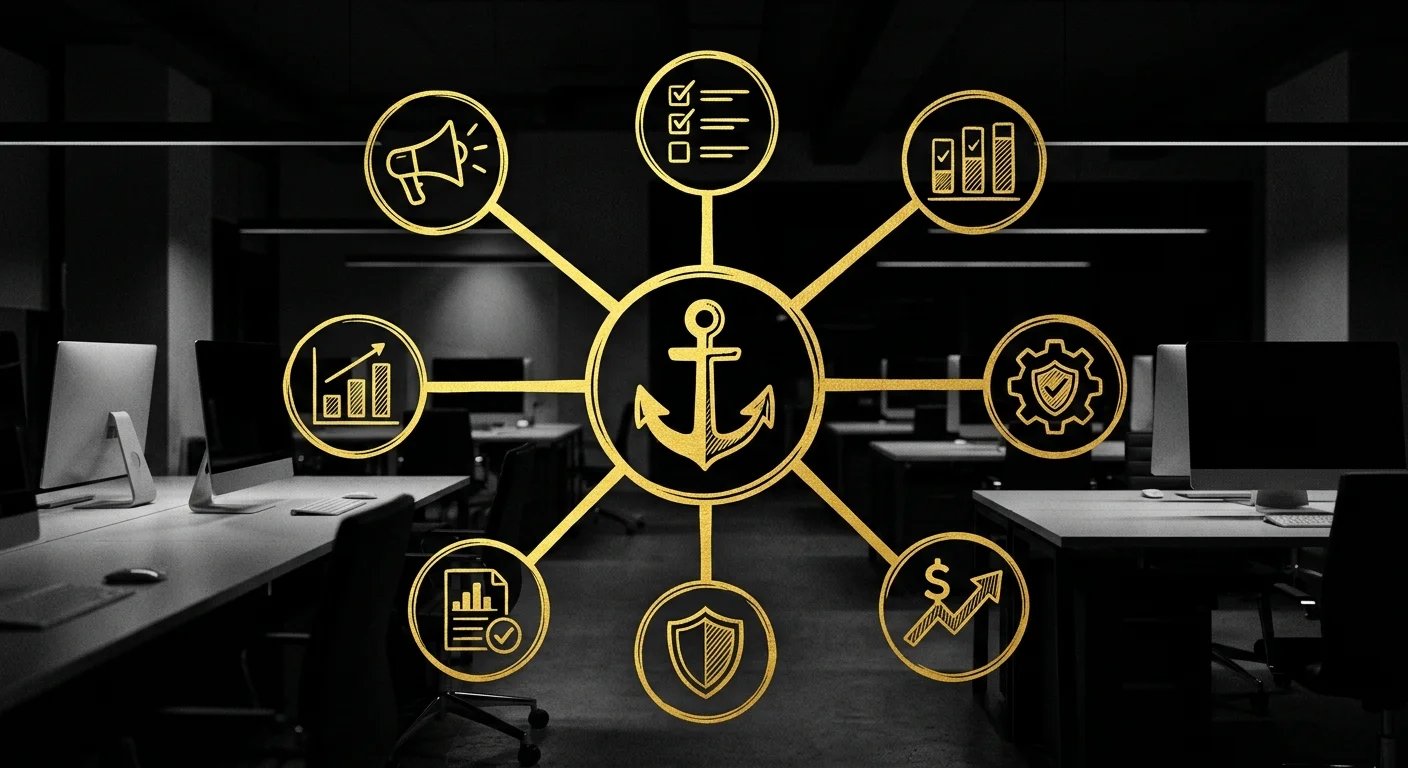
Full Operational Responsibility isn't a premium tier on a service menu. It's a different contract entirely — one where the partner is accountable for the channel's P&L outcome, not whether the task list got completed.
Most brands don't feel the gap until they've already paid for it. Platform fulfillment fees, commissions, and advertising costs now consume an average of 45% or more of gross marketplace revenue. At that cost structure, there's no margin left for a model where each line item has a different owner. Every dollar has to be managed against total channel performance — not siloed by whoever holds that particular deliverable.
That's what it means to manage advertising, inventory health, listing integrity, and compliance as a single system with a single owner. Not coordinated across handoffs. Owned. That's total channel profitability — and it only happens when one partner is accountable for all of it.
One Accountable Partner Across the Entire P&L
One partner owning the entire P&L changes what gets measured, what gets prioritized, and what gets defended. There's no gap between the team running ads and the team managing listings. No handoff between whoever handles compliance and whoever handles pricing integrity. Those gaps — the space between line items — are where margin disappears in a task-based model. Every time work crosses a boundary, someone stops being accountable.
Outsourcing strategic control of a core channel — rather than co-managing it through a single accountable partner — produces a 15% drop in operational efficiency. That's not theoretical. That's the measurable cost of a model where accountability stops at the edge of each deliverable.
Winning brands don't need a longer menu. They need one partner who owns the kitchen. The Amazon Annual Report 2023 confirms what any operator already knows: this channel's cost structure punishes inattention and compounds for the disciplined.
Operator Experience Versus Platform Knowledge
Platform knowledge and operator experience are not the same thing. Most agencies know Seller Central, campaign structures, suppressed listing protocols. That's table stakes. It's not the same as having run the P&L yourself — and the difference shows up in decisions, not dashboards.
Operator experience means knowing what it costs to carry inventory against a demand forecast. Knowing what margin looks like after fees when a campaign spikes velocity faster than replenishment can follow. Knowing the difference between a channel that looks healthy on a dashboard and one that's healthy on a balance sheet. Marketplace Valet's founders built EMPIRE® to over 10 million DTC orders before opening this agency. That's not a credential on a slide. It's why the channel gets managed the way an operator manages it — not the way an advertiser would.
That gap — between platform knowledge and operator knowledge — is what produces decisions that look correct and perform incorrectly at the P&L level. An agency that's never owned physical product inventory optimizes the metrics it can see. An operator-led partner optimizes for what actually matters: a channel that's more defensible, more profitable, and more compounding than it was when the engagement started.
| Responsibility Area | Task-Based Agency | Full Operational Responsibility Partner | Why It Matters at 8 Figures |
|---|---|---|---|
| Advertising Strategy | Manages campaigns to hit ACoS targets; reports on ad-attributed revenue in isolation | Manages advertising as one lever within total channel P&L — optimizing TACoS, not ACoS alone, against full revenue and margin | At scale, optimizing the wrong metric produces clean reports on a declining channel — the gap shows up in contribution margin, not dashboards |
| Listing & Content Integrity | Refreshes listings as a scheduled deliverable; flags suppressed ASINs reactively when escalated | Monitors listing health continuously as a revenue protection function — suppressed content is a margin event, not a support ticket | A suppressed or degraded listing doesn't pause ad spend — it compounds cost against zero organic output until someone owns fixing it |
| Channel Defense (MAP, Unauthorized Sellers) | Not in scope; typically absent from the service list because it's difficult to define as a deliverable | Integrated into the ongoing channel management mandate — unauthorized seller activity is monitored and acted on before pricing erosion becomes structural | Strong products attract unauthorized sellers faster than weak ones; brands that don't own this defensively lose margin they never see leaving |
| Inventory & Fee Management | Inventory planning sits with the client; the agency manages ads regardless of stock position or storage fee exposure | Inventory health is factored into advertising pacing and channel strategy — ad spend doesn't run blind to stockout risk or fee exposure | Advertising into an inventory problem accelerates the damage; the two functions must be managed by a partner who sees both |
| Account Compliance | Escalated by the client when a problem surfaces; no proactive monitoring built into the engagement | Compliance monitoring is continuous — policy changes, account health flags, and ASIN-level risk are tracked as part of channel ownership | An account health violation doesn't announce itself in advance; by the time a brand escalates it, the cost is already compounding |
| Performance Accountability | Accountable for task completion and deliverable output; P&L outcome remains the client's problem | Accountable for the channel's P&L direction — not just whether the work got done, but whether the channel is more defensible and profitable than it was | Task completion without outcome ownership is the exact model that produces 'the agency was doing their job' while the channel quietly deteriorates |
What 8-Figure Brands Should Demand Instead

So what does the right structure actually look like?
Not a longer contract. Not a bigger service menu. One partner, one P&L, accountable for everything from advertising through compliance. That's the model.
The market is already moving. Gartner marketing technology reports show 71% of enterprise marketing leaders are shifting investment away from generic agency models toward specialized operational partners — ones who manage platform complexity as a system, not a checklist.
That's not a trend. That's the market doing the math.
Brands that win on Amazon don't need more options. They need one partner who owns the outcome — and who can demonstrate that accountability before the contract is signed, not in a pitch deck after the fact.
The Evaluation Questions That Surface Real Accountability
Start with accountability, not capabilities.
Ask any agency you're evaluating: if our TACoS rises over the next two quarters, what specifically are you responsible for — and what are we responsible for?
A task-based agency deflects. A channel owner answers directly.
Then ask about defense.
Not whether they offer unauthorized seller removal or MAP enforcement as an add-on service. Ask who owns it, how they handle it, and what the escalation process looks like when a violation surfaces at 11pm on a Friday.
If those answers point to a separate conversation with a separate team, you've found a handoff gap. That's exactly where margin disappears — not in the pitch, but in the seams between departments.
The third question is the one most agencies can't answer.
Ask whether they've ever run their own product P&L. Not managed a client account — owned the inventory, carried the margin risk, and lived with a demand forecast that missed by 30%.
Platform knowledge and operator experience are not the same credential. One teaches you how Amazon works. The other teaches you what it costs when it doesn't. The integrated channel management case study from Marketplace Valet shows exactly what changes when operator experience — not just platform familiarity — drives channel decisions.
Metrics That Prove Channel Ownership
Metrics are where the accountability conversation gets real.
ACoS is what most agencies report because it's what most brands ask about. But 62% of brands experiencing profitability decline have clean ACoS numbers. The channel is eroding and the dashboard looks fine.
Reporting ACoS in isolation isn't a performance update. It's a liability shield.
TACoS — Total Advertising Cost of Sale measured against total channel revenue — isn't a supplemental metric. It's the baseline. Everything else is a subset.
Average CPCs are rising up to 21% year over year. Any model that only optimizes ad-attributed efficiency gets more expensive to sustain every quarter while organic revenue goes unmanaged.
A rising ACoS with a falling TACoS means organic velocity is building. That's a healthy channel. A low ACoS on flat revenue means nothing is compounding. That's a stalled one.
Beyond TACoS, demand contribution margin visibility. What the channel actually returns after Amazon's fees, advertising spend, and cost of goods.
If different teams own different pieces of that answer, you've found the gap. That gap — the space between line items where accountability dissolves — is exactly what Full Operational Responsibility is designed to close.
One number. One owner. One conversation.
| Evaluation Signal | Red Flag Response | Accountability Response | What It Tells You |
|---|---|---|---|
| TACoS vs. ACoS reporting | We report ACoS as the primary advertising metric | TACoS is the baseline — we report total channel revenue against total ad spend, not just ad-attributed sales | An ACoS-only answer signals the agency is optimizing the metric clients ask about, not the one that determines channel health |
| Unauthorized seller enforcement | We offer brand protection as an add-on service handled by a separate team | Unauthorized seller removal and MAP enforcement are integrated into channel management — not a separate engagement | If defense requires a handoff to another team, there's a structural gap between offensive and defensive strategy |
| Accountability for P&L outcomes | We're responsible for delivering the agreed task list — performance depends on many factors | We're accountable for the channel's P&L outcome, not the completion of deliverables | Task-based accountability stops at the edge of each line item — channel accountability has no edge |
| Operator experience | Our team has extensive platform experience managing Amazon accounts and campaigns | Our founders ran their own physical product P&L before opening this agency — we've owned inventory, carried margin risk, and lived with the consequences | Platform knowledge and operator experience are not the same thing — only one produces decisions that hold up at the balance sheet |
| Contribution margin visibility | We can pull reporting on advertising spend and sales revenue — margin is your finance team's scope | We track contribution margin — what the channel returns after fees, ad spend, and cost of goods — as a core engagement metric | If the agency doesn't own margin visibility, nobody owns it — and the gaps are where profitability quietly disappears |
| Strategic escalation path | Major account decisions go through our account manager and then our leadership team for review | One partner owns the channel — there is no handoff between the team running ads and the team managing compliance or pricing integrity | Multiple escalation layers signal a task-based structure; a single accountable owner signals channel management |
Frequently Asked Questions
The framework handles the structural case. But brands that are mid-evaluation — or already locked into an agency and trying to figure out what's wrong — run into friction points that a framework doesn't answer directly. So here are the questions that come up every time.
Straight answers. No qualifications.
Why is a compartmentalized agency service list a major risk for 8-figure brands?
The risk isn't that the tasks don't get done. It's that nobody owns what happens between them.
Compartmentalized models hand advertising to one team, listings to another, compliance to a third. Your internal leadership ends up responsible for stitching all of it into a coherent channel strategy. That integration work doesn't disappear when you hire an agency. It just shifts back to you — quietly, and without anyone acknowledging it happened.
At 8-figure scale, that's a C-suite distraction and a margin problem at the same time. Platform costs now consume an average of 45% or more of gross marketplace revenue. There's no margin in those economics for a model where accountability stops at the edge of each deliverable.
What is the operational difference between tactical execution and full operational responsibility?
Tactical execution means completing what's on the SOW. Full Operational Responsibility means owning what the channel does next.
The difference is most visible when something breaks. A listing gets suppressed. A pricing violation tears through your MAP structure. A campaign spikes velocity faster than inventory can follow. A tactical executor closes the ticket. A channel owner prevents the next one.
That's not a semantic distinction. It's a different contract. The partner is answerable for whether the channel is healthier at the end of the quarter than at the start — not whether deliverables landed on time.
How does optimizing for campaign ACoS in isolation erode an 8-figure brand's total marketplace margin?
ACoS only measures how efficiently your ad spend converts on ad-attributed revenue. It tells you nothing about organic velocity, nothing about pricing integrity, and nothing about what the channel actually returns after fees and cost of goods.
An agency can optimize ACoS to a clean number while your contribution margin quietly drops. And every report they send will look like progress. That's not a hypothetical — 62% of brands are experiencing profitability decline despite positive ad-attributed metrics. That's the ACoS-only model running exactly as designed.
TACoS — Total Advertising Cost of Sale measured against total channel revenue — is what tells you whether the channel is actually growing or just efficiently burning budget. A rising ACoS with a falling TACoS means organic velocity is building. A low ACoS on flat revenue means nothing is.
Why do typical service-list agencies consistently fail to execute defensive measures like MAP enforcement?
Because MAP enforcement and unauthorized seller removal aren't line items. They're outcomes that require continuous monitoring, escalation authority, and integration with pricing strategy.
A service-list agency treats them as add-ons or separate retainer conversations. Either way, nobody owns them on an ongoing basis. So when a third-party seller appears at 20% below your MAP price, there's no one who woke up that morning accountable for fixing it. The ticket gets logged. The process starts. The damage compounds while it moves through the queue.
53% of consumer brands identify pricing erosion and unauthorized seller activity as their single largest threat to channel growth. Not because the tools don't exist. Because nobody owns them as a continuous function.
What core metrics should an 8-figure enterprise demand from a marketplace account management partner?
Start with TACoS, not ACoS. TACoS — Total Advertising Cost of Sale against total channel revenue — tells you whether the channel is building organic velocity or just spending efficiently on ads. That's the baseline question. If your agency can't answer it, stop there.
Next, demand contribution margin visibility. What does the channel actually return after Amazon's fees, advertising spend, and cost of goods? Average CPCs are rising up to 21% year over year. Any model that only tracks ad-attributed efficiency is getting more expensive every quarter while the organic base goes unmanaged.
Beyond those two: account health metrics — ASIN status, listing integrity, suppression rates — and a single point of accountability for all of it. If different teams own different pieces of that picture, you've already found the gap.
How do I know if my current agency is actually accountable for channel outcomes or just deliverable volume?
Ask one question: if our TACoS rises over the next two quarters, what specifically are you responsible for — and what are we responsible for?
A task-based agency splits the answer. A channel owner doesn't.
The second signal is in the reporting. If every dashboard shows green metrics but you're still making Amazon decisions internally — still fielding compliance questions, still escalating pricing violations, still being asked to approve tactical calls — the agency is executing tasks, not owning the channel. The accountability gap isn't always visible in the deliverables. It's visible in where the hard decisions still land.
The Bottom Line on Agency Service Lists
A service list describes what an agency is willing to do.
Not what they're willing to own.
For an 8-figure brand, that's the whole ballgame.
The brands that compound on Amazon aren't the ones with the most line items in an SOW. They're the ones with a single partner accountable for whether that channel is healthier than it was yesterday.
Advertising, inventory, listings, compliance, margin protection — treated as one system with one owner answerable for the result. That's what serious Marketplace Account Management actually looks like. Not a menu. Not a retainer. Full Operational Responsibility.
No checklist has ever owned a P&L.
The menu metaphor holds all the way to the end. A restaurant that hands you a twenty-page menu is signaling breadth. The best operators don't need that menu. They own the kitchen.
If the agency you're evaluating leads with their service list, they've already answered the accountability question. A service list is a document engineered to describe scope — not to own outcomes.
The brands that win on Amazon don't need a longer list. They need one partner who owns the kitchen — and who was built for that accountability long before this conversation started.
The fastest way to find out whether your agency owns the channel — or just executes tasks on it — is to look at your own account. Not their case studies. Yours. A free Amazon audit from Marketplace Valet delivers a 15–20 page review of your specific account: advertising efficiency, listing health, unauthorized seller exposure, compliance gaps. Built by operators who've run their own product P&L. The findings are yours regardless of what comes next.