
Why Amazon Fee Shortages Are Not Just an Unavoidable Cost of Selling
Amazon fee shortages aren’t an unavoidable cost of selling because many come from specific errors a seller can find and claim back: inbound shipments received short, fees charged on the wrong size or weight, and inventory lost or damaged in a fulfillment center. A fee shortage is any point where Amazon’s accounting leaves the seller with less than they’re owed. Amazon does run reimbursement programs for these. Since November 1, 2024, it has reimbursed many units lost in its fulfillment centers on its own. But automatic doesn’t mean complete. When Amazon misses one, filing the claim and proving the loss is the seller’s job, and the claim windows are short. Sellers who book every gap as a normal expense give up money a documented claim could recover. The losses are small one at a time, so they rarely stand out on a single report. Across thousands of orders, they add up. Treating them as recoverable errors, not overhead, is what makes a review process worth building.
Last Updated: October 24, 2026
- • What Counts as an Amazon Fee Shortage (And Why Most Sellers Miss Them)
- • Where the Errors Actually Live
- • Why 'Amazon Will Catch Its Own Mistakes' Is a Flawed Operating Assumption
- • How Unmonitored Shortages Compound Across an Account
- • What a Documentation-First Dispute Process Looks Like
- • Checking Returns and Reimbursements Line by Line
-
• Frequently Asked Questions
- • What's the difference between an Amazon fee shortage and a chargeback?
- • What documentation do I absolutely need to win an inbound FBA shipment dispute?
- • How long do I have to file a claim for a fee discrepancy on Amazon?
- • Can better operational processes prevent most Amazon fee shortages?
- • Why doesn't Amazon automatically find and reimburse all of its own fee errors?
- • What are the most common types of FBA fee errors that sellers miss?
- • Where This Leaves Your Amazon Channel
What Counts as an Amazon Fee Shortage (And Why Most Sellers Miss Them)
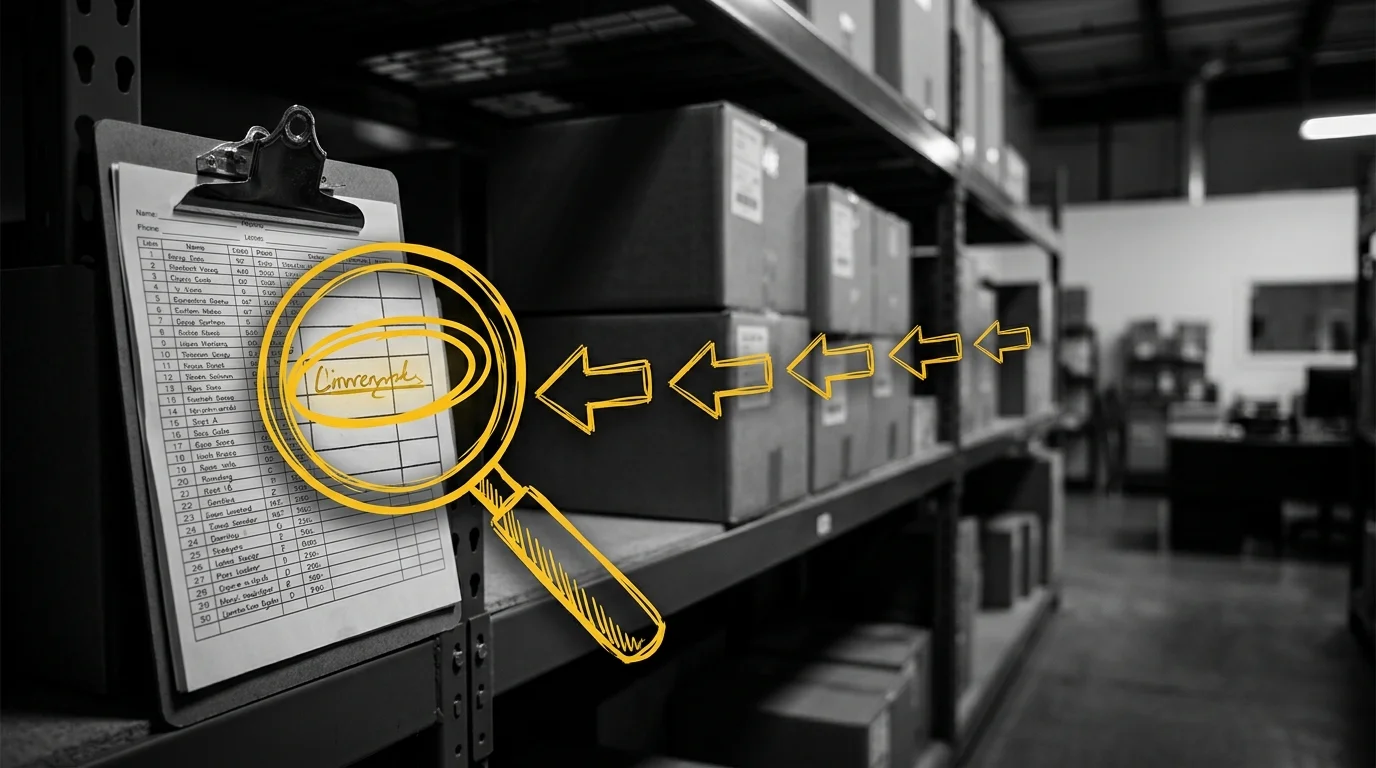
A shortage is any point where Amazon’s accounting leaves the seller short. Overcharged fulfillment fees, a unit placed in the wrong size tier, and inbound inventory received short all count.
Here’s the problem: most sellers never see these errors as their own category. They see a payout that’s lower than expected and move on, treating the gap as noise instead of a line item they can correct.
Defining the Shortage, Not the Symptom
The symptom is a thin settlement report. The shortage is the specific transaction under it: a unit marked lost, a fee charged against the wrong size tier, or a return refunded without the inventory ever coming back to stock.
So the definition has to start at the transaction, not the summary. A seller who only scans the top-line deposit will never find the charge that was wrong.
Why the Complexity Gets Mistaken for Normalcy
Now, Amazon’s fee structure really is complicated. There are many fee types, and each claim type has its own window and its own start date.
But complex isn’t the same as normal. Reconciling takes time, and sellers without a review system mistake that difficulty for an acceptable baseline. Managing Amazon chargebacks and fee shortages lays out the full recovery picture.
Where the Errors Actually Live
Every accounting failure traces back to a specific operational category. That’s where recovery work starts: not at the definition, but at the place the error actually lives.
| Error Category | Where It Originates | Typical Trigger |
|---|---|---|
| Inbound Shipment Shortage | Carrier handoff to warehouse receiving, before a shipment is fully checked in | A shipment arrives short of the units listed on the inbound plan, and no automatic reimbursement is issued |
| Fulfillment Fee Overcharge | Dimensional weight and size tier classification at the fee calculation stage | A unit gets assigned to a larger or heavier tier than its actual packaging qualifies for |
| Storage Fee Error | Warehouse inventory records versus actual physical removal or disposal | A storage charge keeps accruing against inventory that has already left the fulfillment center |
| Lost or Damaged Inventory | Fulfillment center handling and carrier transit | A unit is lost or damaged, and the payout uses a manufacturing cost estimate lower than the real cost |
| Return-to-Stock Failure | Customer return processing and reconciliation against a refunded order | A customer return is refunded to the buyer without the inventory actually returning to sellable stock |
Inbound Shipment Shortages
Inbound shipments can come up short between the carrier’s truck and the warehouse shelf. When one does, the seller has to prove two things: that they owned the inventory, and that it was delivered. Amazon’s Seller Central help page says both proof of inventory ownership and proof of delivery must be submitted with the research request.
So the paperwork has to exist before the discrepancy does. Supplier invoices and carrier delivery records are hard to find months later. For the windows themselves, see Amazon inbound shortage claim deadlines you cannot miss.
Fulfillment and Storage Fee Errors
Fulfillment and storage fees break for a different reason. Amazon measures a unit wrong and it lands in a bigger size tier, or a storage charge keeps running on stock that’s already gone. One reply on Amazon’s U.S. Seller Forums says a seller has 90 days from the date a fee is charged to ask for that money back. Amazon changes these windows, so check the current one in Seller Central before filing.
Why ‘Amazon Will Catch Its Own Mistakes’ Is a Flawed Operating Assumption
The idea that Amazon will catch its own mistakes treats an automated system as a full audit. It isn’t one. Amazon’s automated checks don’t catch every error, so the seller has to look. That looking is part of the work of marketplace account management for a seller. An account with no review process isn’t a healthy account. It’s an unchecked one, and the two look the same until something breaks.
What Automatic Reimbursement Does and Doesn’t Cover
Amazon has automated more of this work. In an announcement on Amazon’s U.S. Seller Forums, Amazon said that starting November 1, 2024, it would proactively reimburse sellers for items lost in its fulfillment centers. The same update shortened the time to file a claim, which used to be 18 months. Removal claims still have to be filed by hand, and if Amazon doesn’t pay a fulfillment-center loss on its own, the seller still has to file. Catching what the automation misses depends on the seller’s own review, which is what a timeline for disputing inbound receiving shortages is built around.
How Unmonitored Shortages Compound Across an Account

A single missed claim is a small accounting error. Left unchecked across inbound shipments, storage fees and customer returns, the same error repeats every cycle, and the total grows quietly.
The Claims Window Problem
Each claim type has its own clock, and each starts at a different event. Per Amazon’s October 2024 update on the U.S. Seller Forums, claims for units lost or damaged in a fulfillment center are due within 60 days after the item was reported lost or damaged, and customer-return claims can be filed 60 to 120 days after the buyer’s refund or replacement date. A separate rule covers disputes over how much Amazon paid. Amazon’s FBA reimbursement policy page says a seller who disagrees with its valuation of a unit can file a claim within 60 days after the reimbursement was issued. Mixing up those start dates is how a seller loses a claim they could have won.
What a Documentation-First Dispute Process Looks Like
A reconciliation system built around documentation works differently than one built around hope. Every claim category above traces back to the same requirement: proof that exists before the dispute does, organized before the settlement report ever reveals a shortfall.
Proof of Ownership and Proof of Delivery
The inbound example above is really a documentation problem. Ownership records and delivery confirmation aren’t extras attached to the claim. They are the claim. Running physical product P&L for 20+ years, including scaling EMPIRE® past 10 million DTC orders, teaches you to guard that paperwork like inventory.
Building a Reconciliation Cadence
A cadence beats a scramble. Reviewing settlement reports on a fixed schedule, rather than only when a payout looks thin, is what separates a monitored account from an unmonitored one. That operational habit, not platform goodwill, is what catches a dimensional weight error before its reimbursement window closes.
Checking Returns and Reimbursements Line by Line

Returns and reimbursement amounts are where shortages hide in plain sight. A return can be refunded without the unit ever coming back, and a reimbursement can be paid at the wrong cost.
| Dispute Type | Required Evidence | Filing Window |
|---|---|---|
| Unit Lost or Damaged in a Fulfillment Center | Inventory ledger entry showing the loss, and whether Amazon already paid | 60 days after Amazon reports the unit lost or damaged |
| Reimbursement Paid at the Wrong Value | Your manufacturing cost records, such as supplier invoices, and the reimbursement line on the settlement report | 60 days after the reimbursement was issued |
| Customer Return Not Restocked | The refund record, return tracking, and an inventory ledger showing no unit came back | 60 to 120 days after the refund or replacement |
| Removal Order Lost in Transit | Removal order details and carrier tracking | 15 to 75 days from the date the removal shipment was created |
Checking a Reimbursement Amount
So start with a line-by-line look, not a glance at the total. Since March 10, 2025, Amazon reimburses units lost before a sale at the product’s manufacturing cost, and units lost after a sale at the sale price minus fees, per its policy update on the U.S. Seller Forums. If you never entered your cost in Seller Central’s Manage Your Manufacturing Cost tool, Amazon uses its own estimate. That’s worth checking first.
Sequencing the Filing Window Against the Reimbursement Date
The valuation window opens on the reimbursement date, not the date the unit went missing. The return window counts from the refund date. A seller who tracks the wrong date will think there’s more time left than there is.
Frequently Asked Questions
So this is where the mechanics get specific. These questions show up once an account starts reconciling instead of guessing.
What’s the difference between an Amazon fee shortage and a chargeback?
A chargeback is a buyer disputing a card charge with their bank. Amazon emails the seller, who has 7 calendar days to answer with the order’s shipping details, and the bank decides. A fee shortage is an accounting gap where Amazon’s own charges or payouts leave the seller short.
What documentation do I absolutely need to win an inbound FBA shipment dispute?
Proof of inventory ownership, such as supplier invoices, and proof of delivery to Amazon. Amazon’s help page says both go in with the research request, so have them ready before you file.
How long do I have to file a claim for a fee discrepancy on Amazon?
Most are short. Fee overcharges from a wrong measurement: 90 days from the charge date, per trade sources. Units lost or damaged in a fulfillment center: 60 days after Amazon reports them. A disputed reimbursement amount: 60 days after it was issued. Check Seller Central for the current numbers before you file.
Can better operational processes prevent most Amazon fee shortages?
Yes. Many shortages trace back to gaps in inventory reconciliation and settlement review. A fixed review schedule catches far more than a reactive glance at a thin payout.
Why doesn’t Amazon automatically find and reimburse all of its own fee errors?
Amazon’s automatic reimbursements cover set cases, like units lost in its fulfillment centers. Errors outside those cases, such as a wrong size tier or a return that never came back, usually need a claim from the seller.
What are the most common types of FBA fee errors that sellers miss?
Misclassified dimensional weight on fulfillment fees, storage charges against inventory already removed from a warehouse, and customer returns refunded without the unit actually restocking. Each one hides inside a settlement report most sellers never open line by line.
Where This Leaves Your Amazon Channel
A ledger that never closes itself doesn’t forgive neglect. Every unreconciled charge stays on the books, waiting, whether anyone goes looking for it or not.
So the real choice is not whether errors exist. It is whether a channel is actively reconciled, or quietly losing money while someone calls it normal. Disciplined execution over the life of the engagement, not a one-time cleanup, is what keeps that ledger closed.
Amazon’s accounting wasn’t built to audit itself for the seller. That oversight belongs in any Amazon Account Management routine. If no one is doing that review today, request a free Amazon audit to see what your own settlement reports have been quietly absorbing.