
When Display and DSP Ads Pay Off on Amazon: A Complete Guide
Amazon Display and DSP ads pay off when total Amazon revenue grows faster than total ad spend after they start, even if each campaign’s own ACoS looks weak. The number that shows this is Total Advertising Cost of Sale, or TACoS, not campaign-level ACoS alone. ACoS measures one campaign’s ad spend against the sales that campaign directly generated. TACoS measures total ad spend against total Amazon sales, paid and organic combined. Display and DSP campaigns often post a weaker ACoS than search-based Sponsored Products campaigns, because they reach shoppers before a purchase decision is made instead of capturing a search already in progress. That weaker number does not mean the spend failed. Display ads and Amazon DSP build audiences, put a brand in front of shoppers browsing related products, and create demand that often converts later through organic or branded search. So the test runs over weeks, not days, and it is measured against the brand’s own past channel data rather than a fixed benchmark. If total ad spend climbs without a matching lift in total revenue, the upper-funnel spend is not earning its place. The payoff point is reached when it measurably strengthens the whole channel’s growth, not when its own line item looks efficient.
Last Updated: October 26, 2026
- • Articles in this cluster
- • What Sponsored Display and Amazon DSP Actually Do
- • Why Judging Upper-Funnel Ads by ACoS Alone Sets Them Up to Fail
- • The Mechanics of Reading TACoS Instead of ACoS
- • How an Account Accumulates Invisible Measurement Risk
- • Four Checks That Show Whether Upper-Funnel Spend Is Paying Off
- • Deploying Display and DSP in a Channel Already Measuring TACoS
- • Frequently Asked Questions
- • What This Means
Articles in this cluster
- When a brand is ready for programmatic display spend — What Revenue Level Justifies Amazon Programmatic Display Spend?
- Why small brands lose money on display ads — Why Smaller Amazon Brands Often Lose Money on DSP Campaigns
- Telling new customers from repeat shoppers in display ads — How to Tell If Display Ads Are Winning New Customers or Not
- How repeat buyers distort display campaign results — Why Repeat Buyers Skew Amazon Display Campaign Results
- Knowing when to shift budget from display to search — Signals That Tell You to Pause Amazon Display Spend for Search
- Sizing a test budget for Amazon DSP — Setting a Testing Budget to Measure Amazon DSP Payoff
- Choosing between Sponsored Products and DSP budget — Amazon DSP vs Sponsored Products: Where Should New Budget Go?
- Defining true incremental revenue from display ads — What Counts as True Incremental Revenue From Display Ads?
- Modeling ad spend against bottom-line margin — Modeling Total Ad Spend Against Bottom-Line Margin on Amazon
- Choosing between Amazon display and external social ads — Upper-Funnel Display Ads vs External Social Ads for Amazon Brands
What Sponsored Display and Amazon DSP Actually Do

Sponsored Display and Amazon DSP are built to reach shoppers before they search, not after. Both tools place a brand in front of audiences based on browsing behavior and shopping signals rather than keyword intent.
The two tools are not interchangeable. Sponsored Display runs inside Amazon’s advertising console with narrower audience options. Amazon DSP buys programmatic display inside and outside Amazon’s ecosystem, reaching shoppers on Amazon detail pages, the open web, connected TV and audio.
Why Judging Upper-Funnel Ads by ACoS Alone Sets Them Up to Fail
ACoS was built to answer one question: did a single campaign’s sales cover its own ad spend? For a bottom-funnel Sponsored Products campaign chasing a search already in progress, that design works.
Applied to Display or DSP, the same measurement breaks. Judging a demand-generation campaign by a bottom-funnel yardstick sets it up to fail before the data is even read.
Where ACoS Breaks Down as a Measurement
Look at what’s actually being compared. A Display campaign introducing a brand to a new audience will show a weaker ACoS than a campaign closing out shoppers who already typed the brand name into the search bar, and that gap isn’t inefficiency. It’s two different jobs measured on one scale that was built for only one of them.
Outside research shows where that demand goes. Lewis and Nguyen’s 2015 study in Quantitative Marketing and Economics followed three advertisers’ campaigns and found display ads lifted searches for the advertised brands by 30–45%, and searches for competitors’ brands by up to 23%. It studied web display, not Amazon, so treat it as a warning rather than a benchmark: some of display’s lift can land on rivals’ search terms if the brand isn’t there to catch it.
And advertising optimization alone can’t carry Amazon growth. A brand chasing a tighter ACoS while listing content drifts, brand protection lapses, or unauthorized sellers go unchecked is tightening the smallest valve on a larger system. The campaign number improves while the channel underneath it stays exposed.
The Mechanics of Reading TACoS Instead of ACoS
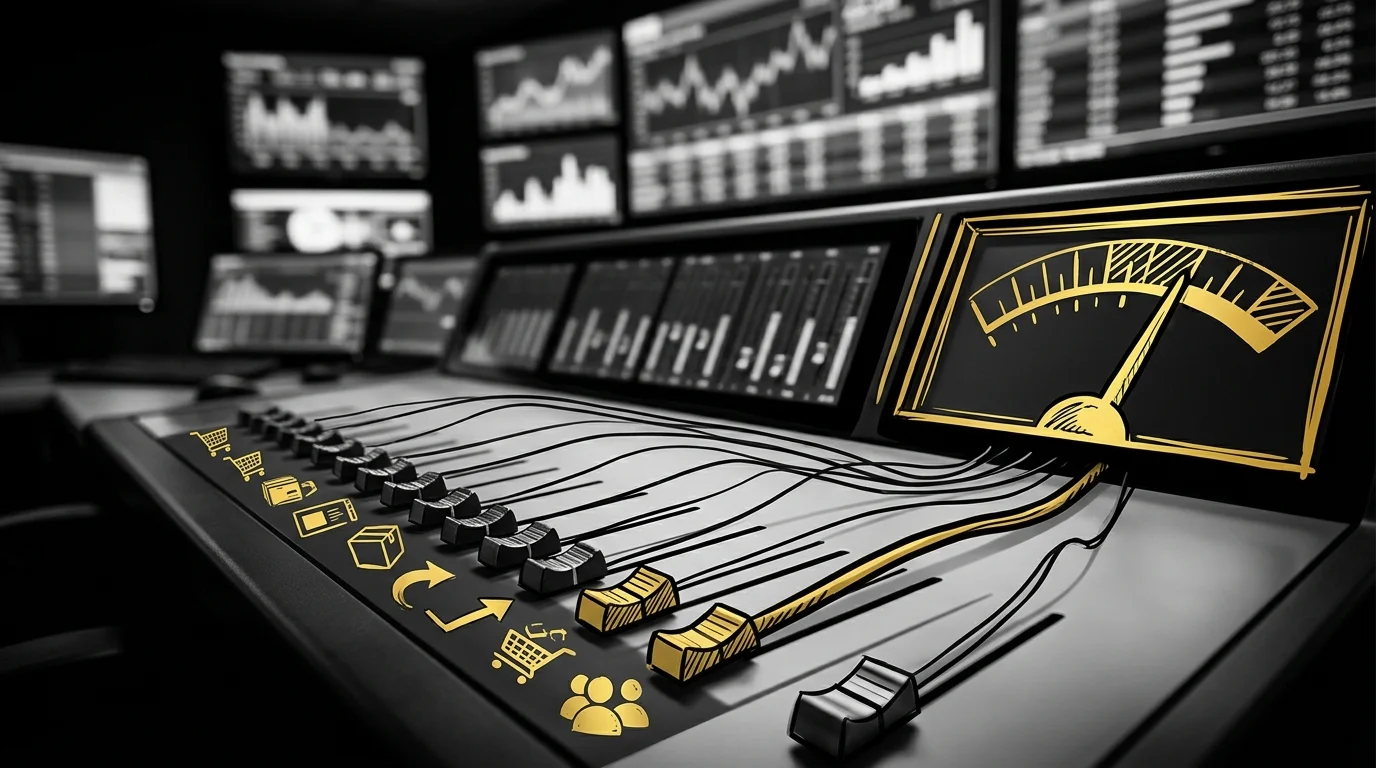
TACoS answers the question ACoS was never built to ask: is the whole channel growing, not just one campaign?
| Measurement Approach | What It Captures | What It Misses |
|---|---|---|
| Campaign-Level ACoS | How efficiently a campaign closes demand that already exists | Whether the whole channel grew alongside the campaign |
| Total Advertising Cost of Sale | The direction of the whole channel over a stretch of time, paid and organic sales together | The efficiency of any one campaign on its own, since the channel-wide view trades individual precision for a full picture of what upper-funnel spend produces |
| Blended Channel Review Without a Time Horizon | A single snapshot of spend against revenue at one point in time | Whether a change is a real trend or a one-off, since a single reading can’t show direction |
What Forrester’s Modeling Projects for DSP
Forrester’s Total Economic Impact study of Amazon DSP, built around a composite organization, projected an increase in return on ad spending of 30% to 50%. That’s a projection for one modeled company, not a result any brand should count on. Amazon is also the DSP many advertisers already use: in an Adweek report, 46% of the advertising professionals interviewed said they had used Amazon Advertising in the past 12 months.
How an Account Accumulates Invisible Measurement Risk
Here’s how it happens: an account runs upper-funnel campaigns for months while every report on the table still reads at the campaign level. ACoS stays the only number on the dashboard, and it looks steady. Nobody is checking whether total channel revenue is actually moving underneath it.
That gap is where measurement risk accumulates invisibly. Accounts without a view into total spend against total revenue are not measuring the channel at all. The absence of a visible problem in a single campaign’s ACoS is not the same as the presence of a healthy, growing channel.
Reading too early is the other half of that risk. An Amazon Science study of 15 U.S. brands on Amazon found that upper- and middle-funnel ad products deliver only 30–50% of their total effects inside the two-week attribution window, compared with 60–90% for lower-funnel products. Judge a Display or DSP campaign at two weeks, and at least half of its effect hasn’t landed yet.
Four Checks That Show Whether Upper-Funnel Spend Is Paying Off
TACoS is the scoreboard. Four checks tell a brand why the number is moving.
First, new-to-brand data. It shows whether a buyer had purchased from the brand within a set lookback window. That’s a useful sign of reach, but it doesn’t prove the ad caused the sale.
Second, a holdout test. Hold back a group of shoppers from the ads, then compare purchase rates between the group that saw them and the group that didn’t. The gap between the two groups is the lift the ads actually caused. Keep the held-back group big enough that normal week-to-week swings in sales don’t swamp the difference.
Third, branded search. If display is building demand, more shoppers should start searching for the brand by name in the weeks after it launches. That’s the pattern the Lewis and Nguyen study found on the web.
Fourth, readiness. If Sponsored Products conversion is still unsteady, fix that first. Upper-funnel spend works best when the campaigns that catch the demand it creates are already running well. Look for steady conversion on your main search terms for several weeks before you add display on top.
None of these checks replaces TACoS. They explain what’s behind it.
Deploying Display and DSP in a Channel Already Measuring TACoS

Once a channel reads TACoS instead of campaign-level ACoS, deployment stops being a budget question and becomes a sequencing question. Amazon is a channel to be managed with discipline, not unlocked with a shortcut. The order upper-funnel tools arrive in decides whether the data stays readable.
Sequencing Display Before DSP
Start with Sponsored Display, the lower-commitment entry point. It sits beside the Sponsored Products campaigns a brand already runs, so it extends audience reach before a single DSP dollar is on the table. Sequencing those steps, from Sponsored Display toward DSP, is work for Amazon Ads Management. Proving the TACoS mechanism here, at smaller scale, keeps the measurement habit intact before inventory and targeting get more complex.
Name Display campaigns so they’re easy to pull out of the account’s reports, and log the week each one starts. Then any later move in TACoS can be lined up against what changed in the account.
Frequently Asked Questions
A few mechanical questions sit under everything covered so far. Here are straight answers to the ones that come up most.
What is the main difference between Amazon Sponsored Display and DSP?
Sponsored Display runs inside Amazon’s advertising console, next to the search campaigns a brand already runs. Amazon DSP is a separate programmatic platform that can also reach shoppers away from Amazon.
Should Display ads or DSP be used for brand awareness?
Start with Sponsored Display. It’s the smaller first step, so the test stays easy to read. Add DSP once TACoS tracking is in place and you want wider reach.
What kind of return on investment is realistic for DSP campaigns?
Don’t expect a fixed return on the DSP campaign itself. Judge it by Total Advertising Cost of Sale: if total revenue grows faster than total ad spend after DSP starts, it’s paying off.
Is Amazon DSP only accessible to enterprise-level brands?
DSP needs a real budget and someone who will read channel-level results, so readiness matters more than company size. A smaller brand with steady Sponsored Products results can qualify, and a large one without them isn’t ready.
What This Means
The habit that matters is the measurement routine around the ads: TACoS read week over week, a holdout test before scaling up, and branded search checked after launch.
Set that routine up before the first Display campaign goes live, so every later read has a baseline. Start by seeing where your own numbers sit: get a free Amazon audit.
Results vary by brand, category, and investment level.